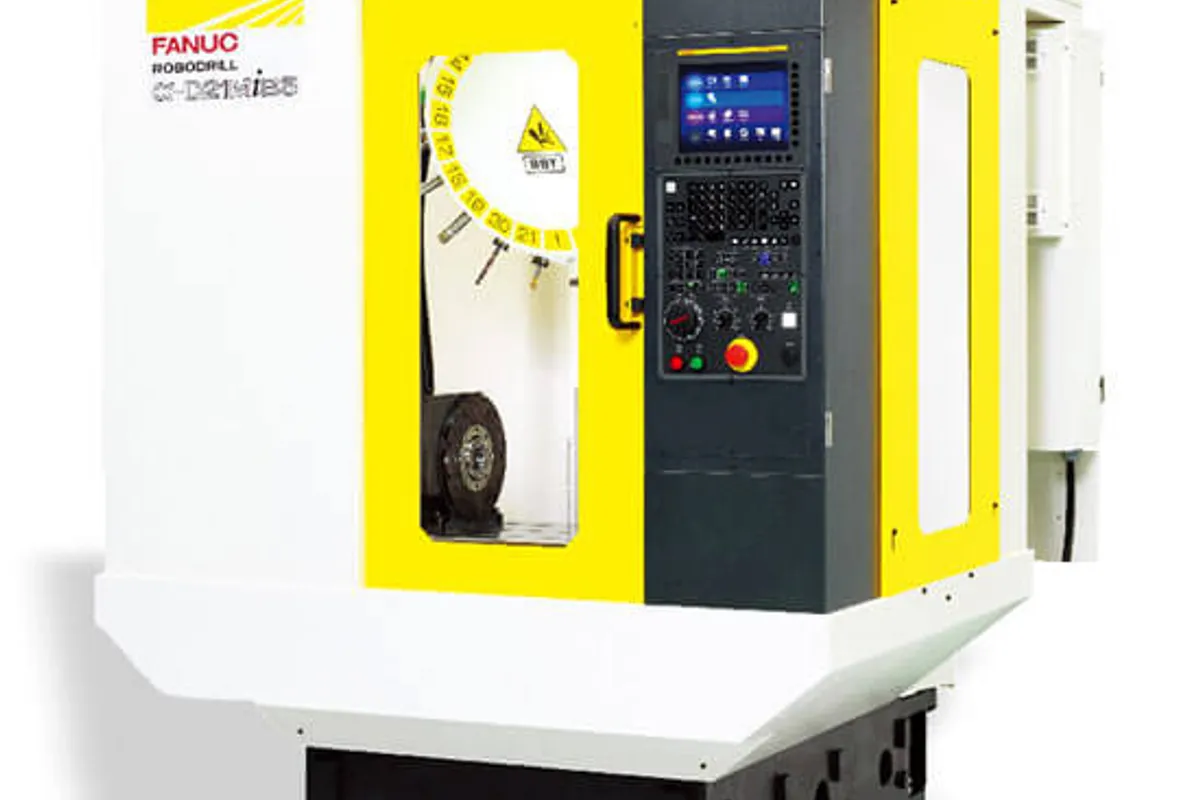
Fanuc Robodrill D21MiB5 Advance
Key Specifications
X Travel
Y Travel
Z Travel
Max Spindle
Spindle Taper
Tool Capacity
How much does the Fanuc Robodrill D21MiB5 Advance cost?
Estimated price range
Our best estimate for a vertical machining centers (vmc) in this class — not a quote from Fanuc. Configuration moves it a long way.
Overview
The Fanuc Robodrill D21MiB5 Advance is a BT30 / BBT30 vertical machining center with 500 mm (19.7 in) of X travel, 400 mm (15.7 in) of Y and 330 mm (13 in) of Z, on the Fanuc 31i-B5 control. Its listed table is more useful than most for tooling, because it states what the 21-tool turret will carry: a maximum tool diameter of 80 mm (3.1 in), a maximum length of 250 mm (9.8 in) and a maximum weight of 3 kg (6.6 lb).
Those limits shape the tool list. An 80 mm (3.1 in) face mill fits, but with its holder it has to stay under 3 kg (6.6 lb), which rules out heavy shell mill bodies and long boring bars. Put angle heads and large taps on a scale with their holders before assuming they can go in the magazine.
Two spindles are described. The 10,000 RPM spindle peaks at 14.2 kW (19 hp) and delivers 79.7 Nm (58.8 ft-lbf) at 1,700 RPM, which is the one for tapping and steel. The optional 24,000 RPM spindle peaks at 26.0 kW (35 hp). Both power figures are peak ratings, and no torque is listed for the faster spindle.
The 650 x 400 mm (25.6 x 15.7 in) table carries 300 kg (660 lb), and the spindle nose sits 250-580 mm (9.8-22.8 in) above it. With the nose never closer than 250 mm, short tools on a low part will not reach, so plan fixture height accordingly. Cutting feed goes up to 30,000 mm/min (1,181 ipm) and rapids to 54 m/min (2,125 ipm).
Full Specifications
| Parameter | Value |
|---|---|
| Z-Axis Travel | 330 mm (13 in) |
| Max Spindle Speed | 10,000 RPM (24,000 RPM optional) |
| Spindle Taper | BT30 / BBT30 |
| Max Tool Diameter (full magazine) | 80 mm (3.1 in) |
| Max Tool Weight | 3 kg (6.6 lb) |
| Rapid Traverse Rate | 54 m/min (2,125 ipm) |
| Machine Weight | 2,000 kg (4,400 lb) |
| CNC Control | Fanuc 31i-B5 |
| X-Axis Travel | 500 mm (19.7 in) |
| Y-Axis Travel | 400 mm (15.7 in) |
| Spindle Motor Power | 14.2 kW (19 hp) peak @ 10K RPM; 26.0 kW (35 hp) peak @ 24K RPM |
| Spindle Torque | 79.7 Nm (58.8 ft-lbf) @ 1,700 RPM (10K spindle) |
| Tool Capacity | 21 turret |
| Max Tool Length | 250 mm (9.8 in) |
| Tool to Tool Time | 0.7 sec |
| Chip to Chip Time | 1.3 sec |
| Table Size | 650 x 400 mm (25.6 x 15.7 in) |
| Max Table Load | 300 kg (660 lb) |
| Spindle Nose to Table | 250-580 mm (9.8-22.8 in) |
| Max Cutting Feedrate | 30,000 mm/min (1,181 ipm) |
| Positioning Accuracy | ±0.003 mm (±0.00012 in) |
| Repeatability | ±0.002 mm (±0.00008 in) |
Specifications compiled from manufacturer literature and industry references. Not independently verified against a published spec sheet — confirm with the manufacturer or an authorised dealer before making a purchasing decision.
Strengths & Limitations
Strengths
- Tool limits are stated: 80 mm (3.1 in) diameter, 250 mm (9.8 in) length and 3 kg (6.6 lb) weight
- 79.7 Nm (58.8 ft-lbf) of spindle torque at 1,700 RPM on the 10,000 RPM spindle
- Tool changes of 0.7 sec tool-to-tool and 1.3 sec chip-to-chip from a 21-tool turret
- 650 x 400 mm (25.6 x 15.7 in) table rated for 300 kg (660 lb)
- Cutting feedrate up to 30,000 mm/min (1,181 ipm), with rapids of 54 m/min (2,125 ipm)
Limitations
- Tools heavier than 3 kg (6.6 lb) or wider than 80 mm (3.1 in) cannot go in the changer
- Z travel is 330 mm (13 in), against 400 mm (15.7 in) on the Robodrill α-D14MiB5ADV Plus
- Standard spindle speed is 10,000 RPM; the 24,000 RPM spindle is optional
- The spindle nose comes no closer than 250 mm (9.8 in) to the table, so low parts need raising
Best For
Frequently Asked Questions
01
The listed maximum tool diameter is 80 mm (3.1 in), the maximum length is 250 mm (9.8 in) and the maximum weight is 3 kg (6.6 lb). Weigh large face mills and angle heads together with their holders before loading them.
02
The spindle power row gives 14.2 kW (19 hp) peak for the 10,000 RPM spindle and 26.0 kW (35 hp) peak for the 24,000 RPM spindle. Torque is 79.7 Nm (58.8 ft-lbf) at 1,700 RPM, stated for the 10,000 RPM spindle only.
03
Z travel is 330 mm (13 in) and the spindle nose to table distance runs 250-580 mm (9.8-22.8 in). Subtract fixture height and tool length from the upper figure to find the tallest part that clears. The Robodrill α-D14MiB5ADV Plus is listed with 400 mm (15.7 in) of Z if more stroke is needed.
04
Positioning accuracy is ±0.003 mm (±0.00012 in) and repeatability is ±0.002 mm (±0.00008 in). Those are axis figures; what a part holds also depends on fixturing, tooling and temperature in the shop.
Videos

Methods Machine Tools, Inc

Methods Machine Tools, Inc

clarkmachinery

Surplex
Community Discussions
Troubleshooting and problem-solving
Links to community discussions. Summaries are editorial — visit the original thread for full context.
More from Fanuc
FANUC Robodrill α-D14MiBADV Plus

FANUC Robodrill α-D21SiB5 Plus
FANUC Robodrill D74CS
FANUC RoboDrill a-D21MiB
FANUC Robodrill α-D21LiB Plus
FANUC Robodrill α-D28MiB5ADV Plus
Other Vertical Machining Centers (VMC)
Campro PV-3221
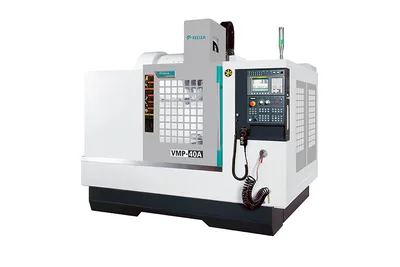
Feeler VMP-40
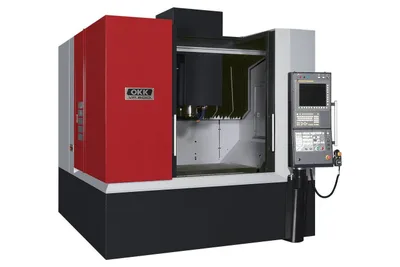
OKK VP 600
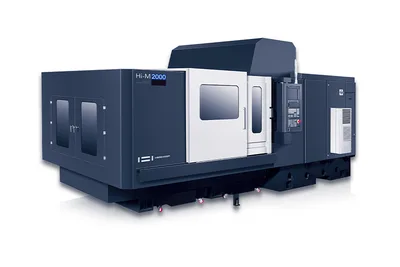
Hwacheon Hi-M2000
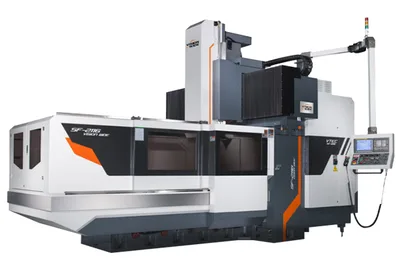
Vision Wide SF-5126