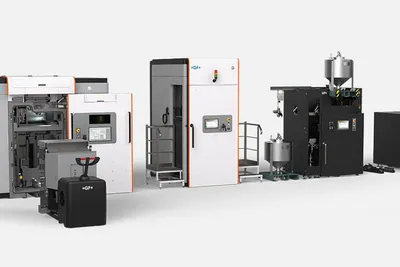
DN Solutions DLX 420
This model was not found in DN Solutions's current lineup when we checked on 2026-10-02 (lineup page). It may be a superseded or older model; the specifications below are as we last recorded them.
Key Specifications
X Travel
Y Travel
Z Travel
Tool Capacity
Max Turn Length
max turning diameter
How much does the DN Solutions DLX 420 cost?
Estimated price range
Our best estimate for a metal additive manufacturing in this class — not a quote from DN Solutions. Configuration moves it a long way.
Overview
The DN Solutions DLX 420 is listed as a hybrid machine that combines turning, milling and laser metal deposition: a 10 in chuck, a maximum turning diameter of 420 mm (16.5 in), a turning length of 900 mm (35.4 in) and a fiber laser of 2-4 kW feeding a coaxial powder nozzle. It is not in DN Solutions' current lineup and may be an older model, so the listed figures should be confirmed against the documentation of the machine itself.
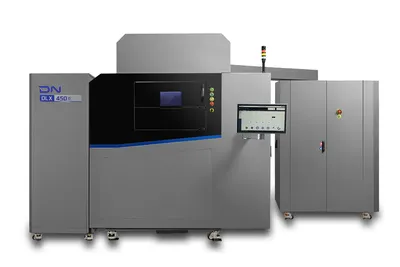
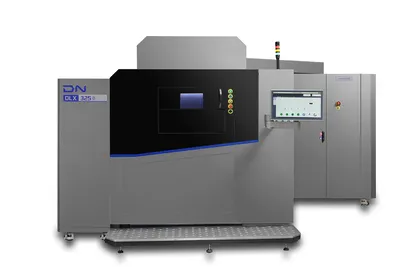
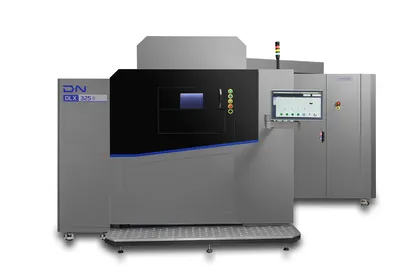
The listed process is directed energy deposition (DED), which adds material onto an existing part instead of growing the part inside a powder bed. That sets it apart from the DLX 325 and the DLX 450, which are listed with enclosed build volumes of 325 x 325 x 400 mm (12.8 x 12.8 x 15.7 in) and 450 x 450 x 450 mm (17.7 x 17.7 x 17.7 in). On the DLX 420 the working space is a lathe envelope: X travel of 420 mm (16.5 in), Y travel of 250 mm (9.8 in), Z travel of 900 mm (35.4 in) and a B-axis range of 240° (+/-120°).
The machining side is listed as a 3,000 RPM turning spindle with 22 kW (30 hp), a 10,000 RPM milling spindle and 20 tools. Deposition is listed at up to 2 kg/hr depending on material, with stainless steels, Inconel, titanium alloys, cobalt-chrome and tool steels named as deposition materials. In practice that points to repair and build-up work: restoring a worn journal or seal face on a shaft, cladding a hard or corrosion-resistant layer, or adding features to a turned blank, then finishing them in the same clamping.
The control is listed as a FANUC 31i-B5 with integrated additive process control, and the machine weight as 12,000 kg (26,455 lb). The listed figures include no footprint, laser spot size, powder feeder details or shielding gas, all of which matter for installation and process planning.
Full Specifications
| Parameter | Value |
|---|---|
| Max Turning Diameter | 420 mm (16.5 in) |
| Max Turning Length | 900 mm (35.4 in) |
| X-Axis Travel | 420 mm (16.5 in) |
| Y-Axis Travel | 250 mm (9.8 in) |
| Z-Axis Travel | 900 mm (35.4 in) |
| B Axis Range | 240° (+/-120°) |
| Turning Spindle Speed | 3,000 RPM |
| Turning Spindle Power | 22 kW (30 hp) |
| Milling Spindle Speed | 10,000 RPM |
| Chuck Size | 10 in |
| Laser Type | Fiber laser (DED) |
| Laser Power | 2-4 kW (configuration dependent) |
| Deposition Method | Coaxial powder nozzle, directed energy deposition |
| Deposition Materials | Stainless steels, Inconel, titanium alloys, cobalt-chrome, tool steels |
| Deposition Rate | Up to 2 kg/hr (material dependent) |
| Tool Capacity | 20 tools |
| Machine Weight | 12,000 kg (26,455 lb) |
| CNC Control | FANUC 31i-B5 with integrated additive process control |
Specifications sourced from dn-solutions.com — verified 2026-03-28
Strengths & Limitations
Strengths
- Deposition, turning and milling are listed in one machine, so built-up material can be finished without a second setup
- Laser power is listed at 2-4 kW with a coaxial powder nozzle and a deposition rate of up to 2 kg/hr
- B-axis range of 240° (+/-120°) with 250 mm (9.8 in) of Y travel for angled deposition and milling
- Turning capacity of 420 mm (16.5 in) in diameter and 900 mm (35.4 in) in length
- Listed deposition materials include stainless steels, Inconel, titanium alloys, cobalt-chrome and tool steels
Limitations
- Not in DN Solutions' current lineup, and the listed figures could not be tied to a current model page
- Laser power is given as a 2-4 kW range that depends on configuration, so the rating of a particular machine must be established
- The turning spindle is listed at 3,000 RPM and 22 kW (30 hp), modest for small-diameter work
- 20 tools have to cover both rough and finish machining of deposited material
- No footprint, spot size or shielding gas figures are listed
Best For
Frequently Asked Questions
01
The listed process is directed energy deposition with a fiber laser and a coaxial powder nozzle. Laser power is listed as 2-4 kW depending on configuration and the deposition rate as up to 2 kg/hr depending on material. Unlike a powder bed machine, it deposits onto a part held in the chuck.
02
The DLX 325 and DLX 450 are listed with build volumes, 325 x 325 x 400 mm (12.8 x 12.8 x 15.7 in) and 450 x 450 x 450 mm (17.7 x 17.7 x 17.7 in), and laser power of 500W or 1000W. The DLX 420 is listed with a lathe envelope, a 10 in chuck, turning and milling spindles and a 2-4 kW deposition laser, so it adds to and machines existing parts.
03
The listed maximum turning diameter is 420 mm (16.5 in) and the maximum turning length is 900 mm (35.4 in), with a 10 in chuck. Axis travels are listed as 420 mm (16.5 in) in X, 250 mm (9.8 in) in Y and 900 mm (35.4 in) in Z, and the B-axis swings through 240° (+/-120°).
04
It is not in DN Solutions' current lineup and may be an older model. The figures on this page are the listed ones and have not been matched to a current model page, so anyone assessing a DLX 420 should confirm laser power, spindle ratings and the control against the machine's own nameplate and manuals.
05
Stainless steels, Inconel, titanium alloys, cobalt-chrome and tool steels. The listed deposition rate of up to 2 kg/hr is material dependent. The listed figures do not state the shielding gas or the powder feeder arrangement, which should be checked for reactive alloys such as titanium.
Comparisons
More from DN Solutions
Other Metal Additive Manufacturing
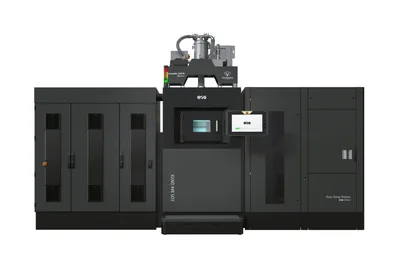
EOS M4 ONYX
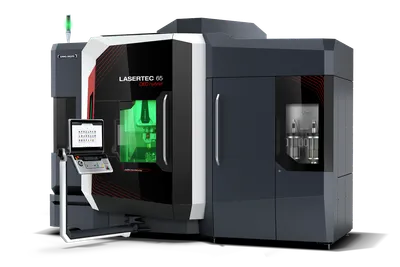
DMG Mori LASERTEC 65 DED hybrid
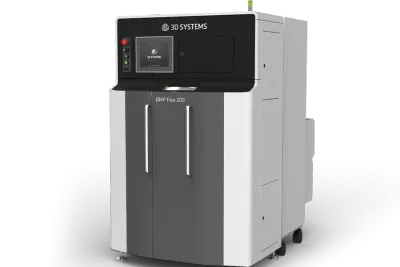
3D Systems DMP Flex 200
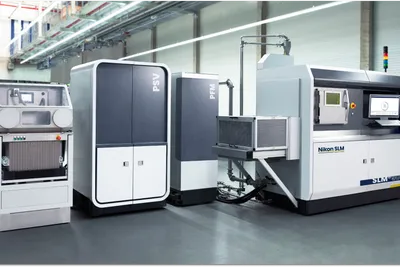
SLM Solutions SLM 500 (Original)
EOS M 300-4 Metal Additive Manufacturing System