DN Solutions DLX 325 D
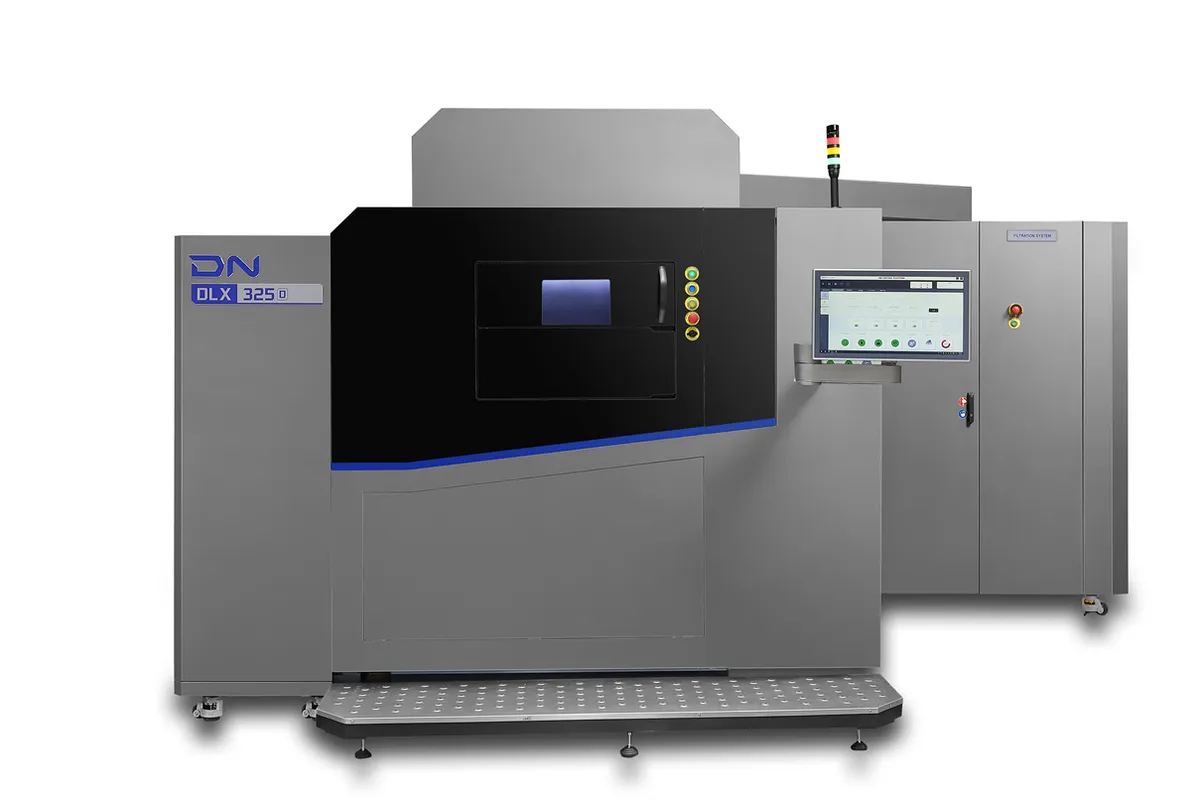
Image: awsimg.dn-solutions.com, DN Solutions
Key Specifications
Weight
build volume
laser type
laser count
laser power
focus diameter
How much does the DN Solutions DLX 325 D cost?
Estimated price range
Our best estimate for a metal additive manufacturing in this class — not a quote from DN Solutions. Configuration moves it a long way.
Overview
The DN Solutions DLX 325 D is a two-laser metal additive manufacturing machine with a build volume of 325 x 325 x 420 mm (12.8 x 12.8 x 16.5 in). Both Yb-fiber lasers are specified at 500 W or 1,000 W each, focused to 80 microns. The model is not shown in DN Solutions' current lineup listing and may be an older designation, so confirm what is available before planning a purchase around it.
The second laser is the reason to look at this machine instead of the single-laser DLX 325, which is listed at 325 x 325 x 400 mm (12.8 x 12.8 x 15.7 in). Two beams working one 325 mm square plate shorten the exposure time of each layer, and the gain is largest on plates packed with parts or on parts with thick sections. On a single slender part the two lasers have little to share and the advantage shrinks.
Multi-laser machines bring one question a single-laser machine does not. Where the two scan fields meet, a part that spans both depends on how well the lasers are aligned to each other. The table says nothing about field overlap or calibration, so ask how the overlap is handled and how often it is checked. On a machine already in service, ask for the calibration records.
Power is listed per laser, which means the choice of 500 W or 1,000 W applies to each beam. Because the table shows both, establish which rating a particular machine was built with. Protective gas is argon or nitrogen, and gas filtration is listed as "Permanent Chalk", a term the table does not explain.
Overall dimensions are 4,500 x 3,800 x 2,700 mm (177.2 x 149.6 x 106.3 in) and the weight is 4,500 kg (9,921 lb).
Full Specifications
| Parameter | Value |
|---|---|
| Build Volume | 325 x 325 x 420 mm (12.8 x 12.8 x 16.5 in) |
| Laser Type | Yb-Fiber Laser |
| Laser Count | 2 |
| Laser Power | 500W or 1000W (per laser) |
| Focus Diameter | 80 microns |
| Gas Filtration | Permanent Chalk |
| Protective Gas | Argon / Nitrogen |
| Machine Dimensions | 4,500 x 3,800 x 2,700 mm (177.2 x 149.6 x 106.3 in) |
| Machine Weight | 4,500 kg (9,921 lb) |
| Length | 325 mm |
| Width | 325 mm |
| Height | 420 mm |
| Number of Laser | 2 |
Specifications sourced from dn-solutions.com — verified 2026-03-28
Strengths & Limitations
Strengths
- Two Yb-fiber lasers on a 325 x 325 x 420 mm (12.8 x 12.8 x 16.5 in) build volume
- Each laser is specified at 500 W or 1,000 W
- 420 mm (16.5 in) of build height, against 400 mm (15.7 in) on the DLX 325
- 80 micron focus diameter on both lasers
- Argon and nitrogen are both listed as protective gases
Limitations
- Not in DN Solutions' current lineup listing, so availability and support terms need confirming
- The table does not describe scan-field overlap or laser-to-laser calibration, which decide quality on parts that span both fields
- No layer thickness, build rate or material list is stated
- The plate is 325 x 325 mm; the DLX 450 D offers 450 x 450 x 470 mm (17.7 x 17.7 x 18.5 in)
Best For
Frequently Asked Questions
01
The model is not in DN Solutions' current lineup listing and may be an older designation. A specification table for it exists, with a 325 x 325 x 420 mm (12.8 x 12.8 x 16.5 in) build volume and two lasers, so the figures on this page are useful for assessing a machine, but availability should be confirmed with DN Solutions directly.
02
It shares the melting work across two beams, which shortens the time each layer takes when there is enough area to divide. Each laser is listed at 500 W or 1,000 W with an 80 micron focus. The build plate stays 325 x 325 mm, so the gain is in output per build and not in part size.
03
The DLX 325 D has two lasers and a build volume of 325 x 325 x 420 mm (12.8 x 12.8 x 16.5 in). The DLX 325 lists 325 x 325 x 400 mm (12.8 x 12.8 x 15.7 in) and gives its 500 W or 1,000 W laser power as a single figure, not per laser.
04
First, which laser power is fitted, since the table lists both 500 W and 1,000 W per laser. Then the alignment between the two lasers, the condition of the gas filtration system and the gas the machine has been run on, argon or nitrogen. The machine is 4,500 x 3,800 x 2,700 mm (177.2 x 149.6 x 106.3 in) and 4,500 kg (9,921 lb) for moving purposes.
More from DN Solutions
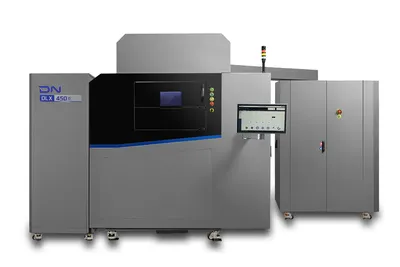
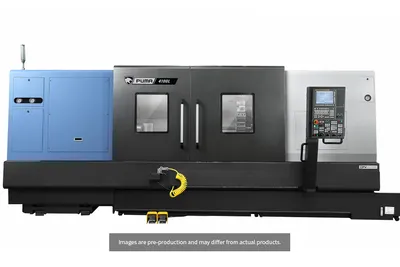

Other Metal Additive Manufacturing
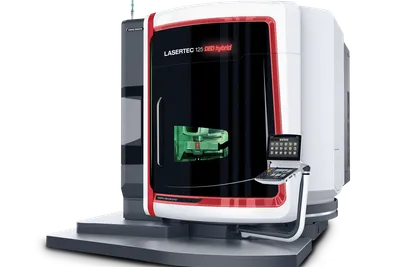
DMG Mori LASERTEC 125 DED hybrid
Markforged Metal X Gen 2
EOS M 100
Desktop Metal Shop System
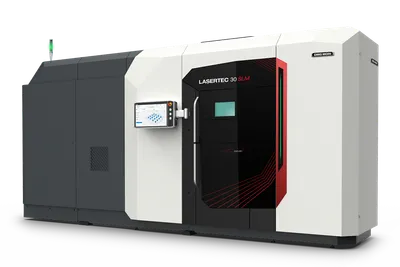
DMG Mori LASERTEC 30 SLM 3rd Generation