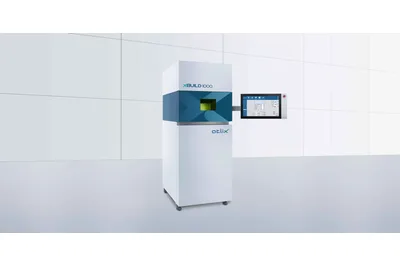
Desktop Metal Shop System
Key Specifications
Weight
build volume
layer thickness
furnace max temp
surface finish sintered
build sizes
How much does the Desktop Metal Shop System cost?
Estimated price range
Our best estimate for a metal additive manufacturing in this class — not a quote from Desktop Metal. Configuration moves it a long way.
Overview
The Desktop Metal Shop System is a metal additive manufacturing system with a 350 x 220 mm (13.8 x 8.7 in) build area, 1600 x 1600 DPI resolution and a layer thickness of 50 - 150 µm. Desktop Metal's page for it lists the printing figures together with powder handling and furnace data, which is a reminder that the purchase is a small process line and not a single machine.
Four build sizes share the same 350 x 220 mm area: 200 mm, 150 mm, 100 mm and 50 mm deep. The depth chosen sets how many parts nest in one job, so it should follow the batch a shop expects to run more than the tallest single part. The headline build volume row reads 350 x 220 x 220 mm (13.8 x 8.7 x 8.7 in), a little taller than the deepest of the four build sizes. Ask for the usable height of the configuration being quoted.
Printed parts are not finished parts. Furnace peak temperature is listed at 1,400°C with an external gas hookup, and sintered surface finish at Ra 4 - 8 µm depending on material. That is rougher than most machined surfaces, so sealing faces, bearing fits and threads should be planned as machining operations after sintering. Powder recovery is covered by a sieving rate of 5 kg/hr.
For room planning the table gives a floor space of 161.8 x 138.0 x 75.4 cm (63.7 x 54.3 x 29.7 in) and a separate dimensions row of 1100 x 910 x 740 mm, with a weight of 110 kg (243 lb) and a power requirement of 230 VAC, 50/60 Hz, 17.5 A, 2.97 kW. The rows do not say which piece of equipment each figure describes. Get that confirmed per unit before laying out the room and the electrical supply.
Full Specifications
| Parameter | Value |
|---|---|
| Build Volume | 350 x 220 x 220 mm (13.8 x 8.7 x 8.7 in) |
| Layer Thickness | 50 - 150 µm |
| Furnace Max Temp | 1,400°C |
| Surface Finish Sintered | Ra 4 - 8 µm (material dependent) |
| Build Sizes | 350 x 220 x 200 mm350 x 220 x 150 mm350 x 220 x 100 mm350 x 220 x 50 mm |
| Resolution | 1600 x 1600 DPI |
| Floor Space | 161.8 x 138.0 x 75.4 cm(63.7 x 54.3 x 29.7 in) |
| Dimensions | 1100 x 910 x 740 mm (43.3 x 35,8 x 29.1 in) |
| Machine Weight | 110 kg (243 lb) |
| Power Requirement | 230 VAC, 50/60 Hz, 17.5 A, 2.97 kW |
| Sieving Rate | 5 kg/hr |
| Gas | External gas hookup |
| Peak Temp | 1400 °C |
Specifications sourced from desktopmetal.com — verified 2026-10-03
Strengths & Limitations
Strengths
- 1600 x 1600 DPI resolution with a layer thickness of 50 - 150 µm
- Four listed build sizes on one 350 x 220 mm area, from 50 mm to 200 mm deep
- Furnace peak temperature of 1,400°C with an external gas hookup
- Sieving rate of 5 kg/hr for powder recovery
- Listed power requirement of 230 VAC, 50/60 Hz, 17.5 A, 2.97 kW
Limitations
- Sintered surface finish is Ra 4 - 8 µm (material dependent), so precision surfaces need secondary machining
- An external gas hookup is listed, so a gas supply has to be planned with the installation
- The listed build sizes stop at 200 mm deep on a fixed 350 x 220 mm area
- The table names no materials, so alloy availability has to be confirmed with Desktop Metal
Best For
Frequently Asked Questions
01
Desktop Metal lists four build sizes: 350 x 220 x 200 mm, 350 x 220 x 150 mm, 350 x 220 x 100 mm and 350 x 220 x 50 mm. The build volume row is given as 350 x 220 x 220 mm (13.8 x 8.7 x 8.7 in), so confirm the usable height for the configuration you are quoted.
02
Resolution is listed as 1600 x 1600 DPI and layer thickness as 50 - 150 µm. Thinner layers give finer steps on sloped and curved surfaces and take more passes for the same build depth, so the setting is a trade between detail and output.
03
Sintered surface finish is listed as Ra 4 - 8 µm, depending on material. Faces that seal, slide or locate will usually need machining or another finishing step, so leave stock on those features when the part is designed.
04
The table lists a power requirement of 230 VAC, 50/60 Hz, 17.5 A, 2.97 kW and an external gas hookup, with a furnace peak temperature of 1,400°C. It does not state which unit the power figure belongs to, so ask for the electrical and gas requirements of each piece of equipment.
Videos

M5D / Cimquest

Azoth 3D
Community Discussions
Links to community discussions. Summaries are editorial — visit the original thread for full context.
More from Desktop Metal
Other Metal Additive Manufacturing
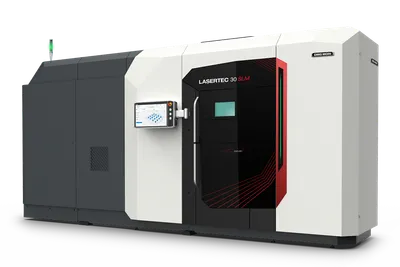
DMG Mori LASERTEC 30 SLM 3rd Generation
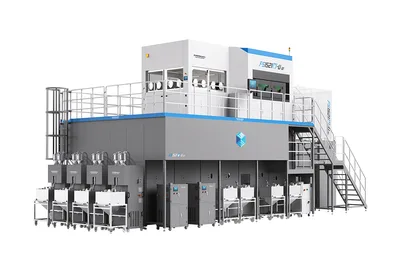
Farsoon FS1521M