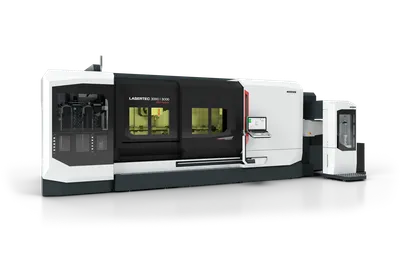
Concept Laser Xline 2000R
Key Specifications
build envelope
layer thickness
production speed
laser system
max scanning speed
focus diameter
How much does the Concept Laser Xline 2000R cost?
Estimated price range
Our best estimate for a metal additive manufacturing in this class — not a quote from Colibrium Additive. Configuration moves it a long way.
Overview
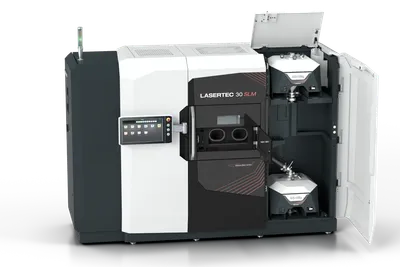
The Colibrium X Line 2000R is a large-format laser metal additive machine built around an 800 x 400 x 500 mm (x, y, z) envelope and 2 fiber lasers, each 1,000 W (cw). The 800 mm X dimension defines it. Parts that would otherwise be split and joined can be built in one piece along that axis, with 400 mm of Y and 500 mm of Z around them.
The process figures sit at the coarse, productive end. Layer thickness is 30 – 150 µm and the focus diameter is approx. 100 – 500 µm, so there is no fine-layer setting below 30 µm and small features are not what the machine is for. Production speed is up to 120 cm3/h, a figure Colibrium Additive qualifies as depending on material, parameter and geometry. Maximum scanning speed is 7 m/s. Heating is rated 9 kW with a maximum temperature of 200°C.
Six materials are listed: Aluminum AlSi10Mg, Titanium Ti64 ELI Grade 23, Nickel Ni718, Stainless Steel SS316L, Nickel Ni625 and Cobalt Chrome CoCrMo. Inert gas consumption is given as approx. 17 – 34 l/min during the building process with N2, through the 1 gas connection available.
This is a building-scale installation. The machine measures 5,235 x 3,655 x 3,604 mm (B x H x T) and weighs approx. 9,500 kg as a tare weight, so the figure for the floor calculation is higher once the machine is loaded. By comparison the Colibrium M2 is listed at Approx. 2,500 kg. A sieving station and a powder silo are named as necessary peripheral equipment and need their own floor space. Average power consumption is 13 kW on a 3/N/PE AC 400 V, 50 A, 50 – 60 Hz connection, and operating conditions are 15 – 25°C.
Full Specifications
| Parameter | Value |
|---|---|
| Build Envelope | 800 x 400 x 500 mm (x, y, z) |
| Layer Thickness | 30 – 150 µm |
| Production Speed | up to 120 cm3/h (depending on material, parameter, geometry) |
| Laser System | 2 fiber lasers, each 1,000 W (cw) |
| Max Scanning Speed | 7 m/s |
| Focus Diameter | approx. 100 – 500 µm |
| Heating | 9 kW, maximum temperature 200°C |
| Connected Loads | Average power consumption 13 kW; Power connection 3/N/PE AC 400 V, 50 A, 50 – 60 Hz |
| Inert Gas Supply | 1 gas connection available |
| Inert Gas Consumption | approx. 17 – 34 l/min (during the building process with N2) |
| Machine Dimensions | 5,235 x 3,655 x 3,604 mm (B x H x T) |
| Machine Weight | approx. 9,500 kg (tare weight) |
| Operating Conditions | 15 – 25°C |
| Necessary Peripheral Equipment | Sieving station, powder silo |
| Materials | Aluminum - AlSi10Mg, Titanium - Ti64 ELI Grade 23, Nickel - Ni718, Stainless Steel - SS316L, Nickel - Ni625, Cobalt Chrome - CoCrMo |
Specifications sourced from colibriumadditive.com — verified 2026-10-03
Strengths & Limitations
Strengths
- 800 x 400 x 500 mm (x, y, z) build envelope, with 800 mm available along X for long one-piece parts
- 2 fiber lasers, each 1,000 W (cw), with a maximum scanning speed of 7 m/s
- Production speed of up to 120 cm3/h, depending on material, parameter and geometry
- Heating rated 9 kW with a maximum temperature of 200°C
- Layers up to 150 µm and a focus diameter up to approx. 500 µm for high deposition on bulky sections
Limitations
- Thinnest layer is 30 µm and the smallest focus diameter approx. 100 µm, which limits fine detail
- A sieving station and powder silo are necessary peripheral equipment on top of the machine itself
- Machine dimensions of 5,235 x 3,655 x 3,604 mm (B x H x T) and approx. 9,500 kg (tare weight) demand a prepared site
- Inert gas consumption of approx. 17 – 34 l/min during the building process with N2
- Needs a 3/N/PE AC 400 V, 50 A connection for an average power consumption of 13 kW
Best For
Frequently Asked Questions
01
800 x 400 x 500 mm (x, y, z). The long axis is X at 800 mm, with 400 mm in Y and 500 mm in Z, so the envelope favours long parts laid along X over tall ones.
02
The laser system is 2 fiber lasers, each 1,000 W (cw). Maximum scanning speed is 7 m/s and the focus diameter is approx. 100 – 500 µm. Layer thickness is 30 – 150 µm.
03
Production speed is listed as up to 120 cm3/h. Colibrium Additive states that the figure depends on material, parameter and geometry, so treat it as an upper bound and ask for a rate based on your own part and alloy.
04
A sieving station and a powder silo are listed as necessary peripheral equipment. The machine itself is 5,235 x 3,655 x 3,604 mm (B x H x T) and approx. 9,500 kg (tare weight), so plan the layout for all three items together.
05
The power connection is 3/N/PE AC 400 V, 50 A, 50 – 60 Hz, with an average power consumption of 13 kW. There is 1 gas connection, and inert gas consumption is approx. 17 – 34 l/min during the building process with N2. Operating conditions are 15 – 25°C.
06
Aluminum AlSi10Mg, Titanium Ti64 ELI Grade 23, Nickel Ni718, Stainless Steel SS316L, Nickel Ni625 and Cobalt Chrome CoCrMo. The heating is rated 9 kW with a maximum temperature of 200°C.
Videos

3D PRINTech

NISSA Digispace

tecnohow
More from Colibrium Additive
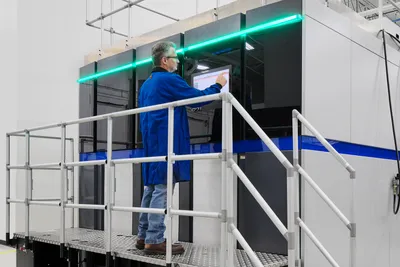
Colibrium M Line
Colibrium Additive Concept M2 Series 5
GE Additive Arcam A2XX
GE Additive Arcam EBM Q10plus
Concept Laser Mlab Cusing R
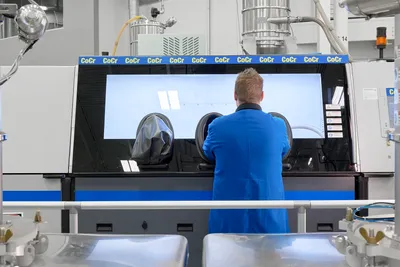
Colibrium X Line 2000R
Other Metal Additive Manufacturing
HP Metal Jet S100+
SLM Solutions SLM 125
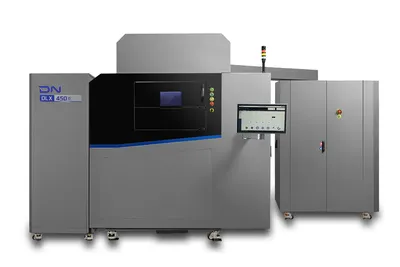
DN Solutions DLX 450
DMG Mori LASERTEC 30 SLM