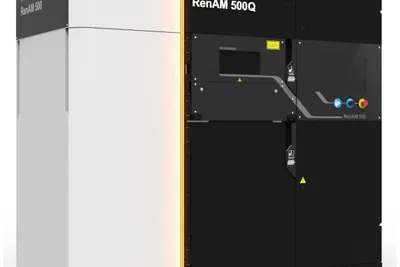
Concept Laser X LINE 2000R
Key Specifications
build envelope
layer thickness
production speed
laser system
max scanning speed
focus diameter
How much does the Concept Laser X LINE 2000R cost?
Estimated price range
Our best estimate for a metal additive manufacturing in this class — not a quote from Colibrium Additive. Configuration moves it a long way.
Overview
The Colibrium X Line 2000R is a large-format laser metal additive machine built around an 800 x 400 x 500 mm (x, y, z) envelope and 2 fiber lasers, each 1,000 W (cw). The 800 mm X dimension defines it. Parts that would otherwise be split and joined can be built in one piece along that axis, with 400 mm of Y and 500 mm of Z around them.
The process figures sit at the coarse, productive end. Layer thickness is 30 – 150 µm and the focus diameter is approx. 100 – 500 µm, so there is no fine-layer setting below 30 µm and small features are not what the machine is for. Production speed is up to 120 cm3/h, a figure Colibrium Additive qualifies as depending on material, parameter and geometry. Maximum scanning speed is 7 m/s. Heating is rated 9 kW with a maximum temperature of 200°C.
Six materials are listed: Aluminum AlSi10Mg, Titanium Ti64 ELI Grade 23, Nickel Ni718, Stainless Steel SS316L, Nickel Ni625 and Cobalt Chrome CoCrMo. Inert gas consumption is given as approx. 17 – 34 l/min during the building process with N2, through the 1 gas connection available.
This is a building-scale installation. The machine measures 5,235 x 3,655 x 3,604 mm (B x H x T) and weighs approx. 9,500 kg as a tare weight, so the figure for the floor calculation is higher once the machine is loaded. By comparison the Colibrium M2 is listed at Approx. 2,500 kg. A sieving station and a powder silo are named as necessary peripheral equipment and need their own floor space. Average power consumption is 13 kW on a 3/N/PE AC 400 V, 50 A, 50 – 60 Hz connection, and operating conditions are 15 – 25°C.
Full Specifications
| Parameter | Value |
|---|---|
| Build Envelope | 800 x 400 x 500 mm (x, y, z) |
| Layer Thickness | 30 – 150 µm |
| Production Speed | up to 120 cm3/h (depending on material, parameter, geometry) |
| Laser System | 2 fiber lasers, each 1,000 W (cw) |
| Max Scanning Speed | 7 m/s |
| Focus Diameter | approx. 100 – 500 µm |
| Heating | 9 kW, maximum temperature 200°C |
| Connected Loads | Average power consumption 13 kW; Power connection 3/N/PE AC 400 V, 50 A, 50 – 60 Hz |
| Inert Gas Supply | 1 gas connection available |
| Inert Gas Consumption | approx. 17 – 34 l/min (during the building process with N2) |
| Machine Dimensions | 5,235 x 3,655 x 3,604 mm (B x H x T) |
| Machine Weight | approx. 9,500 kg (tare weight) |
| Operating Conditions | 15 – 25°C |
| Necessary Peripheral Equipment | Sieving station, powder silo |
| Materials | Aluminum - AlSi10Mg, Titanium - Ti64 ELI Grade 23, Nickel - Ni718, Stainless Steel - SS316L, Nickel - Ni625, Cobalt Chrome - CoCrMo |
Specifications sourced from colibriumadditive.com — verified 2026-10-03
Strengths & Limitations
Strengths
- 800 x 400 x 500 mm (x, y, z) build envelope, with 800 mm available along X for long one-piece parts
- 2 fiber lasers, each 1,000 W (cw), with a maximum scanning speed of 7 m/s
- Production speed of up to 120 cm3/h, depending on material, parameter and geometry
- Heating rated 9 kW with a maximum temperature of 200°C
- Layers up to 150 µm and a focus diameter up to approx. 500 µm for high deposition on bulky sections
Limitations
- Thinnest layer is 30 µm and the smallest focus diameter approx. 100 µm, which limits fine detail
- A sieving station and powder silo are necessary peripheral equipment on top of the machine itself
- Machine dimensions of 5,235 x 3,655 x 3,604 mm (B x H x T) and approx. 9,500 kg (tare weight) demand a prepared site
- Inert gas consumption of approx. 17 – 34 l/min during the building process with N2
- Needs a 3/N/PE AC 400 V, 50 A connection for an average power consumption of 13 kW
Best For
Frequently Asked Questions
01
800 x 400 x 500 mm (x, y, z). The long axis is X at 800 mm, with 400 mm in Y and 500 mm in Z, so the envelope favours long parts laid along X over tall ones.
02
The laser system is 2 fiber lasers, each 1,000 W (cw). Maximum scanning speed is 7 m/s and the focus diameter is approx. 100 – 500 µm. Layer thickness is 30 – 150 µm.
03
Production speed is listed as up to 120 cm3/h. Colibrium Additive states that the figure depends on material, parameter and geometry, so treat it as an upper bound and ask for a rate based on your own part and alloy.
04
A sieving station and a powder silo are listed as necessary peripheral equipment. The machine itself is 5,235 x 3,655 x 3,604 mm (B x H x T) and approx. 9,500 kg (tare weight), so plan the layout for all three items together.
05
The power connection is 3/N/PE AC 400 V, 50 A, 50 – 60 Hz, with an average power consumption of 13 kW. There is 1 gas connection, and inert gas consumption is approx. 17 – 34 l/min during the building process with N2. Operating conditions are 15 – 25°C.
06
Aluminum AlSi10Mg, Titanium Ti64 ELI Grade 23, Nickel Ni718, Stainless Steel SS316L, Nickel Ni625 and Cobalt Chrome CoCrMo. The heating is rated 9 kW with a maximum temperature of 200°C.
Videos

3D PRINTech

NISSA Digispace
More from Colibrium Additive
GE Additive Arcam EBM Spectra H
Concept Laser Xline 2000R
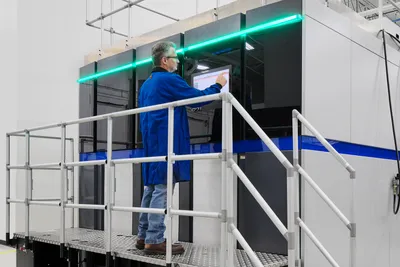
Colibrium M Line
Colibrium Additive Concept M2 Series 5
GE Additive Arcam A2XX
GE Additive Arcam EBM Q10plus
Other Metal Additive Manufacturing
GF Machining DMP Factory 350
EOS M 100 Compact Metal 3D Printer
EOS M 100
Thermwood LSAM-MT (Additive Manufacturing Trim Cell)
SLM Solutions SLM 500