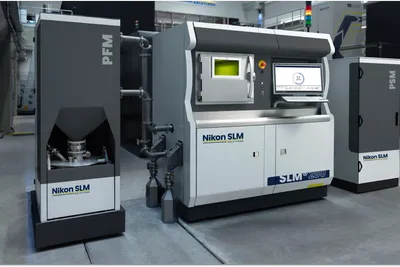
Concept Laser M1 Cusing
This model was not found in Colibrium Additive's current lineup when we checked on 2026-10-03 . It may be a superseded or older model; the specifications below are as we last recorded them.
Key Specifications
build envelope
laser power
laser type
layer thickness
scan speed
spot diameter
How much does the Concept Laser M1 Cusing cost?
Estimated price range
Our best estimate for a metal additive manufacturing in this class — not a quote from Colibrium Additive. Configuration moves it a long way.
Overview
The Concept Laser M1 Cusing is a laser metal additive machine with a cubic build envelope of 250 x 250 x 250 mm (9.8 x 9.8 x 9.8 in) and a 200W Yb fiber laser. Colibrium Additive does not show it in its current lineup, so treat it as an older model. What follows rests on the listed figures only, which have not been confirmed against a maker's page.
The listed figures describe a mid-size machine for detailed work. Layer thickness runs from 20 – 100 µm and the spot diameter is approx. 150 µm, so the thinnest wall is set by the spot more than by the layer. Scan speed is listed as up to 7,000 mm/s. With a 200W source covering the whole 250 x 250 mm area, a full-height build of solid parts takes a long time, which points the machine at tooling inserts, prototypes and short runs. Exposure is by island scanning in 5 x 5 mm randomized fields, which breaks each layer into small patches instead of long continuous tracks.
Compatible materials are 316L, 17-4PH, Ti-6Al-4V, AlSi10Mg, CoCr, Inconel 625 and maraging steel. Oxygen content below 100 ppm is listed against an inert atmosphere option, so anyone planning titanium or aluminium work should confirm the option is fitted on the machine in front of them. Installation looks modest on paper: a footprint of approx. 1,600 x 800 mm and a 32 A, 3-phase supply. No machine weight, gas consumption or build rate is listed, so ask the seller for the original documentation.
Full Specifications
| Parameter | Value |
|---|---|
| Build Envelope | 250 x 250 x 250 mm (9.8 x 9.8 x 9.8 in) |
| Laser Power | 200W fiber laser |
| Laser Type | Yb fiber laser |
| Layer Thickness | 20 – 100 µm |
| Scan Speed | Up to 7,000 mm/s |
| Spot Diameter | Approx. 150 µm |
| Scanning Strategy | Island scanning (5 x 5 mm randomized fields) |
| Oxygen Content | < 100 ppm (inert atmosphere option) |
| Machine Footprint | Approx. 1,600 x 800 mm |
| Power Supply | 32 A, 3-phase |
| Compatible Materials | 316L, 17-4PH, Ti-6Al-4V, AlSi10Mg, CoCr, Inconel 625, maraging steel |
Specifications sourced from machinio.com — verified 2026-03-28
Strengths & Limitations
Strengths
- Cubic 250 x 250 x 250 mm (9.8 x 9.8 x 9.8 in) build envelope, with the same reach in all three axes
- Layer thickness of 20 – 100 µm and a spot diameter of approx. 150 µm for detailed features
- Listed materials run from 316L and 17-4PH to Ti-6Al-4V, AlSi10Mg, CoCr, Inconel 625 and maraging steel
- Modest installation on the listed figures: a footprint of approx. 1,600 x 800 mm and a 32 A, 3-phase supply
Limitations
- Not in Colibrium Additive's current lineup, and the listed figures have not been confirmed against a maker's page
- One 200W laser has to cover the whole 250 x 250 mm area, so large solid builds are slow
- Oxygen content below 100 ppm is tied to an inert atmosphere option that may not be on every machine
- No machine weight, gas consumption or build rate is listed
Best For
Frequently Asked Questions
01
Colibrium Additive does not show the M1 Cusing in its current lineup, so it is best treated as an older model. The figures on this page are the listed figures for it and have not been confirmed against a maker's page. Check them against the documentation of the specific machine before relying on them.
02
The listed build envelope is 250 x 250 x 250 mm (9.8 x 9.8 x 9.8 in), a cube. Layer thickness is listed at 20 – 100 µm, the spot diameter at approx. 150 µm and scan speed at up to 7,000 mm/s.
03
The listed compatible materials are 316L, 17-4PH, Ti-6Al-4V, AlSi10Mg, CoCr, Inconel 625 and maraging steel. Oxygen content below 100 ppm is listed with an inert atmosphere option, so confirm that option on any machine intended for titanium or aluminium.
04
The listed figures give a footprint of approx. 1,600 x 800 mm and a 32 A, 3-phase power supply. They do not give a machine weight or a gas consumption figure, so floor loading and gas supply have to be settled from the documentation of the machine itself.
Videos

Romanoff International
More from Colibrium Additive
Concept Laser M2 Series 5 Metal 3D Printer
Colibrium M2
GE Additive Arcam Spectra H
Concept Laser X LINE 2000R
GE Additive Arcam EBM Spectra H
Concept Laser Xline 2000R
Other Metal Additive Manufacturing
EOS M 290
Desktop Metal Studio System 2
EOS M 290 1kW
Renishaw AM400