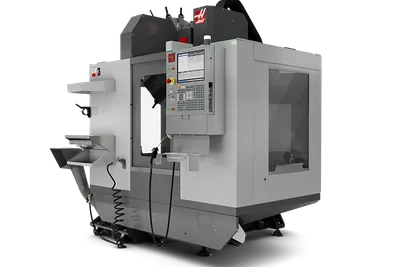
Brother Speedio S700X1
Key Specifications
X Travel
Y Travel
Z Travel
Max Spindle
Spindle Taper
Tool Capacity
How much does the Brother Speedio S700X1 cost?
Estimated price range
Our best estimate for a vertical machining centers (vmc) in this class — not a quote from Brother. Configuration moves it a long way.
Overview
The Brother Speedio S700X1 is a compact BT30 vertical machining center with 700 x 400 x 300 mm (27.6 x 15.7 x 11.8 in) of travel over an 800 x 400 mm (31.5 x 15.7 in) table, a 10,000 rpm spindle and Brother's CNC-C00 control. Brother has discontinued this model, so anyone looking at one now is buying a second-hand machine and should confirm which of the original options it carries.
The spindle option matters most. The base spindle runs to 10,000 rpm, and 16,000 or 27,000 rpm versions were offered, as was a high-torque 10,000 rpm version. Rated output is 10.1 kW for 10 minutes and 6.7 kW continuous. Rigid tapping tops out at 6,000 rpm, or 8,000 rpm on a machine fitted with the 27,000 rpm spindle. A dual-contact spindle and coolant through the spindle were both options, so check the spindle nameplate and the coolant plumbing rather than assuming either is present.
Tools are MAS-BT30 with MAS-P30T-2 pull studs, in a 14 or 21 tool magazine. Each tool may be up to 110 mm (4.3 in) in diameter, 250 mm (9.8 in) long and 3.0 kg (6.6 lb). Brother gives the tool-change times in seconds as 0.8 tool to tool, 1.4 chip to chip and 1.2 cut to cut, and the axes rapid at 50 / 50 / 56 m/min (1,969 / 1,969 / 2,205 ipm). On short-cycle aluminium and steel parts with many holes, those figures shape the cycle more than cutting power does.
The table is rated 250 kg (551 lb), or 300 kg (661 lb) with the option, which rules out heavy fixtures and large rotary setups. The later Speedio S700X2 keeps the same envelope and 2,400 kg (5,291 lb) weight but lists 7.1 kW continuous and a faster tool-to-tool time, 0.7 against 0.8 here (both in seconds). For installation, plan on a 2,050 x 2,220 mm (80.7 x 87.4 in) footprint, 2,497 mm (98.3 in) of height, an AC200V supply and 45 L/min of air at 0.4 to 0.6 MPa.
Full Specifications
| Parameter | Value |
|---|---|
| CNC Control | Brother CNC-C00 |
| X-Axis Travel | 700 mm (27.6 in) |
| Y-Axis Travel | 400 mm (15.7 in) |
| Z-Axis Travel | 300 mm (11.8 in) |
| Spindle Nose to Table | 180 - 480 mm (7.1 - 18.9 in) |
| Table Size | 800 x 400 mm (31.5 x 15.7 in) |
| Max Table Load | 250 kg (551 lb); 300 kg (661 lb) with option |
| Max Spindle Speed | 10,000 rpm (16,000 or 27,000 rpm optional) |
| Tapping Speed Max | 6,000 rpm (8,000 with 27,000 rpm spindle) |
| Spindle Taper | BT30 (7/24 taper No. 30) |
| Dual Contact Spindle | Optional |
| Coolant Through Spindle | Optional |
| Rapid Traverse Rate | 50 / 50 / 56 m/min (1,969 / 1,969 / 2,205 ipm) |
| Max Cutting Feedrate | 30,000 mm/min (1,181 ipm) |
| Tool Shank | MAS-BT30 |
| Pull Stud | MAS-P30T-2 |
| Tool Capacity | 14 / 21 tools |
| Max Tool Length | 250 mm (9.8 in) |
| Max Tool Diameter (full magazine) | 110 mm (4.3 in) |
| Max Tool Weight | 3.0 kg (6.6 lb) per tool |
| Tool Selection | Random shortcut method |
| Tool Change Time | Tool To Tool[sec.]: 0.8 / Chip To Chip[sec.]: 1.4 / Cut To Cut[sec.]: 1.2 |
| Spindle Motor Power | 10.1 kW (10 min) / 6.7 kW continuous |
| Axis Feed Motor | X,Y: 1.0 / Z: 2.0 kW |
| Power Supply | AC200V ±10%, 50/60Hz ±1Hz |
| Power Capacity | 10,000min-1 specifications : 9.5 16,000min-1 specifications(Optional) : 9.5 10,000min-1 high-torque specifications(Optional) : 10.4A 27,000min-1 specifications(Optional) : 9.5 kVA |
| Air Pressure | 0.4 - 0.6 MPa |
| Air Flow | 45 L/min |
| Machine Height | 2,497 mm (98.3 in) |
| Floor Space Required | 2,050 x 2,220 mm (80.7 x 87.4 in) |
| Machine Weight | 2,400 kg (5,291 lb) |
| Positioning Accuracy | 0.006 - 0.020 mm (0.00024 - 0.00079 in) |
| Repeatability | < 0.004 mm (0.00016 in) |
| Front Door | 2 doors |
Specifications sourced from machinetool.global.brother — verified 2026-10-03
Strengths & Limitations
Strengths
- Tool-change times of 0.8 tool to tool, 1.4 chip to chip and 1.2 cut to cut (seconds) keep non-cutting time low on hole-heavy parts
- Rapids of 50 / 50 / 56 m/min (1,969 / 1,969 / 2,205 ipm) with a 30,000 mm/min (1,181 ipm) cutting feedrate
- Spindle offered at 10,000 rpm as standard with 16,000 or 27,000 rpm options, so a used machine can suit small-tool work
- Positioning accuracy of 0.006 - 0.020 mm (0.00024 - 0.00079 in) and repeatability under 0.004 mm (0.00016 in)
- 800 x 400 mm (31.5 x 15.7 in) table on a 2,050 x 2,220 mm (80.7 x 87.4 in) footprint
Limitations
- Discontinued by Brother, so every unit is a used machine whose options must be checked one by one
- Table load is 250 kg (551 lb), or 300 kg (661 lb) with the option
- 300 mm (11.8 in) of Z and a 180 to 480 mm (7.1 to 18.9 in) spindle-nose-to-table range limit tall parts and long tool stacks
- Continuous spindle rating is 6.7 kW, lower than the 7.1 kW listed for the Speedio S700X2
- Tools are limited to 3.0 kg (6.6 lb) each and 110 mm (4.3 in) in diameter
Best For
Frequently Asked Questions
01
No. Brother has discontinued the S700X1. Machines on offer are used, so check which spindle was fitted (10,000 rpm standard, 16,000 or 27,000 rpm optional, or the high-torque 10,000 rpm version), whether the magazine holds 14 or 21 tools, and whether the dual-contact spindle and through-spindle coolant options are present.
02
The Speedio S700X2 has the same 700 x 400 x 300 mm (27.6 x 15.7 x 11.8 in) travels, 800 x 400 mm (31.5 x 15.7 in) table, CNC-C00 control and 2,400 kg (5,291 lb) weight. The Speedio S700X2 also lists 7.1 kW continuous spindle output against 6.7 kW here, and its tool-to-tool time is 0.7 against 0.8 on the S700X1, both in seconds.
03
Rigid tapping runs to 6,000 rpm with the standard spindles and to 8,000 rpm on a machine fitted with the 27,000 rpm spindle. With chip to chip listed at 1.4 (seconds) and 56 m/min (2,205 ipm) on Z, it is set up for parts that are mostly drilled and tapped holes.
04
MAS-BT30 shanks with MAS-P30T-2 pull studs, up to 110 mm (4.3 in) in diameter, 250 mm (9.8 in) long and 3.0 kg (6.6 lb) per tool. The magazine holds 14 or 21 tools and selects them by the random shortcut method.
05
An AC200V supply. The power capacity is 9.5 kVA for the 10,000, 16,000 and 27,000 rpm spindle versions and higher for the high-torque 10,000 rpm version. Air demand is 45 L/min at 0.4 to 0.6 MPa. The machine weighs 2,400 kg (5,291 lb) and stands 2,497 mm (98.3 in) tall.
Videos

Lionapex Machine Tool Solutions

Lionapex Machine Tool Solutions

MTDCNC

Yamazen Inc
Community Discussions
Troubleshooting and problem-solving
Pricing and buying discussion
Pricing and buying discussion
Links to community discussions. Summaries are editorial — visit the original thread for full context.
More from Brother
Other Vertical Machining Centers (VMC)
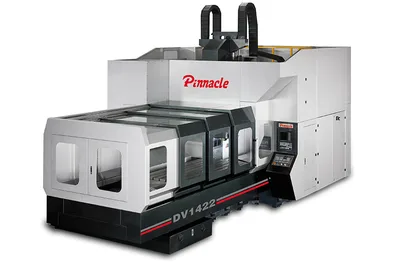
Pinnacle DV1442
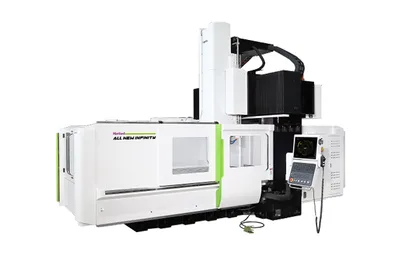
Hartford HSA-216
HNK HPM-50L (50x200)
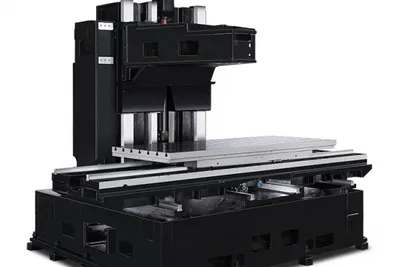
Hurco VMX42i