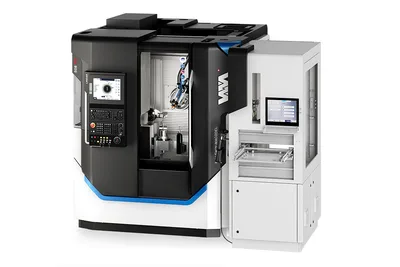
Tsugami TMA8H
Key Specifications
Max Spindle
Tool Capacity
Rapid Traverse
Spindle Power
linear scale
max turning diameter
How much does the Tsugami TMA8H cost?
Estimated price range
Our best estimate for a mill-turn / multi-tasking machine in this class — not a quote from Tsugami. Configuration moves it a long way.
Overview
The Tsugami TMA8H is a B-axis turn-mill center with an 8 in main chuck, a 6 in sub-spindle chuck and a 20,000 rpm (rated 15,000 rpm) tool spindle that swings from -15° to 195°. It turns up to 220 mm (8.66 in) in diameter, takes 65 mm (2.56 in) bar and holds 60 Capto C4 tools.
The B-axis range is the feature to judge it by. A swing of -15° to 195° lets the tool spindle face the main spindle, the sub-spindle and every angle between, so angled holes, compound faces and back-side features can be cut without a special holder. The axis is listed as positioning in 0.001° steps, which covers indexed angled work; ask Tsugami whether simultaneous B-axis contouring is offered if your parts need it.
Linear scales are standard on X, and the TMA8H-YZ version adds them on Y and Z as well. On a turn-mill, scale feedback on X holds diameters as the machine warms up over a long run. Buyers holding tight positions on milled features should price the YZ build.
Main and sub-spindle both run to 5,000 rpm (rated 4,000 rpm). The main spindle is rated 11/15 kW, the sub-spindle and tool spindle 5.5/11 kW each, so the heaviest turning belongs on the main side. Rapids are 30 m/min on X and A, 40 m/min on Z and 24 m/min on Y. The machine weighs 8,500 kg (18,739 lb) and measures 3,600 × 2,126 × 2,250 mm (142 × 83.7 × 88.6 in).
Full Specifications
| Parameter | Value |
|---|---|
| Linear Scale | Standard (X axis; X, Y, Z on TMA8H-YZ) |
| Max Turning Diameter | 220 mm (8.66 in) |
| Bar Capacity | 65 mm (2.56 in) |
| Chuck Size | 8 in |
| Sub Spindle Chuck Size | 6 in |
| Max Spindle Speed | 5,000 rpm (rated 4,000 rpm) |
| Sub Spindle Speed | 5,000 rpm (rated 4,000 rpm) |
| Tool Spindle Speed | 20,000 rpm (rated 15,000 rpm) |
| B Axis Range | -15° to 195° |
| B Axis Index | 0.001° (positioning) |
| Tool Capacity | 60 |
| Tool Shank | Capto C4 |
| Rapid Traverse Rate | 30 m/min (X, A), 40 m/min (Z), 24 m/min (Y) |
| Spindle Motor Power | 11/15 kW |
| Sub Spindle Power | 5.5/11 kW |
| Tool Spindle Power | 5.5/11 kW |
| Floor Space Required | 3,600 × 2,126 × 2,250 mm (142 × 83.7 × 88.6 in) |
| Machine Weight | 8,500 kg (18,739 lb) |
Specifications sourced from tsugami.co.jp — verified 2026-10-03
Strengths & Limitations
Strengths
- Tool spindle swings from -15° to 195° and positions in 0.001° steps
- Linear scales standard on X, and on X, Y and Z in the TMA8H-YZ version
- 20,000 rpm (rated 15,000 rpm) tool spindle for small-tool milling
- Sub-spindle matches the main spindle at 5,000 rpm (rated 4,000 rpm)
- 60-tool magazine using Capto C4 shanks
Limitations
- The sub-spindle chuck is 6 in, against 8 in on the main spindle, which limits second-operation diameters
- Sub-spindle rated 5.5/11 kW, against 11/15 kW on the main, so back-side roughing is lighter
- Turning diameter tops out at 220 mm (8.66 in)
- B axis is listed for positioning; simultaneous contouring is not stated
Best For
Frequently Asked Questions
01
It is the version of the TMA8H with linear scales on X, Y and Z. The standard TMA8H has a linear scale on X only. Scales on all three axes help hold milled feature positions as the machine warms up, so the YZ build suits parts with tight positional tolerances on milled features.
02
From -15° to 195°, positioned in 0.001° steps. That range covers work on the main spindle, on the sub-spindle and at any angle between, which removes the need for many fixed-angle holders on angled holes.
03
The main spindle is rated 11/15 kW and runs to 5,000 rpm (rated 4,000 rpm). The sub-spindle has the same speed and a 5.5/11 kW rating, and the tool spindle is also rated 5.5/11 kW, running to 20,000 rpm (rated 15,000 rpm).
04
Their listed figures match: 220 mm (8.66 in) turning diameter, 65 mm (2.56 in) bar, an 8 in chuck, 5,000 rpm, 60 tools, 11/15 kW and 8,500 kg (18,739 lb). The TMA8H table adds the linear scale row. Ask Tsugami what else separates the H and J builds for your parts.
More from Tsugami

Other Mill-Turn / Multi-Tasking Machines
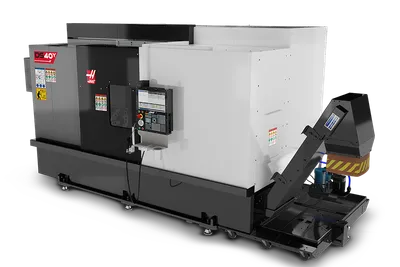
Haas DS-40Y
Mazak INTEGREX i-200S
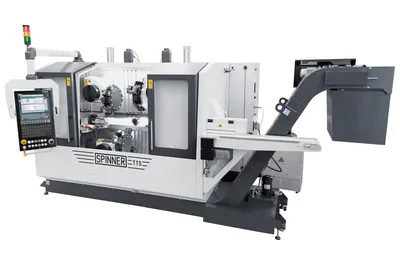
Spinner TTS65
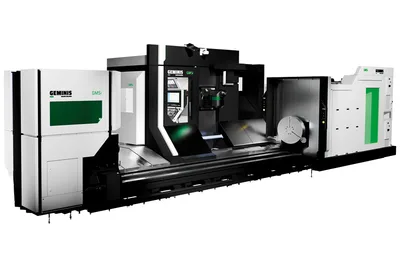
Geminis GM5i
Mazak INTEGREX e-500H