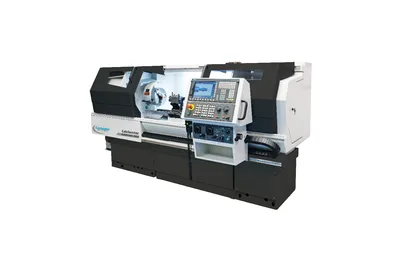
Takamaz XD-10I
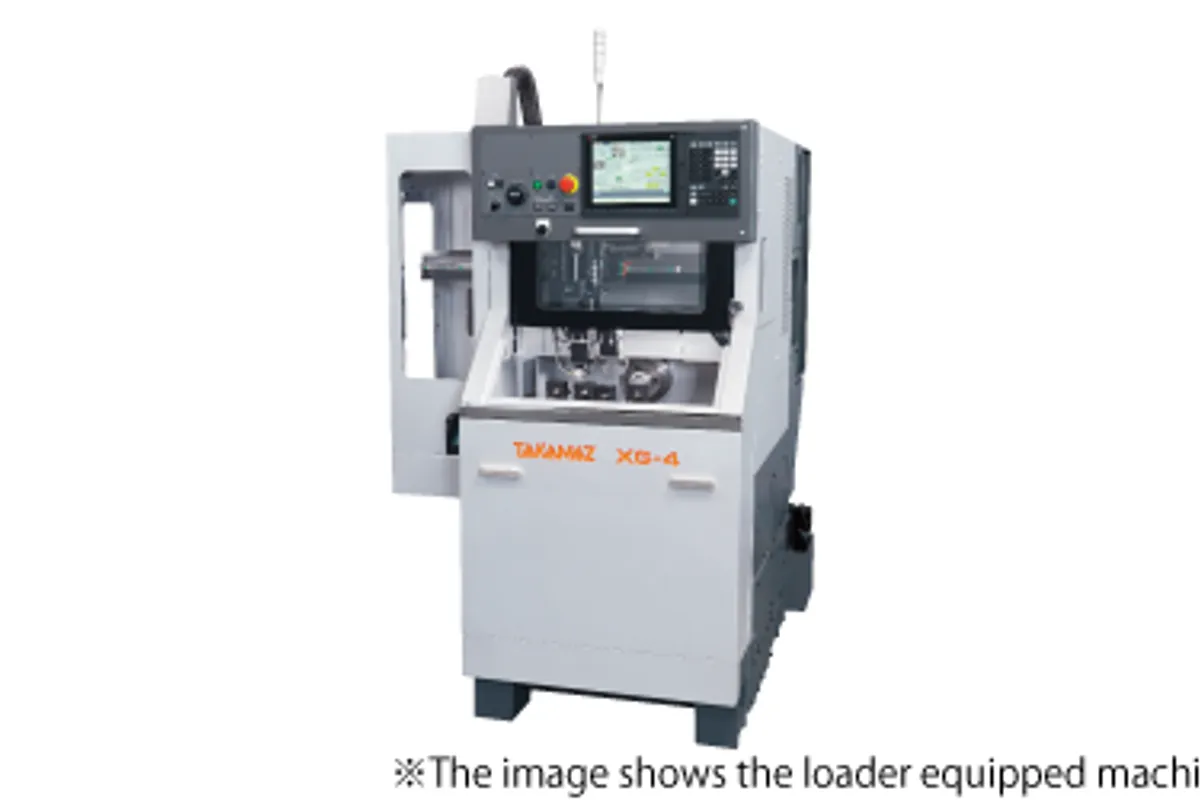
Key Specifications
Rapid Traverse
Spindle Power
Max Turn Length
max turning diameter
main spindle speed
sub spindle speed
How much does the Takamaz XD-10I cost?
Estimated price range
Our best estimate for a cnc lathes / turning center in this class — not a quote from Takamaz. Configuration moves it a long way.
Overview
The Takamaz XD-10I is listed as a twin-spindle, twin-turret production lathe with an integrated gantry loader. The listed figures give two spindles at 5,500 RPM, each rated 11 kW (15 HP) and fitted with a 6 inch hydraulic chuck, two turrets of 8 stations each, and a work envelope of 100 mm (3.94 in) in diameter by 80 mm (3.15 in) in length per spindle. This table comes from a third-party listing rather than from Takamaz, so confirm every figure with the maker before relying on it.
The layout is what sets the machine apart. Each spindle has its own turret with 120 mm (4.7 in) of X and 130 mm (5.1 in) of Z, so the machine behaves like two small chuckers sharing one frame and one loader. The listing calls the gantry loader integrated and standard, which makes the XD-10I a machine for unattended runs of small parts rather than for hand loading.
The envelope is small and the figures are matched to it. An 80 mm (3.15 in) turning length per spindle and 100 mm (3.94 in) of diameter point to short parts such as rings, caps and small flanges, and 20 m/min (787 IPM) of rapid traverse keeps the moves between cuts short.
Before installation, plan for the size of the machine. The listing gives a weight of 5,200 kg (11,464 lb) and a footprint of approximately 3,000 x 1,700 mm (118 x 67 in), large for parts this small because the loader and both spindle stations are inside it.
Full Specifications
| Parameter | Value |
|---|---|
| Max Turning Diameter | 100 mm (3.94 in) |
| Max Turning Length | 80 mm (3.15 in) per spindle |
| Main Spindle Speed | 5,500 RPM |
| Sub Spindle Speed | 5,500 RPM |
| Spindle Motor Power | 11 kW (15 HP) each spindle |
| Chuck Size | 6 inch hydraulic (both spindles) |
| Turret Stations | 8 per turret (2 turrets, 16 total) |
| X Axis Travel | 120 mm (4.7 in) per turret |
| Z Axis Travel | 130 mm (5.1 in) per turret |
| Rapid Traverse Rate | 20 m/min (787 IPM) |
| Gantry Loader | Integrated (standard) |
| CNC Control | Fanuc 0i-TF Plus |
| Machine Weight | 5,200 kg (11,464 lb) |
| Floor Space Required | Approx. 3,000 x 1,700 mm (118 x 67 in) |
Specifications sourced from machinetools.com — verified 2026-03-28
Strengths & Limitations
Strengths
- Two spindles, each listed at 5,500 RPM and 11 kW (15 HP), with a turret of 8 stations for each
- Gantry loader listed as integrated and standard
- 6 inch hydraulic chuck on both spindles
- Rapid traverse listed at 20 m/min (787 IPM)
Limitations
- The table comes from a third-party listing and has not been checked against Takamaz
- Work envelope of 100 mm (3.94 in) diameter and 80 mm (3.15 in) length per spindle limits it to short, small parts
- Listed weight of 5,200 kg (11,464 lb) and approximately 3,000 x 1,700 mm (118 x 67 in) of floor space
- Per-turret strokes of only 120 mm (4.7 in) on X and 130 mm (5.1 in) on Z
Best For
Frequently Asked Questions
01
No. The table on this page comes from a third-party listing and has not been checked against Takamaz's own documentation. Use the listed figures to shortlist the machine, and ask Takamaz to confirm the envelope, spindle and loader data for your parts.
02
The listing shows two spindles, a main and a second spindle, each at 5,500 RPM with 11 kW (15 HP) and a 6 inch hydraulic chuck, and two turrets with 8 stations each. Each turret is listed with 120 mm (4.7 in) of X and 130 mm (5.1 in) of Z.
03
The listed envelope is 100 mm (3.94 in) in turning diameter and 80 mm (3.15 in) in turning length per spindle. That limits the machine to short chucked parts that fit a 6 inch hydraulic chuck.
04
The listing gives a machine weight of 5,200 kg (11,464 lb) and a footprint of approximately 3,000 x 1,700 mm (118 x 67 in), with the gantry loader integrated. Check the floor loading and access for rigging before delivery.
Videos
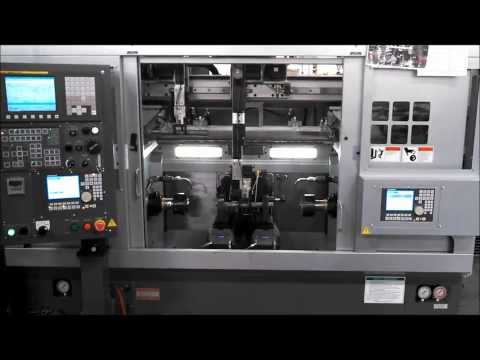
Total Manufacturing Systems

Yuasa International

CNC Exchange
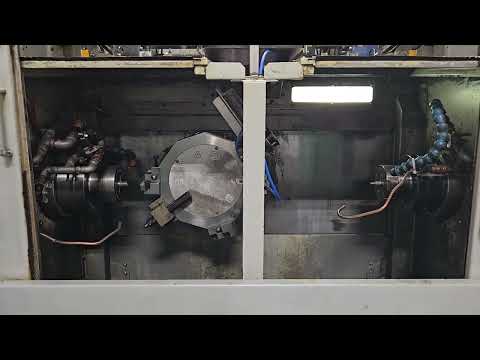
Winternitz Industrial Auctioneers & Appraisers
Comparisons
More from Takamaz






Other CNC Lathes / Turning Centers
KRC Velocity VTC-12