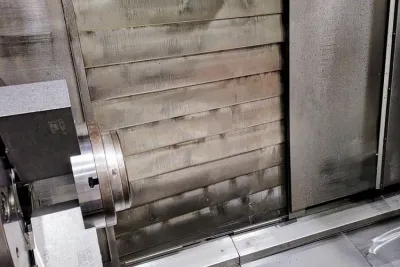
PAMA Speedturn
Key Specifications
Tool Capacity
Rapid Traverse
machine type
max turning diameter
max workpiece length
max workpiece weight
Overview
The PAMA Speedturn is a large-format CNC turn-mill center designed for complete machining of large rotational components in a single setup — integrating the turning capability of a heavy-duty floor lathe with the boring and milling capability of a horizontal boring mill. This complete-machining philosophy targets large aerospace, power generation, oil and gas, and marine components where moving a partially machined workpiece from a lathe to a boring mill introduces repositioning errors that compromise the final part geometry.
The Speedturn combines a large-diameter, high-torque turning spindle with X, Y, Z, W, and B milling axes driven by PAMA's horizontal boring mill architecture. The turning spindle accepts workpieces up to 2,000 mm swing diameter with up to 5,000 mm between centers (configuration-dependent). The 150–200 mm boring spindle provides full horizontal boring and milling capability on the same machine, while the B-axis live tool turret handles turning, threading, grooving, and facing operations.
Typical Speedturn workpieces include: turbine rotor shafts requiring turning of journals plus milling of blade root slots; oil and gas compressor rotors requiring turning of journals plus boring of coupling faces; large aerospace structural components combining turned outer diameters with precision bored holes; and marine propulsion shafts requiring integral flange machining. The advantage of the Speedturn is that all of these operations occur in a single setup on a single machine, eliminating the dimensional accumulation of multi-machine setups.
The Siemens 840D sl control manages the complex multi-axis coordination between turning and milling operations, including synchronized turning (B-axis milling head synchronized to main spindle rotation) for non-circular features and off-center bores. The Speedturn is a configured-to-order machine; PAMA's engineering team works with the customer to define the machine configuration appropriate to their largest and most complex workpieces.
Full Specifications
| Parameter | Value |
|---|---|
| Machine Type | Large-format CNC turn-mill center (mill-turn) |
| Max Turning Diameter | Up to 2,000 mm (78.7 in) swing, configuration-dependent |
| Max Workpiece Length | Up to 5,000 mm (197 in) between centers, configurable |
| Max Workpiece Weight | Up to 30,000 kg (66,138 lb) between centers |
| Turning Spindle Power | 75–150 kW (101–201 hp) continuous, configuration-dependent |
| Turning Spindle Torque | Up to 60,000 Nm (44,254 ft-lb) peak |
| Turning Spindle Speed | Up to 500 RPM (heavy duty) / 1,000 RPM (standard) |
| Boring Spindle Diameter | 110–150 mm, configuration-dependent |
| Boring Spindle Speed | 2,500–3,500 RPM |
| Boring Spindle Power | 45–75 kW (60–101 hp) continuous |
| Milling Travel X | 3,000–6,000 mm (118–236 in) |
| Milling Travel Y | 2,000–4,000 mm (79–157 in) |
| Milling Travel Z | 1,000–2,000 mm (39–79 in) |
| Milling Travel W | 750–900 mm (29.5–35.4 in) quill |
| B Axis Milling Head | ±180° or full continuous, configuration-dependent |
| Rapid Traverse Rate | 12–15 m/min (472–590 ipm) milling axes |
| Positioning Accuracy Turning | ±0.005 mm (±0.0002 in) radial; ±0.005 mm (±0.0002 in) axial |
| Positioning Accuracy Milling | ±0.005 mm (±0.0002 in) full stroke |
| Facing Head | Optional CNC facing head, U-axis |
| Tool Capacity | 80–160 tools (configuration-dependent) |
| CNC Control | Siemens 840D sl |
| Machine Weight | Approximately 200,000–500,000 kg depending on configuration |
Specifications compiled from manufacturer literature and industry references. Not independently verified against a published spec sheet — confirm with the manufacturer or an authorised dealer before making a purchasing decision.
Strengths & Limitations
Strengths
- Complete machining of large rotational parts in a single setup eliminates repositioning errors that accumulate across multi-machine workflows — critical for journal-to-bore concentricity on rotor shafts
- Integrating turning and boring/milling in one machine reduces total throughput time for large components from weeks (multi-machine routing) to days
- 75–150 kW turning spindle with up to 60,000 Nm torque handles the heaviest roughing cuts on large steel and titanium forgings
- 110–150 mm boring spindle provides full horizontal boring and milling capability for complex features — flanges, bores, keyways, and cross-holes — in the same setup as turning
- Siemens 840D sl with synchronized turning capability enables machining of non-circular features (polygonal profiles, off-center bores) using milling head synchronized to spindle rotation
- PAMA's engineering team provides full application engineering support for defining the configuration, tooling strategy, and programming approach for the customer's specific workpieces
Limitations
- Price of $2–5M and extremely specialized capability makes the Speedturn appropriate only for manufacturers with a consistent workload of large-format rotor and shaft components
- Configured-to-order nature means there is no standard machine to evaluate — specification requires detailed workpiece analysis and close collaboration with PAMA's engineers
- Installation projects of 24–36 months from order to acceptance are typical — the Speedturn is a long-term capital investment, not a near-term capacity solution
- Machine weight of 200,000–500,000 kg demands purpose-engineered foundations and building structures — facility costs can rival machine cost
- Highly specialized operators and programmers are required — the Speedturn is not a machine where standard machining center skills transfer without significant training
Best For
Frequently Asked Questions
01
When a large rotor shaft is machined on a lathe first and then moved to a boring mill for cross-bores and face features, the repositioning introduces geometric errors — typically 0.01–0.05 mm or more — from clamping variation, fixture deflection, and thermal changes during the part transfer. These errors directly affect journal-to-bore concentricity, flange face perpendicularity to the shaft axis, and bore pattern accuracy relative to the turned features. The Speedturn eliminates these repositioning errors by completing all operations in a single setup, which is often the only way to achieve the concentricity tolerances required on high-speed rotating machinery.
02
Synchronized turning (also called turn-milling or contouring turning) uses the milling head's rotation synchronized electronically to the main spindle's rotation to machine features that are not rotationally symmetric — such as polygon profiles, eccentric bores, and cam shapes — on the outside diameter of a rotating workpiece. The Siemens 840D sl's electronic gearing function coordinates the milling spindle and main spindle precisely so that, from the workpiece's perspective, the milling cutter traces a non-circular path. This replaces external broaching or grinding operations for polygon features.
03
PAMA begins with a detailed workpiece analysis — the customer provides drawings of the 3–5 largest, most complex parts expected to run on the machine. PAMA's application engineers determine: minimum and maximum turning diameter (sets swing), maximum length between centers, maximum workpiece weight (sets spindle torque and support system), required boring spindle diameter (sets milling capability), and axis travels needed to reach all features. The resulting configuration specification is reviewed jointly before machine design begins. Budget 4–8 weeks for this engineering phase.
04
The primary Speedturn buyers are: power generation OEMs (Siemens Energy, GE Vernova, Ansaldo) producing turbine shafts; oil and gas equipment builders (Baker Hughes, TechnipFMC, NOV) producing large compressor and valve components; marine engineering companies (MAN Energy Solutions, Rolls-Royce Marine) producing propulsion shafts; and large contract manufacturers serving these sectors in Italy, Germany, South Korea, Japan, and the United States.
Community Discussions
Community discussion — PAMA Al127 boring mill - Practical Machinist
Owner experience and review — PAMA (Italian) Horizontal Boring Mill, any experience?
Electrical and installation requirements — M3/M4 during speed/phase sync - Practical Machinist
Community discussion — Turning aluminum-speeds, feeds, and depth of cut ...
Community discussion — Okuma lathe parameters - CNCzone
Community discussion — MILL TURN PART TRANSFER - cnczone.com
Community discussion — Spindle Speed Variation Control - CNCzone
Options and configuration advice — M-Code List for PUMA Lathe - CNCzone
Community discussion — CNC Polygonal turning? : r/Machinists - Reddit
Community discussion — What feed/speed would you recommend for turning this 316 with ...
Community discussion — For all of you CNC guys out there : r/Machinists - Reddit
Community discussion — Surface finish help : r/Machinists - Reddit
Links to community discussions. Summaries are editorial — visit the original thread for full context.
Related Machines
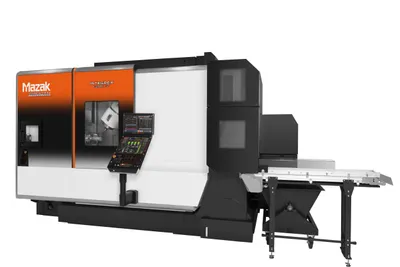
Mazak Integrex i-200
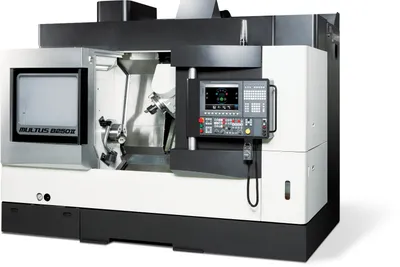
Okuma Multus B250II
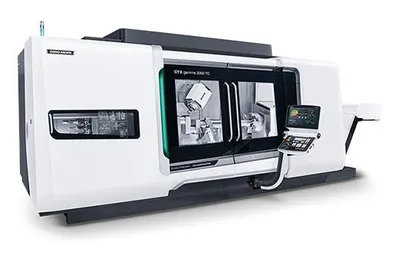
DMG Mori CTX gamma 2000 TC
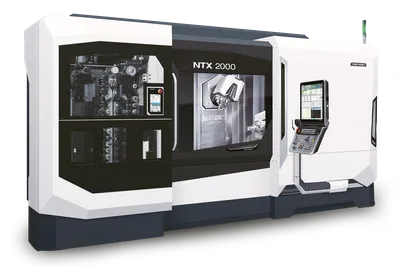
DMG Mori NTX 2000
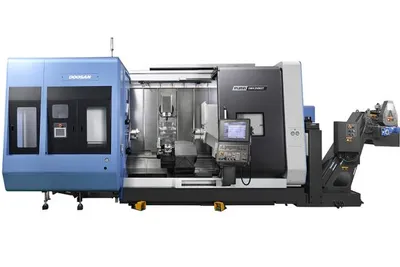
DN Solutions SMX 3100ST