Okuma MULTUS B750
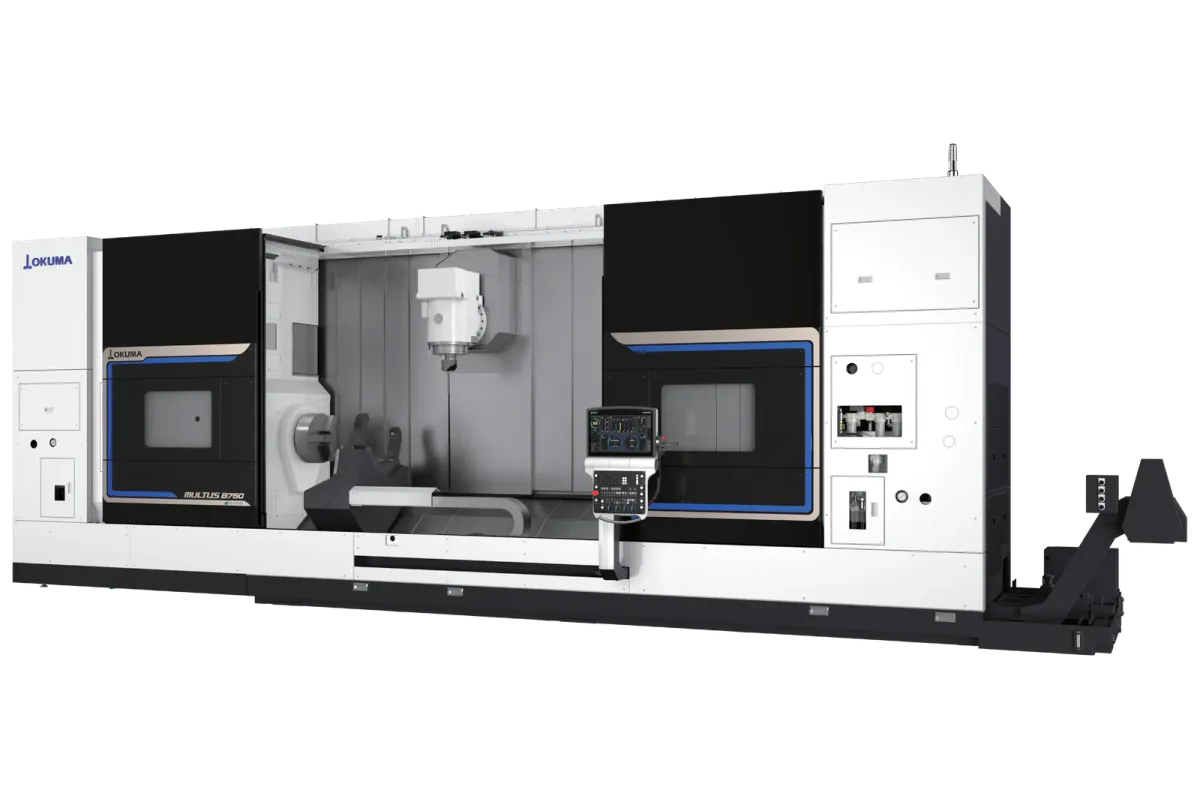
Image: okuma.com, Okuma
Key Specifications
Tool Capacity
Rapid Traverse
Spindle Power
spindle speed
spindle nose
max turning diameter
How much does the Okuma MULTUS B750 cost?
Estimated price range
Our best estimate for a mill-turn / multi-tasking machine in this class — not a quote from Okuma. Configuration moves it a long way.
Overview
The Okuma MULTUS B750 is a multitasking lathe for large-diameter parts: 1,050 mm (41.34 in) of maximum turning diameter on an A2-11 spindle nose, with a slow-running 11-2,000 rpm spindle rated 37/30 kW (50/40 hp).
The speed range is the figure to read first. The MULTUS B550 has the same nose, the same 37/30 kW (50/40 hp) and the same 40 tools, but its spindle runs 30–3,000 rpm and its turning diameter ends at 830 mm (32.68 in). The B750 gives up the top third of that range and gains a lower minimum. At a diameter of 1,050 mm even 2,000 rpm is far more surface speed than turning calls for, so the lower ceiling takes nothing away on big work, while the 11 rpm minimum lets large faces and interrupted cuts be taken slowly.
Rapid traverse is 40/40/40 m/min (1,575/1,575/1,575 ipm) and tool capacity is 40 tools. What the page leaves out matters on a machine this size: there is no turning length, machine weight or Y travel among Okuma's headline rows, so the length and mass of the part have to be checked against the brochure.
Full Specifications
| Parameter | Value |
|---|---|
| Spindle Speed | 11-2,000 rpm |
| Spindle Nose | A2-11 |
| Rapid Traverse Rate | 40/40/40 m/min (1,575/1,575/1,575 ipm) |
| Tool Capacity | 40 tools |
| Max Turning Diameter | 1,050 mm (41.34 in) |
| Spindle Motor Power | 37/30 kW (50/40 hp) |
Specifications sourced from okuma.com — verified 2026-10-03
Strengths & Limitations
Strengths
- 1,050 mm (41.34 in) maximum turning diameter, against 830 mm (32.68 in) on the MULTUS B550
- Spindle speed reaches down to 11 rpm for large-diameter facing and interrupted cuts
- 37/30 kW (50/40 hp) of spindle power on an A2-11 nose
- 40-tool capacity and 40 m/min (1,575 ipm) rapid traverse on each listed axis
Limitations
- Top spindle speed is 2,000 rpm, where the MULTUS B550 runs to 3,000 rpm
- Spindle power is the same 37/30 kW (50/40 hp) as the MULTUS B550, so the extra diameter comes without a larger motor
- Okuma's headline rows omit turning length, machine weight and Y travel
Best For
Frequently Asked Questions
01
The MULTUS B750 turns up to 1,050 mm (41.34 in) and its spindle runs 11-2,000 rpm. The MULTUS B550 turns up to 830 mm (32.68 in) and runs 30–3,000 rpm. Nose (A2-11), spindle power (37/30 kW (50/40 hp)) and tool capacity (40 tools) are the same.
02
For the diameters it is built for, yes. Surface speed rises with diameter, so a part near the 1,050 mm (41.34 in) limit needs only a small fraction of 2,000 rpm. The limit bites on small-diameter features of a large part, which will be cut below their ideal speed. The low end of the range, 11 rpm, is there for large faces.
03
Rapid traverse is listed as 40/40/40 m/min (1,575/1,575/1,575 ipm) and tool capacity as 40 tools. Okuma's page shows no bracketed options for either on this model.
Videos

Okuma America Corporation

aks okuma
Dale Quint
Comparisons
More from Okuma
Other Mill-Turn / Multi-Tasking Machines
INDEX C400
Chiron 831 MT Twin
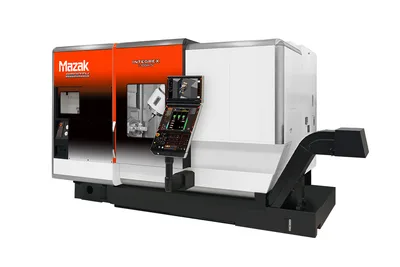
Mazak INTEGREX i-200H S
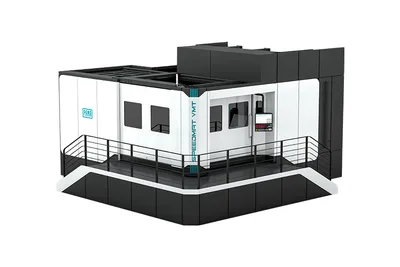
PAMA Speedmat VMT
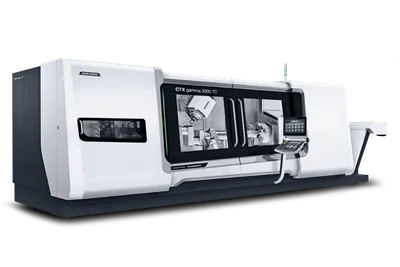
DMG Mori CTX gamma 3000 TC