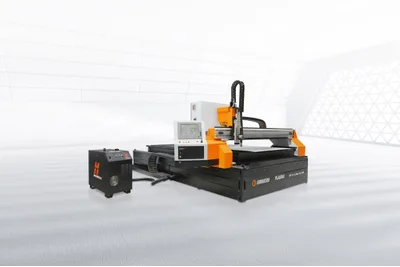
Lincoln Electric Spirit III
Key Specifications
cutting current
cutting thickness mild steel
cutting thickness stainless
cutting thickness aluminum
plasma gas
shield gas
How much does the Lincoln Electric Spirit III cost?
Estimated price range
Our best estimate for a cnc plasma cutting in this class — not a quote from Lincoln Electric. Configuration moves it a long way.
Overview
The Lincoln Electric Spirit III is listed as a mechanized plasma system whose cutting current depends on configuration, reaching up to 400 A with the top-tier power source, and whose mild steel production capacity is up to 80 mm on that basis. Lincoln Electric's current lineup has no model under this name, so read the listed figures as indicative and establish which power source a particular system actually has.
What stands out is the gas range. Plasma gas can be O2, N2, Argon-Hydrogen (H35) or air, and shield gas can be air, O2, N2 or H2O, in each case depending on the power source. In practice that points to oxygen for mild steel, with nitrogen or the argon-hydrogen mix and a water shield for stainless steel and aluminium, where an air cut would leave a heavily oxidised edge. The capacities follow: up to 60 mm in stainless steel and up to 50 mm in aluminium.
Every one of those numbers is tied to the power source, and the input power row says only that it is configuration dependent. A system built around a smaller source will not reach 80 mm, so a buyer comparing two used systems under this name has to compare amperage first. Supply is listed as 3-phase, 400 V / 480 V (50/60 Hz).
Motion is covered by a single row: up to 15,000 mm/min, marked as the rapid rate, with process cutting speed left to material and thickness. Kerf is listed at 1.5–4.0 mm depending on process and power source. The wide end of that range goes with high-current cuts in thick plate, and it sets a floor on hole diameter and slot width as well as on the spacing a nest needs.
Full Specifications
| Parameter | Value |
|---|---|
| Cutting Current | Configuration dependent (up to 400 A with top-tier power source) |
| Cutting Thickness Mild Steel | Up to 80 mm (production, power-source dependent) |
| Cutting Thickness Stainless | Up to 60 mm |
| Cutting Thickness Aluminum | Up to 50 mm |
| Plasma Gas | O2, N2, Argon-Hydrogen (H35), Air (power source dependent) |
| Shield Gas | Air, O2, N2, H2O (power source dependent) |
| Power Supply Voltage | 3-phase, 400 V / 480 V (50/60 Hz) |
| Power Supply Power | Configuration dependent |
| Cutting Speed | Up to 15,000 mm/min (rapid); process cutting speed material/thickness dependent |
| Kerf Width | 1.5–4.0 mm (process and power source dependent) |
Specifications compiled from manufacturer literature and industry references. Not independently verified against a published spec sheet — confirm with the manufacturer or an authorised dealer before making a purchasing decision.
Strengths & Limitations
Strengths
- Up to 400 A with the top-tier power source, with mild steel production cutting listed up to 80 mm
- Plasma gases listed as O2, N2, Argon-Hydrogen (H35) and air, so the process can be matched to the material
- H2O appears among the listed shield options, alongside air, O2 and N2
- Stainless steel listed up to 60 mm and aluminium up to 50 mm
- Rapid rate listed at up to 15,000 mm/min
Limitations
- Current, capacity and gas options are all power-source dependent, so the headline 400 A and 80 mm do not apply to every configuration
- Kerf runs from 1.5 mm to 4.0 mm, which limits small holes and narrow slots on thick plate
- Input power is listed only as configuration dependent, so the electrical service cannot be sized from the table
- Runs on a 3-phase 400 V / 480 V supply only
Best For
Frequently Asked Questions
01
With the top-tier power source, the listed figures give up to 80 mm in mild steel for production cutting, up to 60 mm in stainless steel and up to 50 mm in aluminium. The mild steel figure is marked as power-source dependent, so a lower-amperage configuration will cut less.
02
Plasma gas is listed as O2, N2, Argon-Hydrogen (H35) or air. Shield gas is listed as air, O2, N2 or H2O. Both lists are marked as power-source dependent, so check which gas console and source the system has before planning stainless or aluminium work around a particular process.
03
It depends on configuration. The listed figure is up to 400 A with the top-tier power source. No amperage is given for smaller sources and no input power figure at all, so the nameplate of the installed power source is the reference for both capacity and electrical service.
04
The listed figure is up to 15,000 mm/min, identified as the rapid rate. Process cutting speed is not given as a number because it depends on material and thickness. Use the cut charts for the installed power source to estimate cycle times.
More from Lincoln Electric
Lincoln Electric Tomahawk 2500
Lincoln Electric Precision Plasma 3000
Lincoln Electric Tomahawk 1538
Lincoln Electric QuickTech CNC Plasma
Lincoln Electric Torchmate 4400 CNC Plasma Table
Lincoln Electric Spirit II HD
Other CNC Plasma Cutting
Thermal Dynamics Ultra-Cut 200 XT
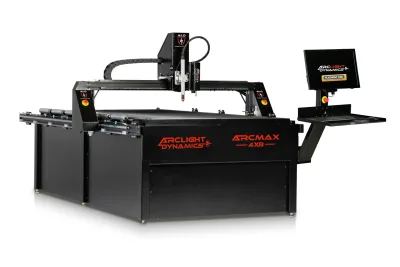
Arclight Dynamics Arc Max Elite 4x8
Hypertherm HPR400XD Plasma Cutting System
Machitech Pipe Cut / Pipe Cut XL
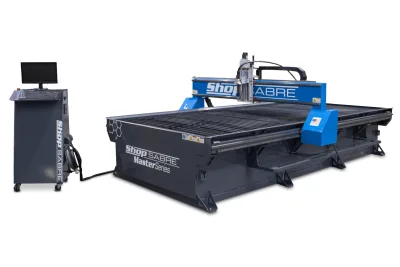
ShopSabre ShopMaster Pro 10