Industrial CNC Machine Directory

Esprit Automation Rotomax

$150,000 - $450,000 Updated 2026-03-17
01

Key Specifications

processing sections

H-beam, I-beam, channel, angle, square and rectangular tube

beam height max

600 mm (23.6 in) depending on model

beam length max

Up to 18,000 mm (60 ft)

plasma source

Hypertherm XPR or compatible 130-300A

cutting thickness

Up to 50 mm (2 in) flange thickness

rotation axis

360 degrees torch rotation around section

02

Overview

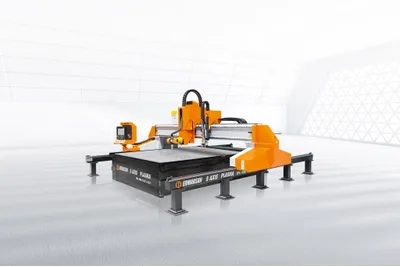
The Esprit Automation Rotomax is a CNC rotary plasma cutting system from Esprit Automation Ltd., a UK-based specialist in CNC plasma and oxy-fuel cutting machines for structural steel processing. Esprit Automation focuses on heavy structural steel cutting including H-beams, angles, channels, and plate, serving steel service centers and structural fabrication shops.

The Rotomax is designed specifically for rotary cutting of structural sections - cutting H-beams, I-beams, channels, and angles by rotating the plasma torch around the cross-section profile to make cope cuts, seat cuts, and connection-plate cutouts. Structural steel fabricators require these complex cuts for steel frame construction, where beam connections require precise coped ends, bolt-hole plates, and angle cuts that flat-table plasma systems cannot efficiently produce.

The Rotomax uses a rotating torch carriage that orbits around the structural member cross-section while advancing along the beam length. The CNC system programs all required cuts from beam connection drawings, automatically positioning for each cope, angle, and cutout in sequence. Processing a single H-beam connection may require 8-15 individual plasma cuts in multiple planes.

The Rotomax competes with the Ficep Gemini CNC drill/saw/coping line, the Peddinghaus beam drill lines, and the Voortman CNC beam processing systems in the structural steel CNC processing market. Esprit differentiators are the specialized rotary plasma approach for cope cutting without the cost of a full drill/saw/cope line, and the UK engineering focus on mid-range structural steel shops. Pricing typically runs $150,000-$450,000.

03

Full Specifications

Parameter Value
Processing Sections H-beam, I-beam, channel, angle, square and rectangular tube
Beam Height Max 600 mm (23.6 in) depending on model
Beam Length Max Up to 18,000 mm (60 ft)
Plasma Source Hypertherm XPR or compatible 130-300A
Cutting Thickness Up to 50 mm (2 in) flange thickness
Rotation Axis 360 degrees torch rotation around section
Cutting Operations Cope cuts, seat cuts, connection plate cutouts, angle cuts, bolt holes (plasma piercing)
CNC Control Esprit CNC with DXF/DSTV import
Feed Rate Up to 4,000 mm/min
Machine Weight 8,000 kg (17,637 lb)
Electrical 400 VAC 3-phase 50 Hz
04

Strengths & Limitations

Strengths

  • Rotary plasma approach handles all faces of structural sections (web, flanges, both sides) in a single setup without repositioning
  • DSTV (Deutsches Stahlbau-Verband) import directly from structural steel detailing software (Tekla, SDS/2, Advance Steel) eliminates manual programming
  • Significantly lower capital cost than full CNC drill/saw/cope lines for shops that primarily need plasma cutting rather than drilling capability
  • Single operator can process full connection details on structural members without manual repositioning between cuts
  • Hypertherm XPR plasma source option provides highest precision plasma cutting for structural connection details

Limitations

  • Plasma cutting only - bolt holes require plasma piercing (less precise than drill/tap); shops requiring drilled and tapped holes need a drill unit or separate drilling operation
  • Esprit Automation is a UK specialist with limited North American service presence - service response for US customers may require remote support or specialist travel
  • Plasma cutting of thick flanges (40-50 mm) produces larger heat-affected zones than saw cutting - may require post-cut grinding in some applications
05

Best For

Structural steel fabricators processing H-beams for commercial buildings, industrial frames, and mezzanine structures requiring cope cuts and connection details Steel service centers providing value-added cut-to-connection on structural sections without investing in a full drill/saw/cope line Mid-size fabrication shops where cope cutting is a bottleneck and plasma coping is preferred over manual hand-cutting and grinding Bridge fabricators requiring precise beam-to-beam connection geometry on H-sections for gusset plate connections
06

Frequently Asked Questions

01 What is a cope cut and why does it require rotary plasma?

A cope cut (or coped connection) removes a portion of the beam flange and web at the end of a beam to allow it to connect to the web of a supporting beam at the same elevation. For example, a secondary beam connecting to a primary beam of the same depth requires the secondary beam flange corners to be removed (coped) to clear the primary beam flange. The cope geometry removes material from both the flange face and the web side of the beam - requiring cuts on the flange top and bottom, the web face, and potentially the flange underside. On a flat-table plasma system, a structural section cannot be processed without complex fixturing and repositioning for each face. The Rotomax rotary torch orbits around the entire cross-section, cutting all faces in sequence without manual beam repositioning.

02 What is DSTV and how does it import to the Rotomax?

DSTV (Deutsches Stahlbau-Verband) is the German/European standard file format for structural steel component data exchange. DSTV files contain the complete machining information for a structural steel component: section profile, length, all drilling patterns (diameter, depth, tolerance), all cutting operations (cope details, angle cuts, notches), and material identification. Structural steel detailing software (Tekla Structures, SDS/2, Advance Steel, SCIA Engineer) exports DSTV files for each beam in a steel structure. The Rotomax CNC imports the DSTV file and automatically generates the plasma cutting program for all cope cuts and plasma operations on that beam. This eliminates manual NC programming - the operator verifies the imported program and runs production. DSTV import is the standard CNC structural steel workflow in European fabrication and is increasingly adopted in North America.

03 Can the Rotomax cut bolt holes in structural steel?

Yes, by plasma piercing - the plasma torch positions at the hole center location and pierces through the flange or web material, leaving a plasma-cut circular hole. For standard bolt holes (M20, M22, M24, M27) in structural steel: plasma piercing provides the hole in one step. Accuracy of plasma-pierced holes: typically +/-1.5 to 3 mm diameter from nominal, with a slightly tapered edge profile. For connections requiring Class A slip-critical bolt holes (tighter tolerance) or countersunk holes, plasma piercing requires reaming or sub-punching to clean up the hole edge. For shops where drilled bolt holes are required by specification, the Rotomax plasma piercing does not replace a drill - a drill/tap unit or separate drilling operation is required.

04 How does the Rotomax compare to a Ficep Gemini CNC line?

Esprit Rotomax vs Ficep Gemini: The Ficep Gemini is a complete structural steel processing line combining a multi-spindle drill head, saw, and coping unit on one automated line. The Gemini drills (Class A precision holes), saws, and copes H-beams in a single automated pass. Capital cost: Ficep Gemini $800,000-$2,000,000; Esprit Rotomax $150,000-$450,000. The Ficep is the appropriate choice for high-volume structural fabricators with full beam processing requirements (drill + saw + cope all in sequence). The Rotomax is appropriate for shops primarily needing cope cutting capability at lower capital cost, where drilling is handled separately. For shops where drilling is not required or is a small fraction of work, the Rotomax provides the cope cutting capability at a fraction of full-line cost.

05 What plasma source is recommended for the Rotomax?

The Rotomax is compatible with major plasma sources. Most commonly specified: Hypertherm XPR130 or XPR170 for precision structural cutting - the XPR provides the highest cut quality and squareness on thick flanges (40-50 mm). For lighter structural work (flanges to 25 mm), the Hypertherm Powermax 105 or 125 provides adequate quality at lower capital cost. ESAB and Lincoln Electric sources are also compatible with appropriate machine interface. Selection criteria: flange thickness of your heaviest structural section is the primary driver - for 40 mm+ flanges, a 130A+ source with good duty cycle (XPR) is appropriate; for predominantly lighter sections, a 65-105A source is adequate and more economical.

07

Videos

Outrunner Brushless stator winding machine for drone aircraft model motors  Wind Automation

Outrunner Brushless stator winding machine for drone aircraft model motors Wind Automation

Coils Winding Equipment

08

Community Discussions

09

Related Machines