Industrial CNC Machine Directory

EMAG VSC 400

$350,000 - $600,000 Updated 2026-03-15
01

Key Specifications

Spindle Power

50 kW (67 hp)

Max Workpiece ⌀

400 mm (15.7 in)

max workpiece length

250 mm (9.8 in)

chuck diameter

500 mm (19.7 in)

spindle speed

3,000 RPM

spindle torque

800 Nm (590 ft-lb)

02

Overview

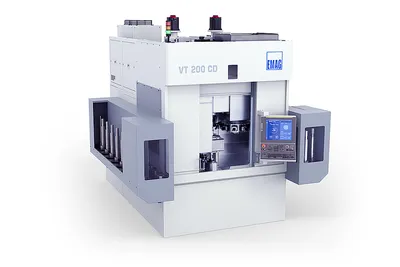
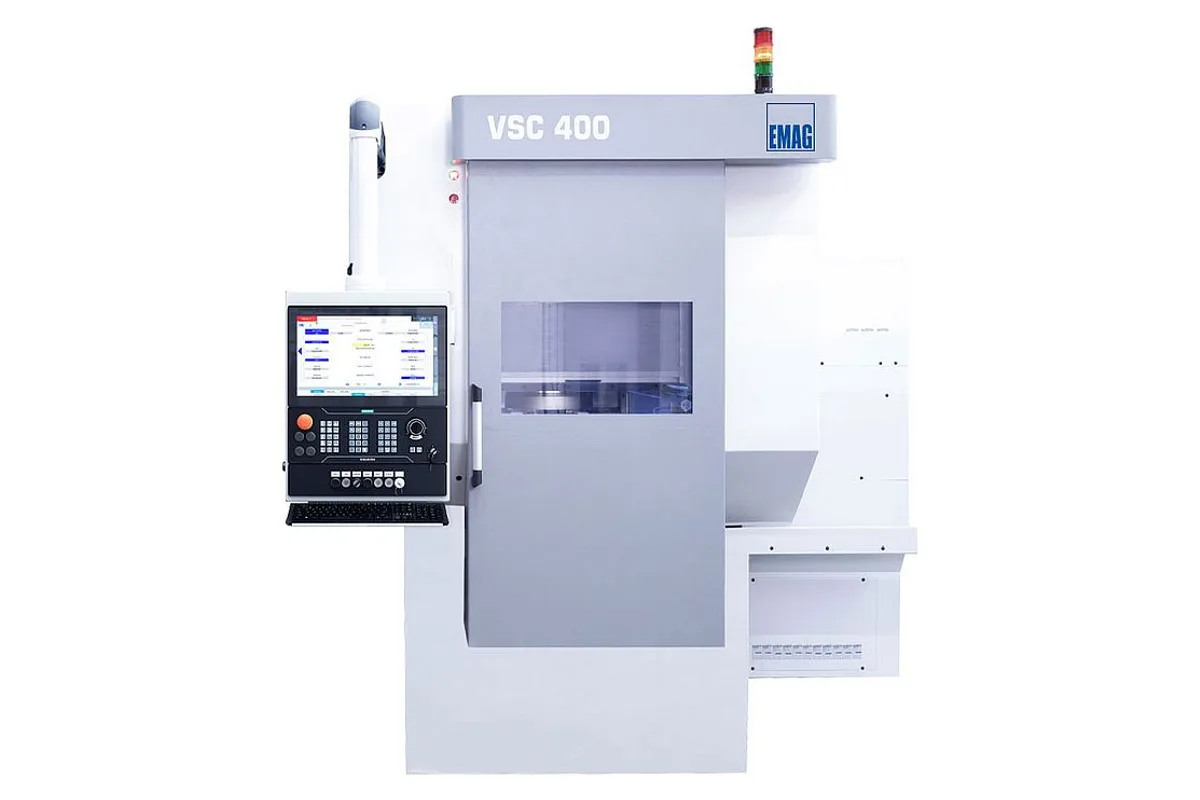
The EMAG VSC 400 is a vertical shaft chuck machine built on EMAG's signature inverted spindle pick-up design, scaled up to handle workpieces up to 400 mm in diameter. Like its smaller sibling the VSC 250, the VSC 400 uses a top-mounted spindle that reaches down, picks up the raw workpiece from a conveyor or automation system, machines it, and returns the finished part — no external gantry loader or robot required. This self-loading concept has been EMAG's calling card since the early 1990s, and the VSC 400 extends it to larger chucked components like clutch housings, brake discs, large bearing rings, and transmission cases.

The main spindle delivers up to 50 kW of power with 800 Nm of torque at speeds up to 3,000 RPM. These are serious numbers — the VSC 400 is designed for production turning of large, heavy chucked parts in hardened and unhardened steel, cast iron, and aluminum. X-axis travel of 880 mm and Z-axis travel of 300 mm define the work envelope, with rapid traverse rates of 60 m/min on X and 30 m/min on Z. The 12-position disc turret accepts VDI 50 tooling, providing the rigidity needed for heavy cuts on large-diameter workpieces.

The machine sits on EMAG's MINERALIT polymer concrete bed, which provides 6-8x better vibration damping than conventional cast iron — a meaningful advantage when turning large, potentially unbalanced chucked parts at production speeds. The vertical spindle orientation means gravity assists chip evacuation: chips fall down and away from the cutting zone, eliminating the chip re-cutting and nesting problems that plague horizontal lathes on certain workpiece geometries.

The VSC 400 can be configured as a turning-only machine or as a DS variant that combines turning with grinding capability for hard-finishing operations in a single setup. The Siemens Sinumerik 840D control manages the multi-technology operations and pick-up automation cycle. New VSC 400 machines typically price between $350,000 and $600,000 depending on configuration. The machine competes with vertical turning centers from Scherer Feinbau, Index, and Weisser, but EMAG's self-loading pick-up concept remains unique in the market for combining loading automation with machining in a single compact platform.

03

Full Specifications

Parameter Value
Max Workpiece Diameter 400 mm (15.7 in)
Max Workpiece Length 250 mm (9.8 in)
Chuck Diameter 500 mm (19.7 in)
Spindle Speed 3,000 RPM
Spindle Motor Power 50 kW (67 hp)
Spindle Torque 800 Nm (590 ft-lb)
X Axis Travel mmin
Z Axis Travel mmin
Rapid Traverse X 60 m/min (2,362 IPM)
Rapid Traverse Z 30 m/min (1,181 IPM)
Turret 12-position disc turret, VDI 50
Machine Bed MINERALIT polymer concrete
CNC Control Siemens Sinumerik 840D
Machine Weight 9,500 kg (20,944 lb)
Floor Space Required 3,000 x 5,000 mm (118 x 197 in)
Chuck Dia Max mmin
Nominal Diameter Inch
Torque Max Nmft-lb

Specifications sourced from emag.com — verified 2026-03-28

04

Strengths & Limitations

Strengths

  • Inverted spindle pick-up design eliminates the need for external loading automation — the machine loads and unloads itself, simplifying the cell and reducing capital cost
  • 50 kW spindle with 800 Nm torque provides the power for aggressive production turning on large cast iron and steel components up to 400 mm diameter
  • MINERALIT polymer concrete bed delivers 6-8x better vibration damping than cast iron, improving surface finish and tool life on large, heavy workpieces
  • Vertical spindle orientation leverages gravity for natural chip evacuation, eliminating chip nesting and re-cutting problems common on horizontal lathes
  • DS variant combines turning and grinding in a single clamping, eliminating the accuracy loss from transferring parts between a lathe and a separate grinder
  • Compact footprint relative to capability — integrates workpiece handling and machining in a single machine rather than a separate lathe plus loader

Limitations

  • 250 mm maximum workpiece length restricts the machine to flanged and disc-shaped chucked parts — shaft work and longer components are out of scope
  • EMAG's service network in North America has historically drawn criticism for response times and parts availability from some owners
  • The pick-up loading concept is production-oriented — setup changes for different part families are not as quick as on conventional chuck lathes with hydraulic chucks
  • Premium pricing of $350K-$600K places it well above conventional vertical turning centers, requiring high-volume production to justify the investment
05

Best For

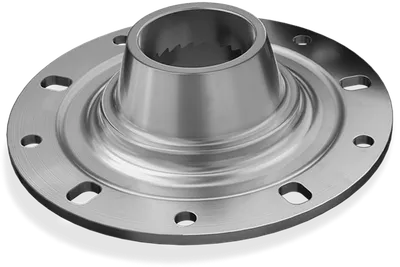
Automotive manufacturers running high-volume production of brake discs, clutch housings, flywheels, and transmission components up to 400 mm diameter Bearing manufacturers turning inner and outer bearing rings in hardened steel where the combined turning/grinding DS variant eliminates a second setup Heavy equipment and commercial vehicle component producers machining large chucked parts in cast iron and forged steel Production facilities seeking to reduce automation complexity by using EMAG's self-loading design rather than separate CNC lathe plus robot cell Plants producing CV joint housings, wheel hubs, and large flanged components at medium-to-high volumes requiring consistent accuracy
06

Frequently Asked Questions

01 What is the difference between the EMAG VSC 400 and VSC 250?

The primary difference is workpiece capacity: the VSC 400 handles parts up to 400 mm diameter (vs. 250 mm), with a larger 500 mm chuck, more spindle power (50 kW vs. 39 kW), and higher torque (800 Nm vs. 460 Nm). The VSC 400 also has a VDI 50 turret (vs. VDI 40) for heavier tooling. Both share the same inverted spindle pick-up design and MINERALIT bed technology. The VSC 400 weighs approximately 9,500 kg compared to 6,500 kg for the VSC 250.

02 How does the self-loading pick-up system work?

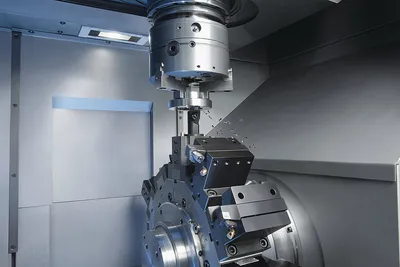
The inverted spindle is mounted on top and moves along the X and Z axes. It travels to a loading position, picks up a raw workpiece from a conveyor or shuttle using the chuck, carries it to the machining position, and machines it. After machining, the spindle deposits the finished part back on the conveyor. This eliminates the need for a separate gantry loader or robot, simplifying the cell and reducing points of failure.

03 What does an EMAG VSC 400 cost?

New EMAG VSC 400 machines price between $350,000 and $600,000. A turning-only configuration sits at the lower end, while the DS variant (turning + grinding) with integrated grinding spindle, coolant systems, and full automation interfaces pushes toward the upper end. Used VSC 400 machines from the 2010s can be found in the $80,000-$180,000 range depending on condition and configuration.

04 Can the VSC 400 do hard turning and grinding?

Yes. The DS variant includes a dedicated grinding spindle alongside the turning turret, enabling both hard turning and finish grinding in a single clamping. This is particularly valuable for bearing rings and gear components that require hard-finished surfaces after heat treatment. The ability to rough-turn and finish-grind without unclamping eliminates the concentricity error that comes with re-chucking on a separate machine.

05 What materials can the VSC 400 machine?

The VSC 400 handles the full range of turning materials: cast iron (gray, ductile, ADI), carbon and alloy steels (soft and hardened to 62+ HRC in hard turning), stainless steels, aluminum alloys, and forged components. The 50 kW spindle provides ample power for aggressive roughing in cast iron and steel, and the MINERALIT bed damping supports the fine finish cuts in hard turning applications.

06 Is the VSC 400 suitable for job shop use?

Not ideally. The VSC 400 is designed for production environments running medium-to-high volumes of similar chucked parts. The pick-up loading system, conveyor integration, and part-specific fixturing make it most efficient when running dedicated part families. Job shops handling diverse, low-volume work would be better served by a conventional chuck lathe with hydraulic quick-change fixturing.

07

Videos

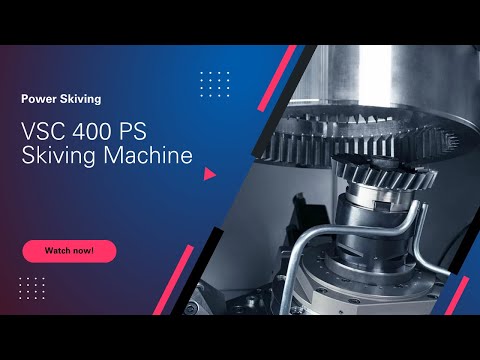
VSC 400 PS Skiving Machine: Perfect Combination of Power Skiving and Turning - EMAG Group

VSC 400 PS Skiving Machine: Perfect Combination of Power Skiving and Turning - EMAG Group

EMAGLLC

Machine in Focus: VSC 400 PS - Power Skiving of Gear Components

Machine in Focus: VSC 400 PS - Power Skiving of Gear Components

EMAGLLC

VL 6 – Vertical Lathe Turning Machine for Heavy Workpieces –  EMAG

VL 6 – Vertical Lathe Turning Machine for Heavy Workpieces – EMAG

EMAGLLC

EMAG VSC 250 DUO Double Spindle Vertical Lathe

EMAG VSC 250 DUO Double Spindle Vertical Lathe

Surplex

OFS International, EMAG VSC 400 DUO Threader, Coupling Manufacturing, Fermata Rattler™ Connection

OFS International, EMAG VSC 400 DUO Threader, Coupling Manufacturing, Fermata Rattler™ Connection

OFS International LLC

08

Community Discussions

09

Comparisons

10

Related Machines