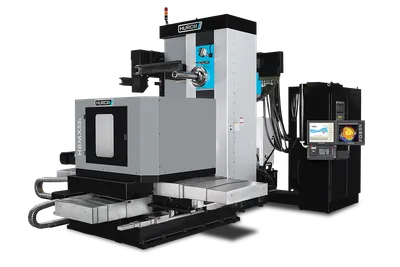
Toshiba BTD-130.R17
Key Specifications
Accuracy
boring spindle diameter
spindle speed
spindle drive
x axis travel
y axis travel
How much does the Toshiba BTD-130.R17 cost?
Estimated price range
Our best estimate for a cnc boring machine in this class — not a quote from Shibaura Machine. Configuration moves it a long way.
Overview
The Toshiba BTD-130.R17 is listed as a boring machine with a 130 mm (5.1 in) boring spindle, a 55 kW (73.8 hp) spindle drive and a 1,700 mm diameter B-axis rotary table. The model is not on Shibaura Machine's current pages, so the listed figures are best treated as a guide and checked against the documents of the machine actually on offer.
Those figures describe a configurable machine, not one fixed size. X travel is given as 4,000 to 12,000 mm, Y as 2,000 to 5,000 mm and Z as 1,000 to 1,800 mm, with boring spindle extension of up to 900 mm in W. Weight is listed as 60,000 to 150,000 kg depending on size. For anyone assessing a particular machine the first job is to establish which travels it was built with, because the largest listed X is three times the smallest.
The spindle range is 3 to 1,800 rpm, a slow range for large boring bars and face mills. Work can go on the rotary table, listed for up to 25,000 kg, or on a floor plate listed for up to 100,000 kg. Positioning accuracy is listed as ±0.003 mm, the spindle head is water-cooled, the magazine is given as 60 to 120 tools and the control as Fanuc 30i-B or Mitsubishi M800. Electrical supply is 200/400 VAC 3-phase at 50/60 Hz.
Full Specifications
| Parameter | Value |
|---|---|
| Boring Spindle Diameter | 130 mm (5.1 in) |
| Spindle Speed | 3–1,800 RPM |
| Spindle Drive | 55 kW (73.8 HP) |
| X Axis Travel | 4,000–12,000 mm (configurable) |
| Y Axis Travel | 2,000–5,000 mm (configurable) |
| Z Axis Travel | 1,000–1,800 mm |
| W Axis | Boring spindle extension up to 900 mm |
| Rotary Table | 1,700 mm diameter B-axis rotary table (R17 model) |
| Rotary Table Load | Up to 25,000 kg on rotary table |
| Floor Plate Load | Up to 100,000 kg |
| Positioning Accuracy | ±0.003 mm |
| Spindle Thermal Control | Water-cooled spindle head (Toshiba standard feature) |
| CNC Control | Fanuc 30i-B or Mitsubishi M800 |
| ATC | 60–120 tool magazine |
| Machine Weight | 60,000–150,000 kg (size dependent) |
| Electrical | 200/400 VAC 3-phase 50/60 Hz |
Specifications compiled from manufacturer literature and industry references. Not independently verified against a published spec sheet — confirm with the manufacturer or an authorised dealer before making a purchasing decision.
Strengths & Limitations
Strengths
- 55 kW (73.8 hp) spindle drive behind a 130 mm (5.1 in) boring spindle
- Listed rotary table load of up to 25,000 kg and floor plate load of up to 100,000 kg
- Water-cooled spindle head, listed as a standard feature
- Tool magazine listed at 60 to 120 tools
- Boring spindle extension of up to 900 mm on the W axis
Limitations
- Top spindle speed is 1,800 rpm, which rules out small-tool and high-speed work
- Travels are listed as ranges (X 4,000 to 12,000 mm, Y 2,000 to 5,000 mm), so the envelope of any one machine has to be confirmed
- Not on Shibaura Machine's current pages; confirm the listed figures against the machine's own documentation
- A listed weight of 60,000 to 150,000 kg means a prepared foundation and heavy lifting equipment
Best For
Frequently Asked Questions
01
The listed figures give a 130 mm (5.1 in) boring spindle with a 55 kW (73.8 hp) drive and a 3 to 1,800 rpm range. The spindle head is listed as water-cooled, and boring spindle extension in W is up to 900 mm. No torque figure or taper is listed.
02
It varies with the build. X travel is listed as 4,000 to 12,000 mm, Y as 2,000 to 5,000 mm and Z as 1,000 to 1,800 mm. The rows describe these as configurable, so the travels of a specific machine have to be read from its own documents, not from the range.
03
Two limits are listed. The 1,700 mm diameter B-axis rotary table is given as up to 25,000 kg, and a floor plate as up to 100,000 kg. A part that has to be rotated for multi-face work is bound by the lower figure, fixture included.
04
It is not on Shibaura Machine's current pages. For comparison, the BTD-130S.R22 lists a 71 x 87 in (1,800 x 2,200 mm) table rated for 26,400 lb (12,000 kg), a 2,500 rpm spindle and 60 tools. Anyone assessing a BTD-130.R17 should confirm its travels, table and control by inspection.
Community Discussions
Troubleshooting and problem-solving
Links to community discussions. Summaries are editorial — visit the original thread for full context.
More from Shibaura Machine
Other CNC Boring Machines
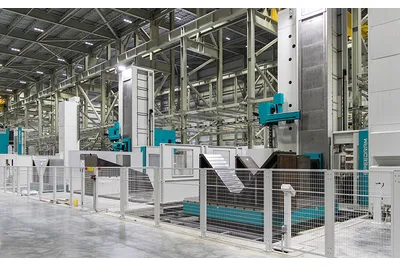
PAMA Speedram
HNK HKDB-150F(1.3Mx16M)
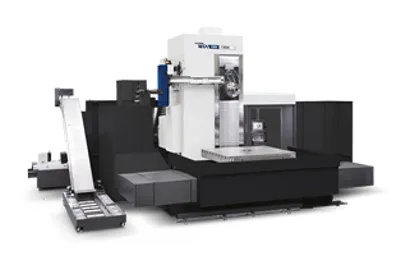
Hyundai WIA KBN1300C
Sunnen SV-310
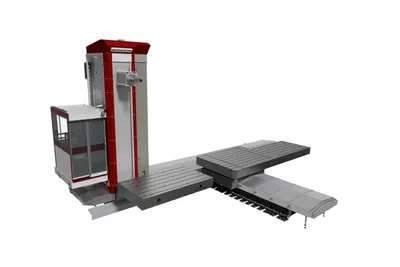
Fermat WF 13/15 R (L)