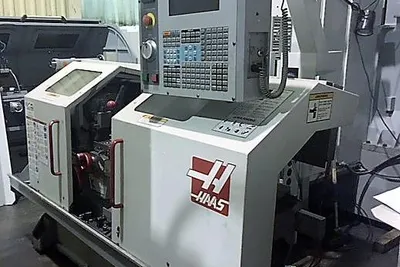
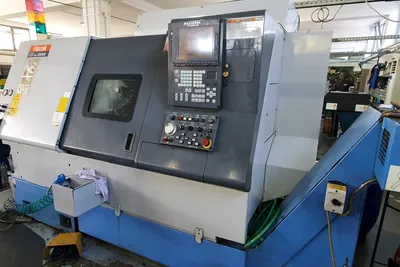
SMEC Puma 280M
Key Specifications
X Travel
Z Travel
Max Spindle
Spindle Power
Max Turn Length
max turning diameter
Overview
The SMEC Puma 280M is a slant-bed CNC turning center with live tooling and C-axis capability from SMEC (Samsung Machine Tools Engineering Company), the Korean machine tool brand with manufacturing and engineering heritage tracing directly to Samsung Heavy Industries' machine tool division. As part of the Doosan group, SMEC machines are engineered and manufactured at facilities sharing process standards with the broader Doosan machine tool organization, providing a level of manufacturing discipline uncommon in the value-oriented turning center segment.
The Puma 280M targets the mid-size live-tool lathe market, competing directly with machines from Doosan, Hyundai WIA, Mazak, and Victor Taichung in the 280–300mm swing class. The machine's 45-degree slant-bed design provides the natural chip-by-gravity evacuation and low-vibration cutting platform that defines the slant-bed category. The main spindle provides 5,000 RPM maximum speed through a 2-speed gearbox delivering high torque at low speed for steel and stainless turning, and adequate speed for aluminum facing and turning operations.
A 12-station live-tool turret with BMT-standard driven tool holders operates live tools up to 4,000 RPM, enabling cross-drilling, face drilling, tapping, and contour milling on turned diameters with C-axis spindle positioning. The C-axis resolves to 0.001-degree for precise angular placement of driven tool features. Through-coolant to the turret supports efficient cooling in deep-hole driven tool operations. The 76mm spindle bore accommodates bar feeders for automated barstock production.
Fanuc 0iTC with C-axis and live tool programming is the standard control configuration, providing comprehensive canned cycle support for all standard turning and mill-turn operations. SMEC's Doosan-group heritage means the machine shares many Fanuc programming conventions common to Doosan Puma lathes, simplifying operator transitions between SMEC and Doosan machines on the same shop floor. The Puma 280M is equipped with full enclosure, chip conveyor, and programmable coolant as standard.
The SMEC Puma 280M is priced competitively within the Korean CNC lathe segment, typically running from $70,000 to $110,000 depending on control, chuck, and configuration. It competes with the Doosan Puma 2600M, Hyundai WIA L300MA, and Victor Taichung NEX 260M. For shops seeking Doosan-heritage engineering in a live-tool turning center at a price point below the full DN Solutions Puma lineup, the SMEC Puma 280M represents a compelling value in the Korean mill-turn lathe segment.
Full Specifications
| Parameter | Value |
|---|---|
| X-Axis Travel | 230 mm (9.1 in) |
| Z-Axis Travel | 640 mm (25.2 in) |
| Max Turning Diameter | 560 mm (22.0 in) over bed; 280 mm (11.0 in) over cross slide |
| Max Turning Length | 580 mm (22.8 in) |
| Max Spindle Speed | 5,000 RPM |
| Spindle Motor Power | 18.5 / 15 kW (25 / 20 hp) |
| Spindle Bore | 76 mm (3.0 in) |
| Live Tool Speed Max | 4,000 RPM |
| Turret Stations | 12-station live-tool turret (BMT standard) |
| C Axis Resolution | 0.001 degree |
| Feed Rate Max | 25,000 mm/min (984 ipm) rapid |
| CNC Control | Fanuc 0iTC with C-axis and live tool |
| Machine Weight | Approx. 7,800 kg (17,196 lb) |
| Account | Name |
| Tiger Nixon | System Architect |
| Horsepower | 22 hp |
| Fuel Type | Diesel |
| Gross Weight | 20 t |
| Tire Size | 275/70R22,5 |
| Drum Diameter | 165 mm |
| Noise Level | 96 dB |
Specifications sourced from machinio.com — verified 2026-03-28
Strengths & Limitations
Strengths
- Doosan-group manufacturing heritage provides a higher standard of machined component quality and assembly discipline compared to some competitors in the value Korean lathe segment
- 76mm spindle bore is larger than many competitors in the 280mm class, accommodating larger-diameter barstock and improving bar-fed production flexibility
- BMT turret standard interface provides improved live tool holder rigidity compared to VDI shanks, benefiting driven tool stability and milled feature accuracy
- 5,000 RPM main spindle speed is competitive for the diameter class, supporting productive aluminum turning and light stainless finishing operations
- Fanuc 0iTC with Doosan-compatible programming conventions simplifies operator transitions and CAM post sharing in mixed SMEC/Doosan lathe environments
Limitations
- SMEC's North American and European dealer network is smaller than DN Solutions (Doosan) or Hyundai WIA, which may impact service response times and spare parts availability
- No Y-axis option on the standard Puma 280M; shops needing true off-center Y-axis features require a different machine
- Brand recognition in Western markets is lower than Doosan's main DN Solutions lineup, which can affect perceived resale value and buyer familiarity
Best For
Frequently Asked Questions
01
SMEC (Samsung Machine Tools Engineering Company) was originally the machine tool division of Samsung Heavy Industries and was acquired by Doosan Group, placing it within the same corporate family as DN Solutions (formerly Doosan Machine Tools). SMEC machines are engineered and manufactured under Doosan-group standards and share many design conventions with DN Solutions products. The primary distinction is commercial positioning — SMEC is typically offered at a more competitive price point than DN Solutions' flagship Puma and DNM lines, while sharing manufacturing heritage.
02
Both machines are slant-bed live-tool turning centers in the 280–300mm class with Doosan-group manufacturing heritage. The DN Solutions Puma 2600M benefits from the full DN Solutions dealer and service network, which is more comprehensive globally. The SMEC Puma 280M is typically priced more competitively. Specification differences are relatively minor at the same configuration level. Shops with existing DN Solutions service relationships will likely prefer the Puma 2600M for service continuity; cost-focused buyers should compare regional pricing and dealer support quality.
03
Yes. The SMEC Puma 280M's 18.5 kW 2-speed geared spindle delivers high torque at low speeds — the cutting condition needed for heavy steel and stainless roughing at large depths of cut. The 45-degree slant-bed with Meehanite iron construction provides the structural damping to maintain accuracy under high cutting force. The machine is capable of aggressive roughing passes in carbon steel, alloy steel, and stainless steel at standard production removal rates.
04
Yes. The 76mm spindle bore is designed with bar feeder integration in mind, and the machine's electrical and coolant interfaces follow standard bar feeder integration conventions common to Fanuc-controlled turning centers. SMEC's regional distributors can advise on specific compatible bar feeder brands and the interface kit required for automatic bar advance and stock advance signaling. The larger-than-standard 76mm bore is a meaningful advantage for shops running barstock in the 60–70mm diameter range.
05
The SMEC Puma 280M is available with 8-inch, 10-inch, and 12-inch hydraulic chuck options depending on the workpiece diameter range and clamping requirements. The 10-inch is the most common configuration for the 280mm class, providing a practical balance of jaw travel, clamping force, and workpiece access. Shops regularly working near the machine's maximum swing diameter may prefer the 12-inch chuck for better large-diameter gripping. Soft jaw, step jaw, and custom jaw configurations are compatible through the standard A2-6 or A2-8 spindle nose.
Videos

GE-TRA-MACK Chiari BS

PRIMEMACHINERY

FAVEL Argentina SA - ROMI
Tezmaksan Makina

Mustafa KARACA
Community Discussions
Community discussion — PSA STAY AWAY FROM SMEC MACHINES : r/Machinists - Reddit
Community discussion — Buyers beware, stay away from this brand. : r/Machinists - Reddit
Community discussion — What do you guys think of this machine? : r/machining - Reddit
Community discussion — What does everyone see as the most trusted CNC ... - Reddit
Links to community discussions. Summaries are editorial — visit the original thread for full context.