Industrial CNC Machine Directory

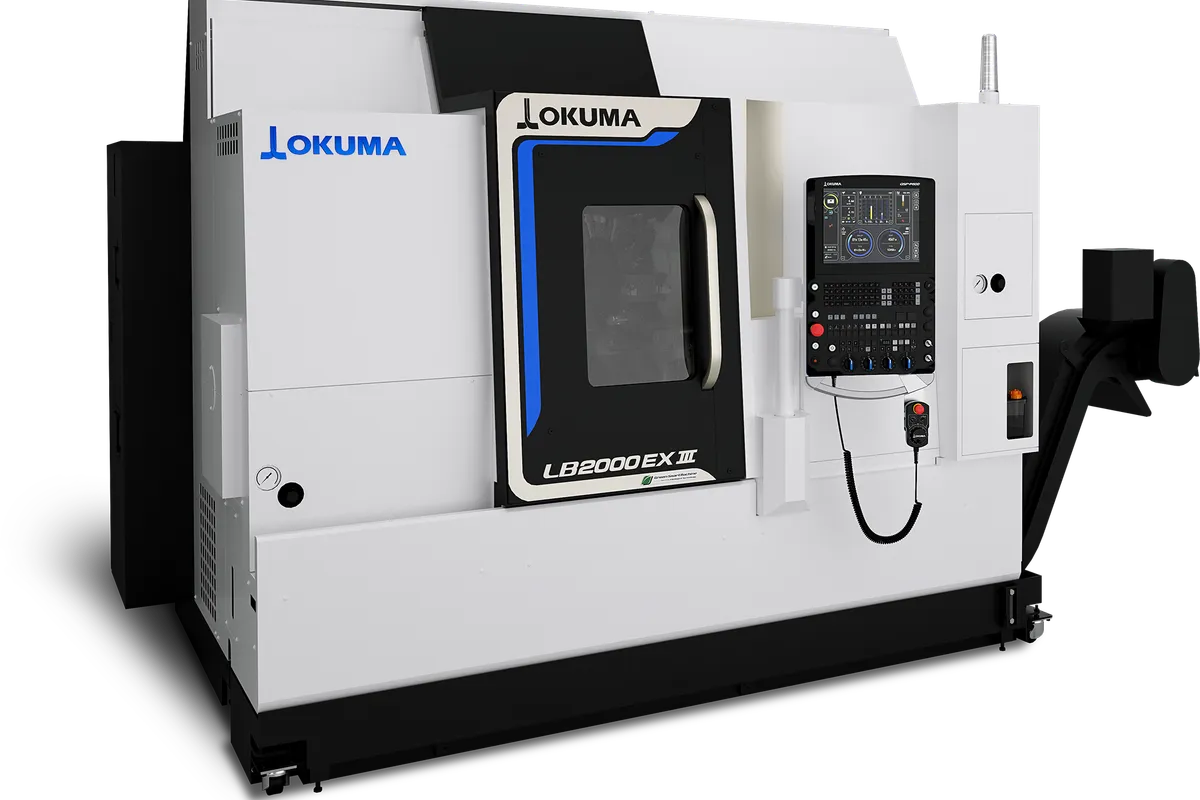
Okuma LB2000 EX III

$120,000 - $180,000 Updated 2026-03-13
01

Key Specifications

Max Spindle

5,000 RPM

Rapid Traverse

25 m/min X, 30 m/min Z

Spindle Power

15/11 kW (20/15 hp)

Max Workpiece ⌀

mm

Max Turn Length

mm

Accuracy

±0.004 mm

02

Overview

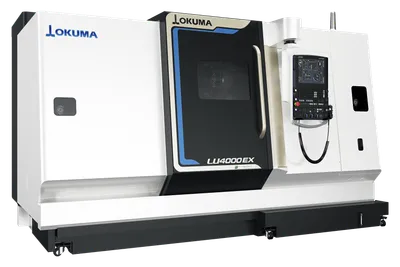
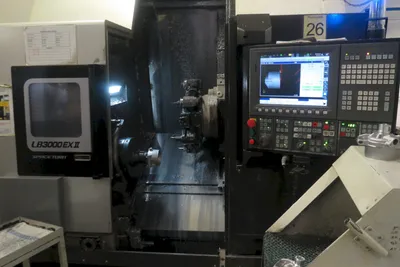
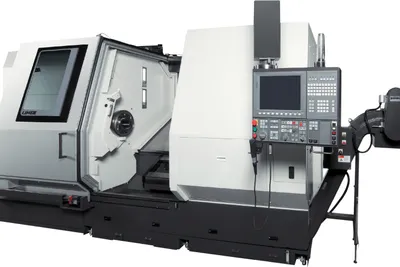
The Okuma LB2000 EX III is the third generation of Okuma's compact premium turning center, refined through decades of real-world production feedback. The EX III designation signals upgrades to spindle bearings, thermal compensation algorithms, and control software over the EX II. It's Okuma's answer for shops that need maximum precision and rigidity in a small-footprint lathe.

Max turning diameter is 250 mm (9.8 in) with a swing over bed of 400 mm (15.7 in). Standard turning length is 300 mm (11.8 in), with options to 500 mm (19.7 in) and 750 mm (29.5 in). The main spindle delivers 15/11 kW (20/15 hp) at up to 5,000 RPM through a JIS A2-6 spindle nose. Bar capacity is 54 mm (2.1 in) on the standard bore. The 8-inch chuck is standard, providing solid workholding for the machine's target part range.

The LB2000 EX III uses Okuma's box way construction on both X and Z axes, providing inherent damping and rigidity that linear guide machines in this size class struggle to match. This shows up in tool life and surface finish, particularly on interrupted cuts and hard materials. The 12-station turret with BMT mounting is available on M/MY/MYW variants, with driven tool speeds up to 6,000 RPM.

Okuma's OSP-P300L control integrates Thermo-Friendly Concept, Collision Avoidance System, and Machining Navi for vibration-free cutting parameter optimization. Rapid traverse rates are 25 m/min on X and 30 m/min on Z. The machine weighs approximately 4,200 kg (9,259 lb), giving it thermal mass that contributes to stability.

The LB2000 EX III sits between the value-oriented GENOS L2000-e and the larger LB3000 EX III in Okuma's lineup. It competes with the DMG Mori NLX 1500, Mazak Quick Turn 200, and Haas ST-15 in the compact premium turning segment. Shops choosing the LB2000 EX III over the GENOS are buying heavier castings, tighter tolerances, and the full LB-series option catalog. Specs sourced from Okuma published data.

03

Full Specifications

Parameter Value
Max Turning Diameter 250 mm (9.8 in)
Max Turning Length mm
Swing Over Bed 400 mm (15.7 in)
Max Spindle Speed 5,000 RPM
Spindle Motor Power 15/11 kW (20/15 hp)
Spindle Nose JIS A2-6
Chuck Size 8 in (210 mm)
Bar Capacity 54 mm (2.1 in)
Turret Stations 12
X Axis Travel 170 mm (6.7 in)
Z Axis Travel 380 mm (15 in)
Rapid Traverse Rate 25 m/min X, 30 m/min Z
Positioning Accuracy ±0.004 mm
Repeatability ±0.002 mm
Machine Weight 4,200 kg (9,259 lb)
CNC Control Okuma OSP-P300L
Max Workpiece Diameter mm
Speed Range 45~6,000
Rapid Traverse X Z 25/30
Standard Power 11/7.5
Okuma Global Repair Center Charlotte, North Carolina
Inches Metric
Max Machining Diameter 430
Max Machining Length 300
Spindle Nose Type STD Ø140

Specifications sourced from okuma.com — verified 2026-03-28

04

Strengths & Limitations

Strengths

  • Third-generation refinement brings upgraded spindle bearings and improved thermal compensation over the EX II
  • Box way construction on both axes provides superior rigidity and vibration damping for interrupted cuts and hard materials
  • BMT turret mounting on M/MY/MYW variants delivers more rigid milling than VDI alternatives
  • Machining Navi optimizes cutting parameters in real-time to eliminate chatter, extending tool life
  • ±0.002 mm repeatability enables consistent precision production across extended runs
  • Comprehensive option catalog including sub-spindle, Y-axis, bar feeder prep, and ARMROID robot integration

Limitations

  • Starting at $120K, it's substantially more expensive than the GENOS L2000-e for similar basic turning specs
  • 250 mm max turning diameter limits part size; shops with larger work should consider the LB3000 EX III
  • 54 mm bar capacity is adequate but not class-leading for an 8-inch chuck lathe
  • OSP proprietary control means fewer available operators compared to Fanuc-trained machinists
  • Box ways require more maintenance attention than linear guides for way lube and periodic adjustment
05

Best For

Precision production shops running tight-tolerance parts in batches of 500+ pieces Aerospace component manufacturers needing documented accuracy and repeatability specifications Medical device production requiring consistent sub-micron repeatability across shifts Shops upgrading from LB2000 EX or LB2000 EX II that want improved performance on existing programs Facilities running Okuma platforms that need a compact lathe with full LB-series capability
06

Frequently Asked Questions

01 What does an Okuma LB2000 EX III cost?

New LB2000 EX III machines run $120,000-$180,000 depending on configuration. Base turning models start around $120,000-$135,000. MYW setups with Y-axis, sub-spindle, and driven tools reach $165,000-$180,000. Previous-generation LB2000 EX II machines sell used for $60,000-$90,000.

02 What's the difference between the LB2000 EX III and the GENOS L2000-e?

The LB2000 EX III has heavier castings, tighter accuracy specs (±0.004 vs ±0.005 mm positioning), faster rapids, MYW sub-spindle availability, and the full LB-series option catalog. The GENOS L2000-e costs less and covers basic turning needs well. Choose the LB for maximum precision and capability; choose the GENOS for value.

03 What changed from the EX II to the EX III?

The EX III generation brought upgraded spindle bearing preload for better thermal stability, refined Thermo-Friendly algorithms, updated OSP-P300L control software with improved Machining Navi, and structural improvements to the headstock casting. Most shops report measurably better thermal stability and surface finish consistency.

04 Can the LB2000 EX III replace a lathe and a mill?

The MYW configuration with Y-axis, sub-spindle, and BMT live tooling at 6,000 RPM handles many mill-turn parts in a single setup. Cross-drilling, tapping, flat milling, and keyway cutting are all feasible. Heavy 3D milling or large face milling still needs a dedicated VMC or full multitasking machine like the Okuma MULTUS.

05 How does maintenance compare to linear guide lathes?

Box ways require periodic way lube system maintenance and occasional scraping during rebuilds, which linear guide machines avoid. However, box ways last longer under heavy cutting loads and maintain geometric accuracy better over decades. Most Okuma dealers recommend annual way inspections and lube system checks.

07

Videos

Precision Machining at Its Best With the LB2000 EX III MYW

Precision Machining at Its Best With the LB2000 EX III MYW

Okuma America Corporation

LB-EXⅡseries Video Brochure 【OKUMA CORPORATION JAPAN】

LB-EXⅡseries Video Brochure 【OKUMA CORPORATION JAPAN】

OKUMA CORPORATION JAPAN

Okuma LB3000 EX III | The Benchmark Turning Center

Okuma LB3000 EX III | The Benchmark Turning Center

Okuma America Corporation

Introducing the Okuma LB3000EXII-MYW Machine!

Introducing the Okuma LB3000EXII-MYW Machine!

EMEC Machine Tools Inc

Okuma LB-2000EX II MY-C500

Okuma LB-2000EX II MY-C500

NEFF - Der Okuma Spezialist

08

Community Discussions

09

Related Machines