Industrial CNC Machine Directory

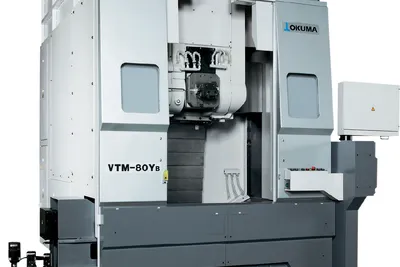
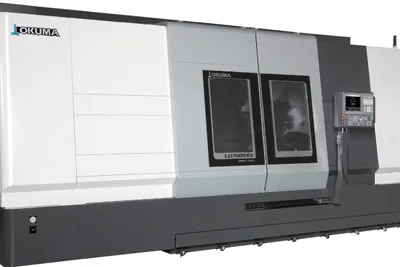
Okuma LAW-2S

$250,000 - $380,000 Updated 2026-03-13
01

Key Specifications

Rapid Traverse

20 / 15

Max Turn Length

250 mm (9.8 in) per spindle

max turning diameter

Ø630

main spindle speed

5,000 RPM

main spindle power

18.5/15 kW (25/20 hp)

main spindle torque

200 Nm (148 ft-lb)

02

Overview

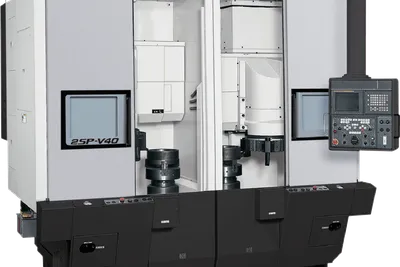
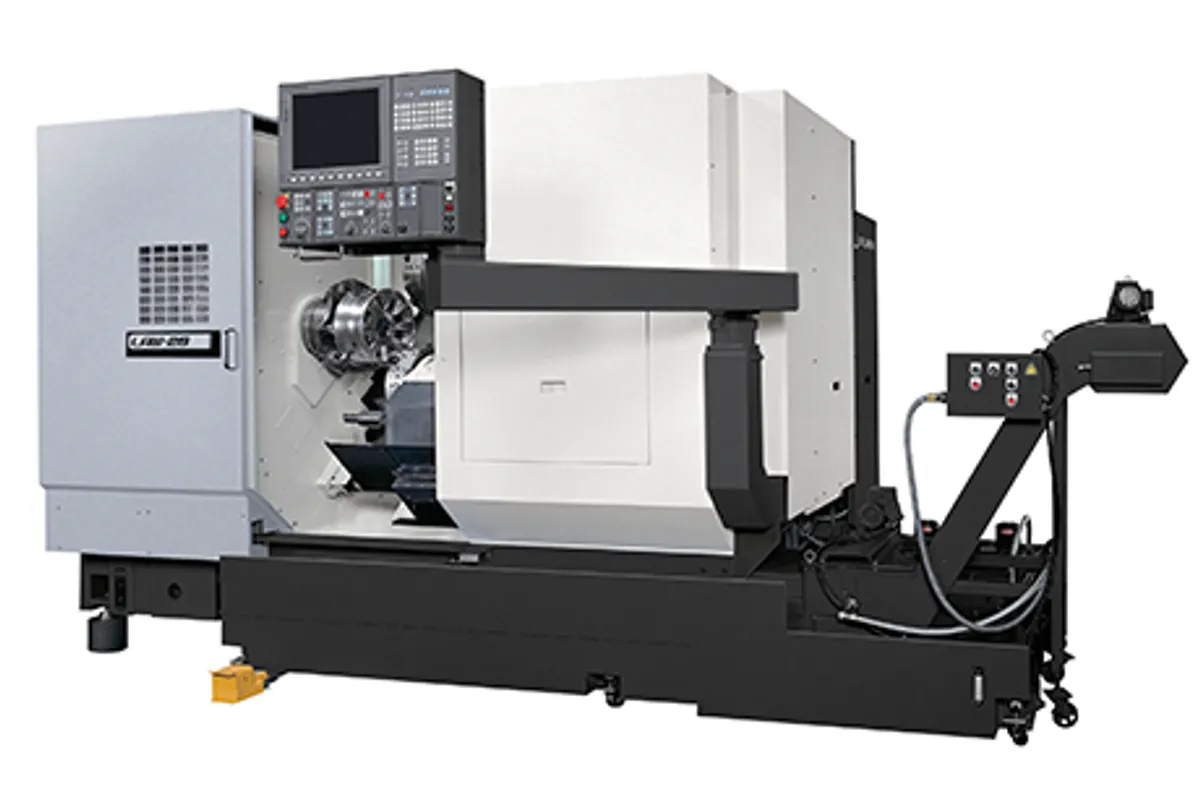
The Okuma LAW-2S is a twin-spindle opposed-spindle horizontal CNC lathe designed for complete part machining in a single cycle. The two spindles face each other, allowing the machine to turn OP10 on the main spindle, transfer the part to the sub-spindle for OP20 back-end machining, and discharge a fully finished part without operator intervention. This opposed-spindle architecture eliminates the need for manual part flipping or a second lathe for back-end work.

The main spindle delivers 18.5/15 kW (25/20 hp) at up to 5,000 RPM with 200 Nm (148 ft-lb) of torque through an A2-6 spindle nose. The sub-spindle matches the main spindle specification for consistent performance on both OP10 and OP20 operations. Maximum turning diameter is 260 mm (10.2 in) with a maximum turning length of 250 mm (9.8 in) per spindle. Bar capacity is 51 mm (2.0 in).

Each spindle station has its own turret: the main turret carries 12 stations in VDI 30 format and the sub-spindle turret carries 8 stations. Both turrets offer optional driven tools for cross-drilling, tapping, and light milling. X-axis travel is 200 mm (7.9 in) per turret and Z-axis travel is 350 mm (13.8 in) for the main spindle and 310 mm (12.2 in) for the sub-spindle. Rapid traverse is 30 m/min.

The part transfer between spindles is automated and programmable, with the sub-spindle traveling on the Z2 axis to meet the main spindle, grip the part, and retract for OP20 machining. Simultaneous cutting on both spindles is possible, further reducing cycle time. Okuma's Thermo-Friendly Concept maintains accuracy across both spindles, and Collision Avoidance System models the complex dual-spindle envelope.

The LAW-2S competes with the Mazak Quick Turn 200MSY, Doosan Lynx 2100LSYB, and Haas DS-30SSY. Pricing runs $250,000-$380,000 new. Machine weight is approximately 7,200 kg (15,873 lb).

03

Full Specifications

Parameter Value
Max Turning Diameter Ø630
Max Turning Length 250 mm (9.8 in) per spindle
Main Spindle Speed 5,000 RPM
Main Spindle Power 18.5/15 kW (25/20 hp)
Main Spindle Torque 200 Nm (148 ft-lb)
Sub Spindle Speed 5,000 RPM
Sub Spindle Power 18.5/15 kW (25/20 hp)
Spindle Nose A2-6 (both spindles)
Bar Capacity 51 mm (2.0 in)
Main Turret VDI 30, 12-station
Sub Turret 8-station
X Axis Travel 200 mm (7.9 in) per turret
Z Axis Travel 350 mm (main) / 310 mm (sub)
Rapid Traverse Rate 20 / 15
Machine Weight 7,200 kg (15,873 lb)
CNC Control Okuma OSP-P300L
Speed Range 200~3,000
Standard Power 55/45
Okuma Global Repair Center Charlotte, North Carolina
Inches Metric
Spindle Nose Type JIS A2-8

Specifications sourced from okuma.com — verified 2026-03-28

04

Strengths & Limitations

Strengths

  • Opposed-spindle design machines OP10 and OP20 in a single cycle, producing finished parts without operator intervention for part flipping
  • Simultaneous cutting on both spindles reduces cycle time beyond what sequential OP10/OP20 processing achieves
  • Both spindles matched at 18.5 kW and 5,000 RPM ensures consistent cutting performance on front and back operations
  • Automated part transfer between spindles is programmable for different part lengths and gripping strategies
  • Driven tools on both turrets enable cross-drilling and tapping on both ends of the part in a single cycle
  • Thermo-Friendly Concept maintains accuracy across both spindles for consistent part quality through production runs

Limitations

  • 260 mm turning diameter limits the machine to small-to-mid parts; larger work requires the LAW-F II or a dedicated turning center
  • 8-station sub-turret has fewer positions than the 12-station main turret, which can limit OP20 complexity
  • OSP control managing dual spindles, dual turrets, and part transfer requires more programming expertise than single-spindle machines
  • Capital cost of $250,000-$380,000 is justified only when OP10/OP20 completion in one cycle provides measurable throughput or quality improvement
  • Complex dual-spindle configuration increases setup time for new jobs compared to a simple single-spindle lathe
05

Best For

Production shops that currently run OP10 and OP20 on separate lathes and want to consolidate into a single machine for complete parts Automotive and industrial component manufacturers producing shaft and fitting parts requiring machining on both ends Shops running bar stock up to 51 mm where bar feeder plus opposed spindles creates a continuous complete-part production cycle Medical device manufacturers producing small precision components requiring both-end machining with tight concentricity between operations Job shops seeking to reduce work-in-process inventory by eliminating the queue between OP10 and OP20 machines
06

Frequently Asked Questions

01 What does an Okuma LAW-2S cost?

A new LAW-2S typically runs $250,000-$380,000 depending on driven tool packages, bar feeder, and parts catcher configuration. The dual-spindle architecture commands a premium over single-spindle lathes, justified by the complete-part-per-cycle capability.

02 How does the part transfer work between spindles?

The sub-spindle travels on the Z2 axis toward the main spindle. The sub-spindle chuck opens, grips the part that was just machined on OP10, the main spindle releases, and the sub-spindle retracts with the part for OP20 machining. The transfer is fully programmable for timing, grip position, and speed.

03 Can both spindles cut simultaneously?

Yes, the LAW-2S supports simultaneous cutting where the main spindle machines OP10 on one part while the sub-spindle machines OP20 on the previous part. This parallel processing significantly reduces floor-to-floor time compared to sequential processing.

04 How does the LAW-2S compare to the Mazak Quick Turn 200MSY?

Both are opposed-spindle lathes with similar capacity. The Mazak uses MAZATROL SmoothAi with conversational programming, while Okuma uses OSP. Okuma's Thermo-Friendly Concept is a differentiator for thermal accuracy. The Mazak typically offers broader Y-axis capability for off-center milling. Both are strong choices in this segment.

07

Videos

2-Spindle Horizontal CNC Lathe 2SP-2500H【OKUMA CORPORATION JAPAN】

2-Spindle Horizontal CNC Lathe 2SP-2500H【OKUMA CORPORATION JAPAN】

OKUMA CORPORATION JAPAN

OKUMA CNC Lathe, LAW-F II L (2023) For Sale

OKUMA CNC Lathe, LAW-F II L (2023) For Sale

JS PRECISION CO

OKUMA Two Spindle lathe 2SP 150H with loader

OKUMA Two Spindle lathe 2SP 150H with loader

BULMAKMETAL

LAW 2S Cutting Demo

LAW 2S Cutting Demo

Okuma America Corporation

Okuma & Howa ACT 2SP-2 cnc lathe

Okuma & Howa ACT 2SP-2 cnc lathe

Graff Machine Tools, LLC

08

Community Discussions

09

Related Machines