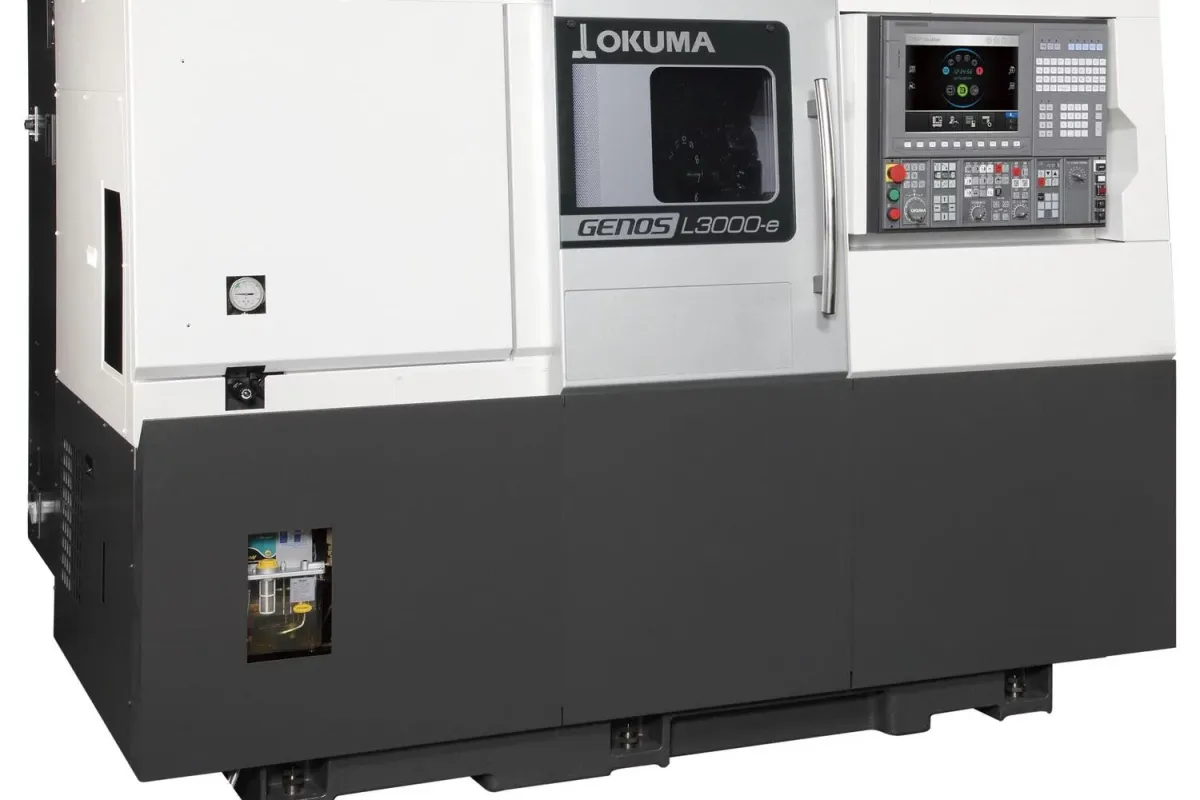
Okuma GENOS L3000-e
Key Specifications
Max Spindle
Spindle Power
Max Turn Length
max swing over bed
max turning diameter
spindle nose
How much does the Okuma GENOS L3000-e cost?
Estimated price range
Our best estimate for a cnc lathes / turning center in this class — not a quote from Okuma. Configuration moves it a long way.
Overview
The listed figures for the Okuma GENOS L3000-e describe a 10 in (254 mm) chuck turning center with a JIS A2-8 spindle nose, 70 mm (2.75 in) of bar capacity and a 22/15 kW (30/20 hp) spindle that runs to 3,800 RPM. Swing over the bed is 520 mm (20.5 in).
Capacity depends on how the machine was configured, and the table marks which figures are options. Maximum turning diameter is 300 mm (11.8 in), with 340 and 390 mm shown as optional. Maximum turning length is 500 mm (19.7 in), with 1,100 mm optional. Anyone looking at a particular machine should establish which of these it was built with, because the gap between 500 and 1,100 mm decides whether longer shaft work is possible at all.
The turret has 12 stations, and rapid traverse is 25 m/min in X and 30 m/min in Z. Listed weight is 5,430 kg (11,970 lb) and the control is the Okuma OSP-P300LA. None of the listed rows covers live tooling, a Y axis or a sub-spindle, so confirm those separately.
Set beside the GENOS L300, the difference is mostly in the spindle and the turret. The GENOS L300 is listed with an 8 in (203 mm) chuck, 11 kW and a 10-station turret, with rapids of 15 m/min in X and 20 m/min in Z.
Full Specifications
| Parameter | Value |
|---|---|
| Max Swing Over Bed | 520 mm (20.5 in) |
| Max Turning Diameter | 300 mm (11.8 in) [340, 390 mm optional] |
| Max Turning Length | 500 mm (19.7 in) [1,100 mm optional] |
| Max Spindle Speed | 3,800 RPM |
| Spindle Motor Power | 22/15 kW (30/20 hp) |
| Spindle Nose | JIS A2-8 |
| Chuck Size | 10 in (254 mm) |
| Bar Capacity | 70 mm (2.75 in) |
| Turret Stations | 12 |
| Rapid Traverse X | 25 m/min (787 ipm) |
| Rapid Traverse Z | 30 m/min (984 ipm) |
| Machine Weight | 5,430 kg (11,970 lb) |
| CNC Control | Okuma OSP-P300LA |
Specifications compiled from manufacturer literature and industry references. Not independently verified against a published spec sheet — confirm with the manufacturer or an authorised dealer before making a purchasing decision.
Strengths & Limitations
Strengths
- 22/15 kW (30/20 hp) spindle on a JIS A2-8 nose, listed to 3,800 RPM
- 70 mm (2.75 in) bar capacity with a 10 in (254 mm) chuck
- Optional turning length of 1,100 mm, against 500 mm (19.7 in) on the listed base machine
- 12-station turret, with the Okuma OSP-P300LA as the listed control
- Rapid traverse of 25 m/min in X and 30 m/min in Z
Limitations
- 3,800 RPM limits surface speed on small-diameter bar work
- The 340 and 390 mm turning diameters and the 1,100 mm length are options; the base figures are 300 mm (11.8 in) and 500 mm (19.7 in)
- At 5,430 kg (11,970 lb) the machine needs rigging and floor capacity planned in advance
- The listed rows say nothing about live tooling, a Y axis or a sub-spindle
Best For
Frequently Asked Questions
01
The listed maximum turning diameter is 300 mm (11.8 in), with 340 and 390 mm as options. Maximum turning length is 500 mm (19.7 in), with 1,100 mm as an option. Swing over the bed is 520 mm (20.5 in).
02
A 22/15 kW (30/20 hp) spindle with a maximum speed of 3,800 RPM on a JIS A2-8 nose. The chuck is 10 in (254 mm) and bar capacity is 70 mm (2.75 in).
03
The listed turret has 12 stations. Rapid traverse is 25 m/min in X and 30 m/min in Z, and the control is the Okuma OSP-P300LA. The table does not say whether the stations are driven.
04
The GENOS L300 is listed with an 8 in (203 mm) chuck, 11 kW and a 10-station turret. The GENOS L3000-e figures are a 10 in (254 mm) chuck, 22/15 kW (30/20 hp) and 12 stations, with faster rapids of 25 m/min in X and 30 m/min in Z.
Videos

Okuma Europe GmbH

Molinari S.A.

MTDCNC

GreenBau Tehnologie
Community Discussions
Options and configuration advice
Maintenance and service
Comparison and buying advice
Links to community discussions. Summaries are editorial — visit the original thread for full context.
Comparisons
More from Okuma
Other CNC Lathes / Turning Centers
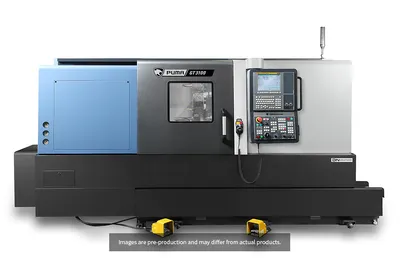
DN Solutions PUMA GT 2600 XLMA
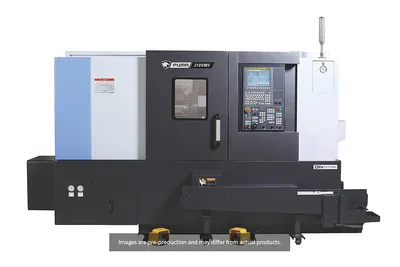
DN Solutions PUMA 2600 LSYB II
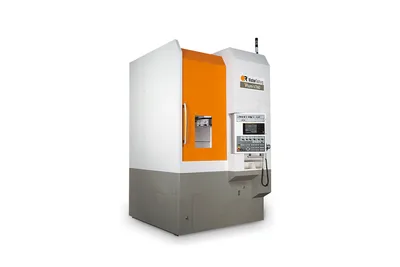
Victor Taichung Vturn-V760
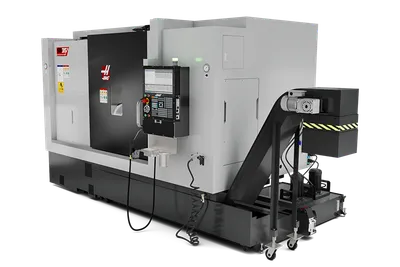
Haas SB-35Y
Republic Lagun AT-1860-G-TW-CNC