Industrial CNC Machine Directory

Kuraki KBM-13RX

$1,500,000 - $3,000,000 Updated 2026-03-17
01

Key Specifications

X Travel

5,000 mm (196.9 in) — column traverse

Y Travel

2,500 mm (98.4 in) — vertical

Z Travel

1,000 mm (39.4 in) — spindle axial

Max Spindle

2,000 RPM

Table Size

2,000 x 2,000 mm (78.7 x 78.7 in) rotary table

Rapid Traverse

10 m/min (394 ipm)

02

Overview

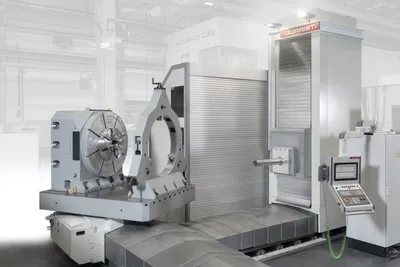
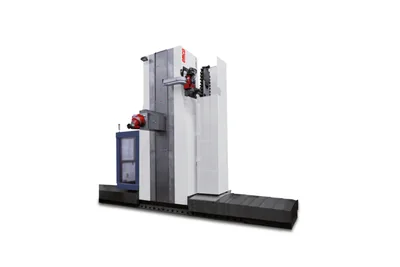
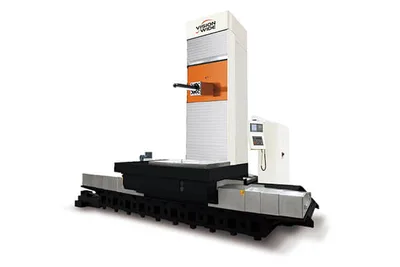
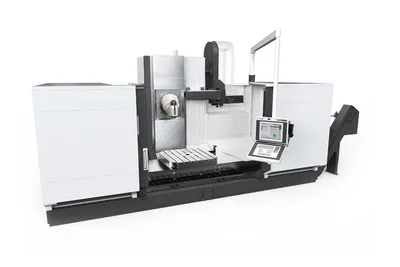
The Kuraki KBM-13RX is a large-format CNC horizontal boring and milling machine built around a 130 mm (5.1 inch) boring spindle — one step up from the KBM-11RX in Kuraki's floor-type boring mill line. The larger 130 mm spindle diameter provides increased rigidity and torque capacity for heavier boring operations in harder materials and at greater depths, making the KBM-13RX the preferred choice when the KBM-11RX's 110 mm spindle does not provide sufficient stiffness for the target application. Kuraki Co., Ltd., based in Kurobe, Toyama, Japan, has specialized in large-format boring mills for nearly a century, and the KBM-13RX reflects the company's position as one of Japan's premier builders of precision floor-type boring machines.

The 130 mm spindle in the KBM-13RX is precision-ground to tighter runout specifications than the majority of competing boring mills in this class. The larger spindle cross-section enables the use of heavier boring bars with greater cantilever lengths, which is critical when boring large deep housings — such as turbine casing bores of 600–1,200 mm diameter at depths exceeding 1,000 mm — where boring bar deflection under cutting forces directly limits achievable roundness and cylindricity. Kuraki's precision spindle assembly process, developed over decades of serving the Japanese heavy industry and export markets, consistently achieves radial runout values below 2 µm at the spindle nose.

The KBM-13RX retains the floor-type traveling column design of the KBM series, with the workpiece fixed to a floor plate or a large rotary table. The column traverses in X on precision linear guideways, the spindle head moves vertically in Y, and the boring spindle quill provides W-axis axial travel in addition to the Z-axis column-to-workpiece travel. This four-axis configuration (X, Y, Z, W) forms the foundation, with a rotary table B-axis bringing the standard machining configuration to five controlled axes. Full five-axis simultaneous machining is available with the universal swiveling milling head option.

Kuraki engineering on the KBM-13RX places particular emphasis on thermal stability. The column casting uses a thermally symmetric design with strategically placed cooling channels to minimize thermal growth differentials during production. The Fanuc 31i-B5 control integrates with Kuraki's multi-point thermal compensation system, which measures structural temperatures at key locations and applies real-time correction to all axes. This system maintains bore positional accuracy within specification in production environments without climate control — a practical requirement for most aerospace and energy sector shops.

In the large horizontal boring mill market, the KBM-13RX competes with the TOS Varnsdorf WRD 150, Parpas ML 50, Juaristi JXR-150, and Burkhardt+Weber MCX 1000. Kuraki's advantage is its combination of Japanese manufacturing precision, Fanuc control ecosystem, and established North American service network. For customers in North America's aerospace corridor (Seattle, Wichita, Dallas, Los Angeles) and energy manufacturing belt (Houston, Calgary), Kuraki's service presence is a practical differentiator over European boring mill builders with thinner North American coverage.

03

Full Specifications

Parameter Value
Spindle Diameter 130 mm (5.12 in)
X-Axis Travel 5,000 mm (196.9 in) — column traverse
Y-Axis Travel 2,500 mm (98.4 in) — vertical
Z-Axis Travel 1,000 mm (39.4 in) — spindle axial
W Axis Travel 800 mm (31.5 in) — quill
Max Spindle Speed 2,000 RPM
Spindle Motor Power 60 kW (80.4 hp)
Spindle Torque 5,000 Nm at S1
Table Size 2,000 x 2,000 mm (78.7 x 78.7 in) rotary table
Max Workpiece Weight 30,000 kg (66,139 lb)
Rapid Traverse Rate 10 m/min (394 ipm)
Tool Taper SK 50 / HSK-A100
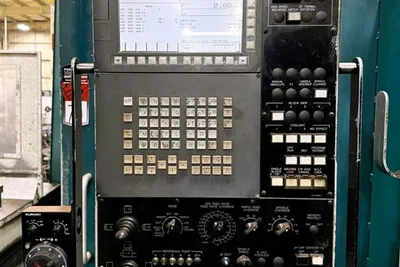
CNC Control Fanuc 31i-B5
Machine Weight 80,000 kg (176,370 lb) approximate
Brand KURAKI
Model KBT13-DXA
Id 588454
Type Horizontal Table Type Boring Mills
Location United States
Stock 4376
First Name Last Name
Will You Need Financing YesNo
Yes No
Will You Need Freight Service YesNo

Specifications sourced from machinetools.com — verified 2026-03-28

04

Strengths & Limitations

Strengths

  • 130 mm precision-ground spindle with 5,000 Nm torque provides the rigidity for heavy deep-bore operations in steel, titanium, and nickel alloys — handling boring bar lengths and diameters where 110 mm spindle machines deflect unacceptably
  • 5,000 mm X-axis column traverse enables machining of very long workpieces — ship propulsion frames, aircraft fuselage sections, large industrial press frames — that cannot be accommodated on shorter-travel machines
  • Multi-point thermal compensation system maintains bore positional accuracy in standard production shop environments without climate control, reducing facility infrastructure requirements
  • Fanuc 31i-B5 control with full five-axis capability and comprehensive boring/thread-milling cycles provides a familiar, well-supported control environment preferred by North American aerospace and energy manufacturers
  • Kuraki's established North American distributor and service network ensures parts availability and technical support response times comparable to domestic machine builders

Limitations

  • The KBM-13RX price range of $1.5M–$3M is a significant capital commitment requiring a sustained pipeline of large-part boring work to justify; this machine is only viable for shops with a genuine large-format precision boring requirement
  • Site preparation for a 80,000 kg machine with 5,000 mm travel is a major project requiring structural engineering for the foundation, floor-level crane runway, and machine placement logistics — often adding 6+ months to the deployment timeline
  • At 2,000 RPM maximum spindle speed, the KBM-13RX is strictly a heavy boring and milling machine; aluminum high-speed machining or fine contouring work should use a supplementary VMC or HMC
05

Best For

Aerospace prime contractors machining very large structural components: main landing gear beam housings, large nacelle frames, propulsion system strut housings, and fuselage frame sections requiring multi-face boring and milling Power generation OEMs and EPC contractors producing large steam turbine casings, gas turbine compressor frames, and large centrifugal pump housings in alloy steel and stainless steel Shipbuilding and naval contractors machining large propeller shaft housings, rudder frames, azipod thruster housings, and ship engine foundation frames Mining and resource industry equipment manufacturers producing large SAG mill trunnions, crusher frames, large pump housings, and industrial compressor casings
06

Frequently Asked Questions

01 When should I choose the KBM-13RX over the KBM-11RX?

Choose the KBM-13RX over the KBM-11RX when: (1) bore diameters exceed 500 mm at depths greater than 800 mm, where the larger 130 mm spindle provides meaningfully less boring bar deflection; (2) material hardness or interrupted cuts generate cutting forces that risk chatter with a 110 mm spindle; (3) workpiece length requires more than 4,000 mm column traverse; or (4) workpiece weight exceeds the KBM-11RX's 20,000 kg table capacity. The KBM-11RX is the preferred choice when the KBM-13RX's size and cost exceed application requirements.

02 Can the KBM-13RX perform five-axis simultaneous contouring?

Yes, with the optional universal swiveling milling head. The standard configuration provides four linear axes (X, Y, Z, W) plus the rotary table B-axis (five controlled axes). The universal milling head adds A and C (or B and C) swivel axes for full five-axis simultaneous interpolation. This capability is used for compound-angle boss and pad features on large aerospace castings where the feature geometry cannot be reached with a fixed-axis head.

03 What is the typical foundation requirement for the KBM-13RX?

The KBM-13RX requires a reinforced concrete foundation typically 600–800 mm deep, with isolation from building vibration through elastomeric mount pads or active vibration isolation. Kuraki provides foundation drawings specific to the machine configuration. The foundation design must account for the machine weight (80,000 kg) plus the workpiece weight (up to 30,000 kg) and tooling. Foundation preparation typically takes 4–8 weeks and must be completed before machine delivery.

04 What automatic head changing options are available?

The KBM-13RX automatic head changer can store and exchange right-angle milling heads, extended-angle heads (15°, 30°, 45° offset), universal swiveling heads, extended-reach boring heads, and large-diameter facing heads. Head change time is typically 3–8 minutes depending on head weight. The head library is programmable through the Fanuc control so the correct head is automatically requested and exchanged at the appropriate point in the part program.

05 Does Kuraki offer turnkey installation and application support in North America?

Yes. Kuraki works through established North American machine tool distributors and has factory-trained service engineers based in North America. For the KBM-13RX, Kuraki typically provides foundation engineering support, machine installation and leveling, control commissioning, and application run-off at the customer site. Application programming support for initial part programs is available from Kuraki application engineers on-site or remotely via the Fanuc control's remote diagnostic interface.

07

Community Discussions

08

Related Machines