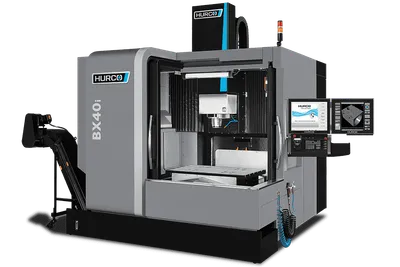
Fermat WRT 150
Key Specifications
Spindle Taper
Spindle Power
Accuracy
Repeatability
spindle diameter
x axis travel
Overview
The Fermat WRT 150 is a table-type horizontal boring and milling machining center from Fermat Machinery, featuring a 150 mm spindle diameter and a fully integrated rotary table as the primary workholding system. Where the WF floor-type series is designed for very large workpieces mounted directly on a floor plate, the WRT series centers on a precision rotary table that carries the workpiece and provides controlled B-axis rotation for multi-face machining in a single setup. The WRT 150's 150 mm spindle diameter places it at the upper end of table-type boring mill capability, handling substantial workpieces — turbine components, large gearbox cases, pump bodies, and structural castings — with the torque and rigidity to perform heavy rough boring as well as precision finish passes.
The WRT configuration provides several operational advantages over floor-type machines for the right workpiece class. The precision rotary table enables accurate 4-axis positioning (X, Y, Z, B) — the workpiece can be indexed to any angular position with the control managing position accuracy and repeatability. This capability enables complete machining of a boxed part's four faces and top surface in a single setup, eliminating the re-fixturing, re-inspection, and accumulated error associated with manual workpiece repositioning on a floor plate. For production environments running repeat-part work on family-type prismatic parts, the WRT's single-setup capability is a significant cycle time and quality advantage.
The WRT 150 incorporates a Siemens 840D sl or Heidenhain TNC 640 control with full simultaneous 4-axis capability (X, Y, Z, B) and optional 5-axis milling head configurations for complex angular feature machining. The spindle drive provides a wide speed range from 2 RPM to 2,500 RPM through a multi-range gearbox, covering both slow-speed heavy rough boring (where high torque at low RPM is required) and higher-speed finish milling and boring operations. The ATC holds 40–60 tools depending on configuration, enabling multi-operation complete machining without manual tool changes.
Fermat positions the WRT 150 as a comprehensive horizontal machining center for the heavy-part sector — bridging the gap between conventional horizontal machining centers (limited in table load and X/Y envelope) and floor-type boring mills (which lack the precision rotary table indexing capability). The target buyer is a heavy-industry manufacturer or job shop that runs complex prismatic parts in the 5,000–25,000 kg range requiring precision bored features, precision milled faces, and accurate inter-feature relationships achievable only through single-setup machining.
Full Specifications
| Parameter | Value |
|---|---|
| Spindle Diameter | 150 mm |
| Spindle Taper | ISO 50 (SK 50) |
| X Axis Travel | 4,000 mm to 8,000 mm (configuration dependent) |
| Y Axis Travel | 2,500 mm to 4,000 mm (configuration dependent) |
| Z Axis Travel | 1,200 mm |
| W Spindle Travel | 900 mm |
| B Axis | Full 360° CNC rotary table, ±0.001° positioning |
| Spindle Speed Range | 2 – 2,500 RPM |
| Spindle Motor Power | 55 kW (continuous) |
| Spindle Torque | up to 7,500 Nm (at low speed range) |
| Rotary Table Load | Up to 25,000 kg |
| Tool Magazine | 40–60 tools (configuration dependent) |
| CNC Control | Siemens 840D sl or Heidenhain TNC 640 (customer choice) |
| Positioning Accuracy | ±0.008 mm |
| Repeatability | ±0.005 mm |
| Born | August 17, 1601, Beaumont-de-Lomagne,France |
| Died | January 12, 1665,Castres(aged 63) |
| Notable Works | “Introduction to Loci” |
| Subjects Of Study | Fermat prime |
Specifications compiled from manufacturer literature and industry references. Not independently verified against a published spec sheet — confirm with the manufacturer or an authorised dealer before making a purchasing decision.
Strengths & Limitations
Strengths
- 150 mm spindle diameter delivers high torque and rigidity for heavy rough boring in cast iron, carbon steel, and stainless — the core requirement for large turbine component, pump, and gearbox machining
- Integrated precision CNC rotary table enables complete multi-face machining in a single setup, eliminating re-fixturing errors and dramatically reducing cycle time on complex prismatic part families
- 55 kW spindle motor with multi-range gearbox covers the full spectrum from slow-speed heavy boring to higher-speed finish milling without compromise, making the machine genuinely versatile across a wide job mix
- Siemens 840D sl or Heidenhain TNC 640 control options serve the preferences of European and North American heavy industry customers and provide access to the full application support ecosystems of both platforms
- Czech manufacturing with European component specification delivers quality credibility at pricing typically more competitive than German (Parpas, Wotan) or Italian (Pama, Breda) equivalents
Limitations
- Purchase price in the $1.2M–$3M range requires strong capital justification — the WRT 150 is a major capital investment appropriate for operations with a confirmed large-part machining workload
- Long lead times are typical for custom-configured WRT 150 orders (6–18 months) — production planning and machine delivery timing must be coordinated well in advance of need
- Specialized machine type with a narrow buyer base means resale is difficult and time-consuming — the WRT 150 is a long-term capital commitment rather than a liquid asset
Best For
Frequently Asked Questions
01
The WF series is Fermat's floor-type boring mill line, where the workpiece is mounted on a floor plate with T-slots and the column/headstock traverse to reach the work. The WRT series is the table-type boring mill line, where the workpiece is mounted on a CNC rotary table that provides B-axis indexing. WF machines handle the largest, heaviest workpieces that cannot be moved or that exceed table size limits. WRT machines are better for complex multi-face prismatic parts that benefit from precision single-setup rotary indexing. The WRT 150's 150 mm spindle is also larger than the WF 13's 130 mm spindle, providing more torque.
02
The WRT 150 rotary table is rated up to 25,000 kg workpiece capacity in standard configuration. This covers the majority of large prismatic parts in energy, oil and gas, and heavy manufacturing. For workpieces approaching or exceeding this limit, Fermat's engineering team can discuss reinforced table options or evaluate whether a floor-type WF series machine is more appropriate. Always provide workpiece weight, size, and fixturing details to Fermat engineering during the application evaluation.
03
The WRT 150 in standard configuration is a 4-axis machine (X, Y, Z, B-axis rotary table). Optional 5-axis milling head configurations are available — these add an A-axis or C-axis capability to the spindle head, enabling angular boring and milling for complex workpiece features that cannot be reached with a standard horizontal spindle orientation. 5-axis head options increase machine cost and complexity but eliminate additional setups for parts with angular features. Discuss 5-axis head requirements with Fermat during the application review.
04
Pama (Italy) and Parpas (Italy) are premium Italian boring mill manufacturers with strong global reputations and typically higher pricing than Fermat. All three produce high-quality, European-engineered machines for the heavy boring market. Fermat's competitive positioning is value — Czech manufacturing with European components at pricing below Italian equivalents. Buyers prioritizing absolute brand prestige and the deepest global service networks often prefer Pama or Parpas. Buyers seeking credible European quality at more competitive pricing will evaluate Fermat seriously. All three should be considered for major capital purchases.
05
The WRT 150 serves heavy capital goods manufacturers across several sectors: power generation (steam and gas turbine casings, generator housings), oil and gas (large pump bodies, compressor casings, valve blocks), mining and minerals processing (crusher frames, mill housings, large bearing housings), shipbuilding (engine components, propeller hubs, large shaft housings), and heavy transportation (locomotive frames, axle housings). Defense and aerospace large-part machining is also a market. The common thread is complex prismatic parts above 5,000 kg requiring multi-face precision machining.
Videos

Michigan Medicine

Miaohua Jiang

Human Sir Maths Club

شادى سوفت
Community Discussions
Community discussion — contouring EDT 150 steel - Practical Machinist
Capabilities and material handling — Drill press parts
Community discussion — East German (GDR) WMW Machine Tools Brochures [PDF]
Community discussion — W & S Turret Lathe sizes | Practical ...
Community discussion — Vise recommendations? Best for the money : r/Machinists - Reddit
Pricing and buying discussion — Engineer here: what machine should I buy? : r/Machinists - Reddit
Community discussion — Polycarbonate speeds/feeds? : r/Machinists - Reddit
Community discussion — Ream feeds and speeds : r/Machinists - Reddit
Links to community discussions. Summaries are editorial — visit the original thread for full context.
Related Machines
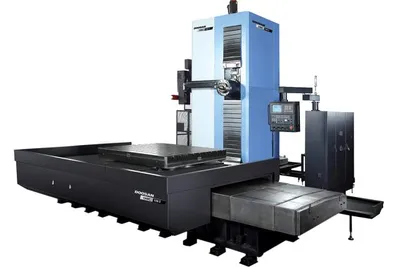
DN Solutions DBC-130
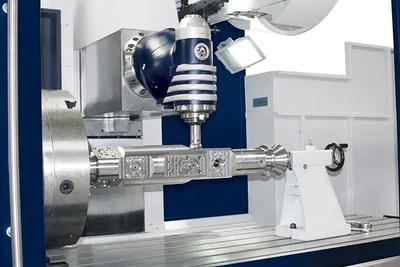
Soraluce TA-A 35
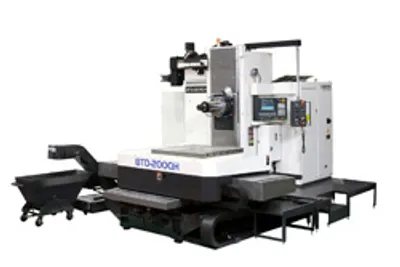
Toshiba BTD-200QH

DN Solutions DBC 130

DN Solutions DBD 130