Euroturn 6/20
Key Specifications
Max Spindle
Accuracy
number of spindles
max bar diameter
spindle speed independent
cross slide stroke
Overview
The Euroturn 6/20 is a CNC multi-spindle automatic turning machine for bar stock up to 20 mm diameter, produced by Euroturn GmbH. Euroturn is a German manufacturer of CNC multi-spindle automatics, representing an independent European alternative to the larger multi-spindle brands. The 6/20 designation reflects the machine's core specifications: 6 spindles and 20 mm maximum bar diameter. The machine is aimed at medium-volume precision component production in the automotive, fluid power, and general engineering sectors.
The 20 mm bar capacity positions the Euroturn 6/20 in a competitive but well-established market tier. At 20 mm, the machine covers small hydraulic fittings, fuel system connectors, electrical connector housings, and a wide range of automotive sub-components produced in volumes from hundreds of thousands to millions per year. The 6-spindle architecture provides the characteristic multi-spindle throughput advantage: 3-5x the parts per hour achievable on equivalent single-spindle CNC turning operations, translating directly to reduced machine count and lower per-piece labor cost for sustained production programs.
The 6/20 uses CNC servo drives for cross-slide and longitudinal axes at each spindle station, providing programmable control over all cutting operations at every position in the machine cycle. The control system manages station-to-station synchronization during drum indexing and provides standard G-code programming interfaces for operator familiarity. Live tooling capability at designated cross-slide stations enables radial milling, cross-drilling, and thread-forming operations within the multi-spindle cycle.
Euroturn's positioning as an independent German manufacturer offers certain advantages for European buyers: relatively local service and support, German engineering quality standards, and pricing that may be competitive against larger-brand alternatives. For shops already operating multi-spindle automatics from larger German manufacturers, Euroturn machines use compatible tooling systems and familiar CNC platforms, reducing the knowledge and tooling investment required to add Euroturn capacity.
Pricing for the Euroturn 6/20 typically ranges from $360,000 to $680,000 depending on configuration, live tooling packages, and optional back-working attachment. As with all CNC multi-spindle automatics, the machine is positioned as a dedicated production platform for high-volume component manufacturing rather than a flexible job shop resource.
Full Specifications
| Parameter | Value |
|---|---|
| Number Of Spindles | 6 |
| Max Bar Diameter | 20 mm (0.79 in) |
| Max Spindle Speed | 7,000 RPM per spindle |
| Spindle Speed Independent | Yes |
| Cross Slide Stroke | 55 mm (2.2 in) |
| Longitudinal Stroke | 90 mm (3.5 in) |
| Tool Stations | Up to 14 cross tools + 6 longitudinal |
| Live Tooling | Yes |
| Back Working | Yes (optional) |
| Positioning Accuracy | 0.005 mm |
| Machine Weight | 13,000 kg (28,660 lb) |
| CNC Control | Siemens 840D or Fanuc 30i |
| Bar Feed | Magazine bar feeder (20 mm capacity) |
| Parts Per Minute | Varies by part; typically 2-6 ppm |
Strengths & Limitations
Strengths
- 20 mm bar capacity covers a broadly applicable range of small automotive fittings, connector housings, and fluid power components — one of the most common production tiers in European precision parts manufacturing
- German engineering construction and quality standards provide confidence for European automotive Tier 1 and Tier 2 supply chain requirements
- Independent manufacturer pricing may offer competitive alternatives to larger-brand multi-spindle machines at comparable specifications
- Siemens 840D or Fanuc 30i control options provide programming compatibility with existing shop floor CNC expertise
- Live tooling and optional back-working attachment enable complete-part production within the multi-spindle cycle, eliminating downstream secondary operations
Limitations
- 20 mm bar maximum excludes the 6/20 from components requiring 21-32 mm stock, limiting the machine to a specific portion of the small-parts market
- Euroturn's international service and support network is more limited than major multi-spindle brands, which may affect response times for non-European installations
- Capital investment of $360K-$680K requires high annual production volumes to justify — smaller European shops with mixed-volume programs may find CNC turning centers more economical
Best For
Frequently Asked Questions
01
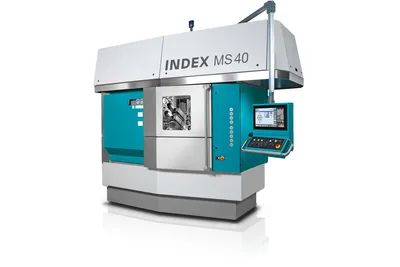
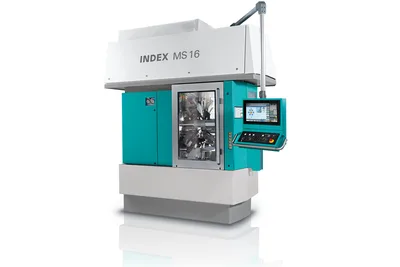
Euroturn 6/20 vs Index MS 16 (16 mm max, larger brand) vs Tornos Sigma 20 (20 mm max, larger brand): The Index MS 16 is actually a 16 mm machine — the Euroturn 6/20 provides 4 mm additional bar capacity, accessing a broader range of components. The Tornos Sigma 20 is the most direct comparison at 20 mm. Key differences: (1) Tornos has a larger global service network, particularly valuable outside Europe; (2) Euroturn's independent German manufacturing may offer pricing advantages in certain configurations; (3) Tornos has deeper market penetration in Swiss watchmaking and precision medical parts. For European automotive and fluid power manufacturers, the Euroturn 6/20 is a credible alternative to both, particularly where local German service is valued. For precision medical and watchmaking, Tornos Sigma 20's established application expertise is a meaningful differentiator.
02
In the European automotive supply chain, the Euroturn 6/20 is used for: (1) Fuel system connectors — quick-connect fitting bodies, fuel line end fittings, and evaporative emission system ports in nylon-reinforced and steel configurations; (2) Cooling system components — bleed screw bodies, expansion tank cap cores, and thermostat housing inserts in brass and aluminum; (3) Brake system fittings — brake line unions, ABS sensor housings, and caliper bleed nipples in steel and brass; (4) EGR system fittings — exhaust gas recirculation valve seat inserts and pipe connector bodies in stainless; (5) Transmission components — sensor body blanks, solenoid valve housings, and pilot valves in alloy steel. Bar material is typically free-machining steel (11SMnPb30 or 11SMnPb37), brass (CW614N), and stainless (303 or 316L) depending on application.
03
Euroturn 6/20 changeover procedure for a complete job change: (1) Call up new part program from control memory or DNC transfer — 15-30 minutes including review; (2) Remove and replace tooling at all 6 stations — typically 12-18 tools, 2-3 hours depending on live tooling configuration; (3) Set tool length offsets for all new tools using preset tool lengths or on-machine touch setting; (4) Change bar feed collet, guide bush, and bar stop for new bar diameter — 30-45 minutes; (5) Load new bar material to feeder; (6) Run 5-10 first-off parts; (7) Measure all critical dimensions and adjust offsets to print. Total time: 4-7 hours for a complete changeover to a different part family and diameter. For repeat jobs with same bar diameter and similar tooling layout, time reduces to 2-4 hours. This compares favorably to cam multi-spindle changeover times of 1-3 days.
04
The Euroturn 6/20 uses a flood coolant system with chip conveyor and coolant recirculation. Standard specifications: coolant flow rate 80-120 L/min at 5-8 bar (standard), with optional high-pressure coolant upgrade to 70+ bar for through-tool drilling applications; stainless steel coolant tank with magnetic chip separator and paper band filter for fine chip removal; chip conveyor delivering chips to external chip bin; coolant concentration monitoring and automatic top-up in some configurations. For stainless steel and titanium machining, high-pressure through-tool coolant (70-100 bar) is strongly recommended for hole-drilling operations to prevent chip packing and drill breakage. For brass and free-machining steel (the most common 6/20 materials), standard 5-8 bar flood coolant is adequate for most operations. Coolant type: typically semi-synthetic or synthetic metalworking fluid at 5-8% concentration.
05
The Euroturn 6/20 uses a combination of gravity chute and optional conveyor belt for parts unloading. When parts are parted off at the cutoff station, they fall into a parts catcher chute that directs them to a parts bin or conveyor. Options include: (1) Standard gravity chute to parts bin — adequate for robust parts where impact is not a concern; (2) Conveyor belt with soft landing zone for precision or delicate parts (watch components, medical parts) requiring gentle handling; (3) Parts catcher with separate bin for back-working attachment parts vs. main spindle production; (4) Integration with in-process gauging systems where every part is measured before depositing in the production bin. For high-value medical or precision instrument components, a soft-landing conveyor with pneumatic part transfer is recommended to prevent surface marking or dimensional distortion on fragile micro-parts.
Videos
Graff-Pinkert's Videos
Graff Machine Tools, LLC
Ken Duffy
Graff Machine Tools, LLC
Community Discussions
Community discussion — SCREW MACHINES - Practical Machinist
Community discussion — The ultimate screw ... - Practical Machinist
Options and configuration advice — Screw machines as a hobby? | Page 5 ...
Community discussion — Can screw machines bore off-axis? - Practical Machinist
Community discussion — Why would this happen on a swiss type? : r/Machinists - Reddit
Community discussion — Cutoff took an interesting walk. : r/Machinists - Reddit
Community discussion — How to remove center : r/Machinists - Reddit
Troubleshooting and problem-solving — Problems Hard Turning C300 Steel : r/Machinists - Reddit
Links to community discussions. Summaries are editorial — visit the original thread for full context.