Industrial CNC Machine Directory

Doosan VTC 300M

$180,000 - $260,000 Updated 2026-03-17
01

Key Specifications

Max Spindle

2,000 RPM

Spindle Power

22 kW (29.5 hp)

Max Turn Length

690 mm

Accuracy

±0.005 mm (±0.0002 in)

Repeatability

±0.003 mm (±0.00012 in)

chuck diameter

300 mm (11.8 in) hydraulic vertical chuck

02

Overview

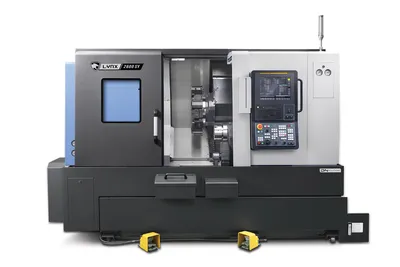
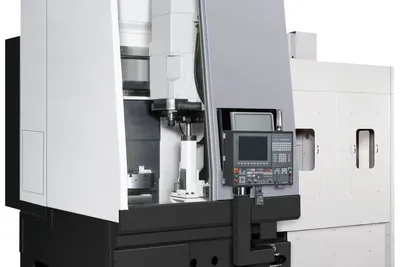
The Doosan VTC 300M is a vertical turning center (VTC) from Doosan Machine Tools designed for chucking large, heavy, and awkward workpieces that are difficult to fixture horizontally on conventional slant-bed lathes. With a 300 mm (11.8 in) chuck capacity and a vertical spindle axis, the VTC 300M is aimed at shops producing large-diameter flanges, wheel hubs, brake drums, large rings, and disc-shaped components where gravity assists workpiece clamping rather than fighting it. The VTC architecture is inherently stable for heavy, unbalanced parts that would create vibration and chuck clamping challenges on a horizontal turning center.

The VTC 300M's vertical spindle delivers 22 kW (29.5 hp) at up to 2,000 RPM on an A2-8 spindle nose, providing the torque profile needed for roughing large-diameter disc and flange parts in steel, gray iron, and ductile iron. The ram-type turret is a 12-station VDI 40 unit with optional live tooling at 4,500 RPM (3.7 kW), enabling cross-drilling, tapping, and milling on the vertical platform. The table (chuck) diameter is 600 mm (23.6 in), matching the workpiece diameter range the VTC 300M is designed to handle.

X-axis travel on the cross-slide is 500 mm (19.7 in) and Z-axis (ram) travel is 450 mm (17.7 in), providing a working envelope sized for the flanges, rings, and hubs in the 200–550 mm diameter range where the VTC platform offers the most ergonomic and productivity advantage. The machine is controlled by the Fanuc 0i-TF with Doosan's Smart Turning application, providing consistent control familiarity for shops already running Doosan PUMA series lathes.

The VTC 300M is priced from $180,000 to $260,000 depending on live tooling and automation options. It competes with the Mazak Quick Turn Nexus 350 VTC, the Emag VSC 250, and the Okuma VTR series in the vertical turning center segment. Doosan's value proposition is delivering vertical turning capability — gravity-assisted clamping, improved chip evacuation, and ergonomic part loading — at a competitive price point relative to European and Japanese VTC offerings.

03

Full Specifications

Parameter Value
Chuck Diameter 300 mm (11.8 in) hydraulic vertical chuck
Table Diameter 600 mm (23.6 in)
Max Turning Diameter 830 mm
Max Turning Height 350 mm (13.8 in)
Max Spindle Speed 2,000 RPM
Spindle Motor Power 22 kW (29.5 hp)
Spindle Torque Max 1,432 N·m
Spindle Nose A2-8
Turret Stations 12-station VDI 40
Turret Type Ram-type
Live Tool Speed Max 4,500 RPM (optional)
Live Tool Power 3.7 kW (5 hp) (optional)
X Axis Travel 500 mm (19.7 in)
Z Axis Travel 450 mm (17.7 in)
Rapid Traverse X 15 m/min (591 ipm)
Rapid Traverse Z 12 m/min (472 ipm)
Positioning Accuracy ±0.005 mm (±0.0002 in)
Repeatability ±0.003 mm (±0.00012 in)
Machine Weight 11,000 kg (24,251 lb)
CNC Control Fanuc 0i-TF with Doosan Smart Turning
Coolant Capacity 400 L (106 gal)
Chuck Size 15 inch
Max Turning Length 690 mm
Metric IMPERIAL
Capacity Chuck sizeMax. Turning DiameterMax. Turning Length
Travels X-Axis Rapid TraverseZ-Axis Rapid TraverseX-Axis Travel DistanceZ-Axis Travel Distance
Main Spindle Max. Spindle SpeedMax. Spindle PowerMax. Spindle Torque
Turret No. of tool stationRotary Tool r/min
No Of Tool Station Rotary Tool r/min
Dimensions LengthHeightWidthWeight
Favorites PV 6300MR
12 Ea 4000 r/min
12 Inch 4000 RPM

Specifications sourced from dn-solutions.com — verified 2026-03-28

04

Strengths & Limitations

Strengths

  • Vertical spindle orientation means gravity assists chuck clamping on heavy, disc-shaped parts — solving the workholding challenges that make large flanges and hubs difficult to fixture on horizontal lathes
  • Improved chip evacuation compared to horizontal lathes — chips fall away from the cutting zone by gravity, reducing chip re-cutting and improving tool life in cast iron and steel facing operations
  • Ergonomic part loading for heavy disc and ring parts — operators load vertically oriented chucks from above without the awkward horizontal lifting required on conventional turning centers
  • 22 kW spindle with 1,432 N·m torque provides ample power for aggressive face turning and boring of large-diameter workpieces in gray iron, ductile iron, and steel
  • Optional live tooling enables cross-drilling, tapping, and milling on the VTC platform, reducing secondary operations for parts requiring features on the face or OD

Limitations

  • 2,000 RPM maximum spindle speed is inherently limited by the large vertical chuck architecture — high-speed finishing of small-diameter features is not the VTC 300M's strength
  • VTC platform requires a specialized programming approach and operator training compared to conventional horizontal turning centers — shops without VTC experience face a learning curve
  • Z-axis travel of 450 mm limits the height of parts that can be machined — tall cylindrical components are better suited to horizontal turning centers
05

Best For

Automotive and heavy equipment producers machining large brake drums, wheel hubs, flywheel housings, and differential cases in gray iron and ductile iron where vertical orientation improves chip flow Energy sector shops producing large flanges, valve bodies, and ring-type components in carbon steel and stainless where the workpiece weight and diameter favor vertical clamping General job shops handling a mix of large disc, ring, and hub components across industries — the VTC 300M's vertical architecture simplifies fixturing for shapes that are awkward on horizontal lathes Shops replacing older vertical turret lathes (VTLs) with modern CNC vertical turning center capability, gaining full CNC flexibility while retaining the ergonomic advantages of vertical workpiece orientation
06

Frequently Asked Questions

01 What is the practical advantage of a vertical turning center over a horizontal lathe?

For large, heavy disc-shaped and ring-shaped workpieces (flanges, hubs, rings, drums), vertical orientation offers three main advantages: gravity assists the chuck in holding the part — reducing required clamping force and risk of distortion from over-clamping; chips fall away from the cutting zone rather than piling up around the tool — improving chip management and tool life in cast iron; and operators load parts from above using a hoist without the awkward horizontal lifting that slant-bed lathes require for heavy parts. For long shafts or slender parts, horizontal lathes remain preferable.

02 Can the VTC 300M handle both chucking and boring operations?

Yes. The VTC 300M's turret accommodates both OD turning tools and ID boring bars. The vertical ram provides Z-axis travel for boring operations on the face of disc parts — for example, bore-turning the ID of a large flange hub or machining the spigot bore of a brake drum. The working envelope (550 mm turning diameter, 350 mm turning height) is sized for the disc and ring parts that are the VTC's primary application. For deep-bore operations on tall cylinders, a horizontal lathe with a long-boring bar arrangement is typically better suited.

03 How does loading a VTC differ from loading a horizontal lathe?

On a VTC, the chuck is horizontal and faces upward, so heavy parts are lowered onto the chuck from above using an overhead crane or jib crane. This is ergonomically superior for large disc parts — operators control the part during lowering using slings or dedicated lifting fixtures, and the part seats on the chuck jaws under its own weight before clamping is applied. No horizontal lifting or awkward maneuvers to seat a heavy part in a horizontal chuck. For parts above approximately 30–40 kg, the vertical loading method is significantly safer and faster than horizontal lathe loading.

04 Is live tooling on the VTC 300M useful, or is it mainly a horizontal lathe feature?

Live tooling is genuinely useful on the VTC 300M for parts that require features on the top face — cross-drilled holes in the disc face, tapped holes in a flange bolt circle, or milled slots on the face. The C-axis positions the part for angular indexing and the driven tools perform the milling and drilling operations. The time savings from eliminating a secondary VMC setup to drill a bolt circle in a flange or hub are meaningful, especially when the parts are heavy and time-consuming to re-fixture. Live tooling on the VTC adds real value for face-feature-intensive parts.

05 What workpieces are NOT well-suited to the VTC 300M?

The VTC 300M is not the right choice for: long shafts and bars (the 450 mm Z-travel is insufficient); small-diameter parts where horizontal lathes with collets or small chucks are more efficient; parts requiring between-centers turning (no tailstock on the standard VTC); and high-speed finishing of small features where the 2,000 RPM limit constrains surface speed. The VTC shines for large, heavy, disc- and ring-shaped parts where gravity is an asset. For everything else, a conventional horizontal turning center is typically the better choice.

07

Videos

Mazak QTU 250MSY

Mazak QTU 250MSY

MachinerySystems

How to : Doosan CNC Lathe Tool Offset

How to : Doosan CNC Lathe Tool Offset

Pro Install & Repair

Dugard 200HT CNC Lathe

Dugard 200HT CNC Lathe

Dugard

Doosan Puma 300C 2007 | Horizontal Machining Center

Doosan Puma 300C 2007 | Horizontal Machining Center

Machinery Marketing International

How to choose the right tool holder for your CNC Machine | DN Solutions

How to choose the right tool holder for your CNC Machine | DN Solutions

TITANS of CNC MACHINING

08

Community Discussions

Practical Machinist

Unknown MDI Key on Doosan Puma 300m with Fanuc 32i A

Community discussion — Unknown MDI Key on Doosan Puma 300m with Fanuc 32i A

Practical Machinist

CNC Machining | Mazak or Doosan VMC - Practical Machinist

Pricing and buying discussion — Mazak or Doosan VMC - Practical Machinist

Practical Machinist

Victor vs Smec vs Doosan - Practical Machinist

Comparison and buying advice — Victor vs Smec vs Doosan - Practical Machinist

Practical Machinist

Which new vmc? Haas, Doosan, Milltronics, etc...

Maintenance and service — Which new vmc? Haas, Doosan, Milltronics, etc...

CNCZone

Just In Every Doosan Service Manual that I currently have ...

Maintenance and service — Just In Every Doosan Service Manual that I currently have ...

CNCZone

Just In Does anyone need service manuals for popular Doosan ...

Troubleshooting and problem-solving — Just In Does anyone need service manuals for popular Doosan ...

CNCZone

Problem turret index issue - CNCzone

Troubleshooting and problem-solving — Problem turret index issue - CNCzone

CNCZone

Daewoo/Doosan - CNCzone

Troubleshooting and problem-solving — Daewoo/Doosan - CNCzone

Reddit

VTL operable now : r/Machinists - Reddit

Community discussion — VTL operable now : r/Machinists - Reddit

Reddit

DOOSAN lathe : r/Machinists - Reddit

Community discussion — DOOSAN lathe : r/Machinists - Reddit

Reddit

I’ve never run a CNC lathe. I bought a brand new Doosan for ...

Community discussion — I’ve never run a CNC lathe. I bought a brand new Doosan for ...

Reddit

NMD! Doosan SVM4100 : r/Machinists - Reddit

Community discussion — NMD! Doosan SVM4100 : r/Machinists - Reddit

Links to community discussions. Summaries are editorial — visit the original thread for full context.

09

Related Machines