DN Solutions PUMA V 400 P
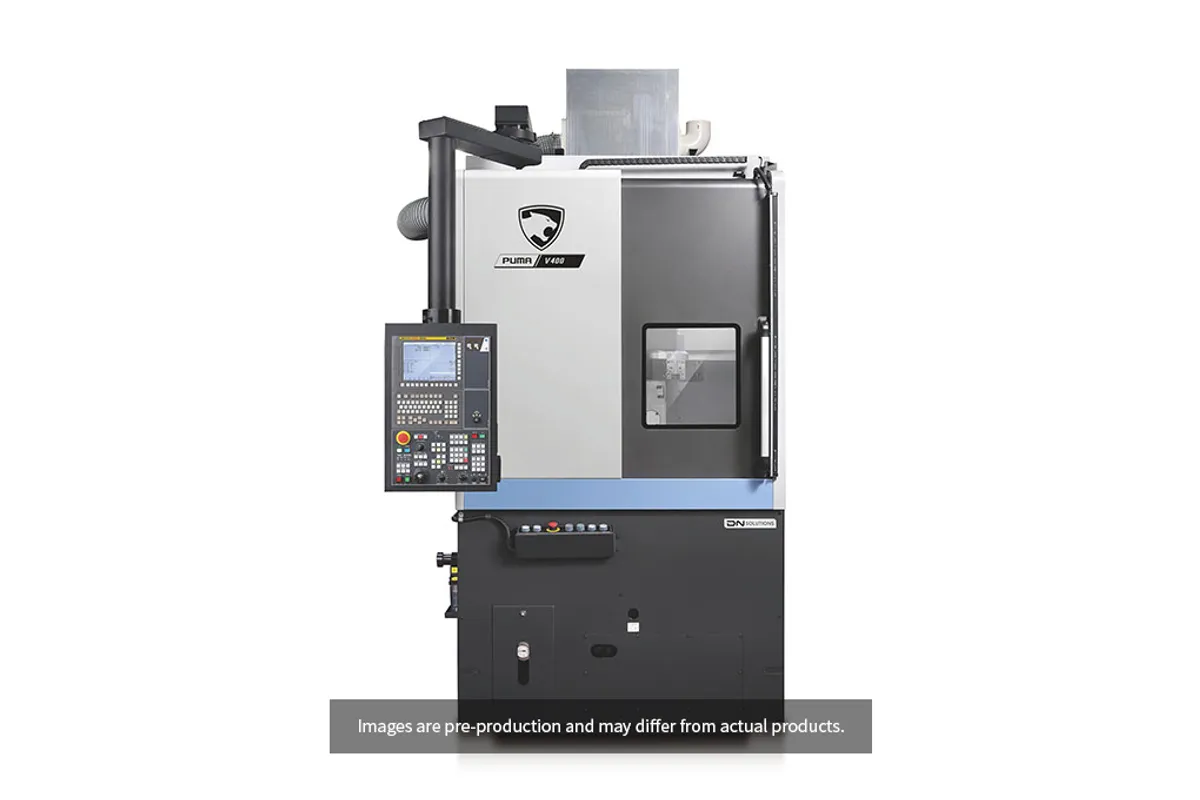
Image: dn-solutions.com, DN Solutions
Key Specifications
X Travel
Z Travel
Max Spindle
Rapid Traverse
Spindle Power
Max Turn Length
How much does the DN Solutions PUMA V 400 P cost?
Estimated price range
Our best estimate for a cnc lathes / turning center in this class — not a quote from DN Solutions. Configuration moves it a long way.
Overview
The DN Solutions PUMA V 400 P is the turning-only model of DN's smallest vertical turning center, and it has the larger work envelope of the two listed variants: 496 mm (20 in) of maximum turning diameter and 461 mm (18 in) of turning length with a 12 in chuck.
Its table has no live-tool row. The PUMA V 400 M, which has 4,000 rpm live tools, is listed at 420 mm (17 in) by 400 mm (16 in). So the choice between them is plain: the variant without driven tooling is the one that swings the bigger part.
The spindle is rated 26 kW (35 hp) and 863 N·m (637 ft-lb), with a maximum of 3,000 rpm. At 496 mm (20 in) the rim of a part reaches a normal cutting speed for steel or cast iron at a small fraction of that speed, so the top end is rarely the constraint. Torque is, because it sets how deep a cut can be held at the largest diameters.
X travel is 268 mm (11 in), a little more than half the maximum turning diameter, which is what a facing cut from rim to centre needs. Z travel is 488 mm (19 in). DN gives one rapid figure for this model, 24 m/min (945 ipm). On strokes this short, rapids add little to the cycle; turret indexing and the cut itself decide it. The turret has 12 stations.
DN says the PUMA V400 is meant to run under tough machining conditions and that its spindle cartridge makes maintenance quick. The machine weighs 6,000 kg (13,228 lb) and measures 1,475 × 2,075 × 3,210 mm (58 × 82 × 126 in) as length, width and height. The last of those is the one that catches buyers out.
Full Specifications
| Parameter | Value |
|---|---|
| Chuck Size | 12 in |
| Max Turning Diameter | 496 mm (20 in) |
| Max Turning Length | 461 mm (18 in) |
| Rapid Traverse Rate | 24 m/min (945 ipm) |
| X-Axis Travel | 268 mm (11 in) |
| Z-Axis Travel | 488 mm (19 in) |
| Max Spindle Speed | 3,000 rpm |
| Spindle Motor Power | 26 kW (35 hp) |
| Spindle Torque | 863 N·m (637 ft-lb) |
| Turret Stations | 12 |
| Floor Space Required | 1,475 × 2,075 × 3,210 mm (58 × 82 × 126 in) |
| Machine Weight | 6,000 kg (13,228 lb) |
Specifications sourced from dn-solutions.com — verified 2026-10-02
Strengths & Limitations
Strengths
- 496 mm (20 in) turning diameter and 461 mm (18 in) turning length, the larger envelope of the two PUMA V 400 variants
- 863 N·m (637 ft-lb) of spindle torque from 26 kW (35 hp)
- X travel of 268 mm (11 in) covers a facing cut from rim to centre at full diameter
- 12-station turret for roughing, finishing and boring tools in one setup
- DN describes a spindle cartridge intended to shorten maintenance work
Limitations
- No live-tool speed is listed; the PUMA V 400 M is the variant with 4,000 rpm live tools
- Height of 3,210 mm (126 in) has to clear doors, cranes and ceilings
- Turning length stops at 461 mm (18 in), so tall parts and shafts do not fit
- The table gives no workpiece weight limit or chuck clamping data
Best For
Frequently Asked Questions
01
Its table lists no live-tool speed. It has a 12-station turret and X and Z travel. The PUMA V 400 M is the variant with live tools, at 4,000 rpm, and its turning envelope is 420 mm (17 in) in diameter by 400 mm (16 in) in length.
02
Up to 496 mm (20 in) in turning diameter and 461 mm (18 in) in turning length, with a 12 in chuck. Travels are 268 mm (11 in) in X and 488 mm (19 in) in Z. The table does not state the maximum workpiece weight, which matters for solid castings near the diameter limit.
03
Not for the parts this envelope is built for. Large diameters reach their cutting speed at low rpm, and the spindle's 863 N·m (637 ft-lb) and 26 kW (35 hp) are what the cut draws on. It would be a limit only for small-diameter work in aluminium, which is not what a 12 in vertical lathe is bought for.
04
The table for the PUMA V 400 P gives one figure, 24 m/min (945 ipm), without separating X and Z. The PUMA V 400 M is listed with 20 m/min (787 ipm) in X and 24 m/min (945 ipm) in Z on the same travels. Ask DN which axis the single figure refers to if X rapid matters to your cycle.
05
The machine is 1,475 mm (58 in) long, 2,075 mm (82 in) wide and 3,210 mm (126 in) high, and weighs 6,000 kg (13,228 lb). Check the route into the building for height, and make sure whatever loads the parts can work over a machine that tall.
Videos
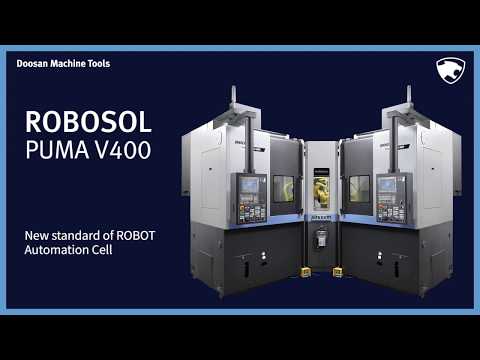
DN Solutions_Official
More from DN Solutions
Other CNC Lathes / Turning Centers
Mazak Nexus 3000
Hwacheon Hi-TECH 850
Hardinge Quest CHNC 27
Mazak HQR-100MSY
HNK VTC-60/70