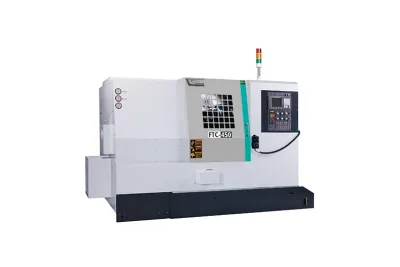
DN Solutions PUMA TL 2000

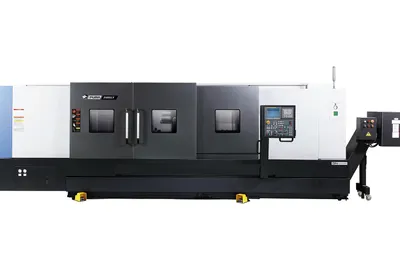
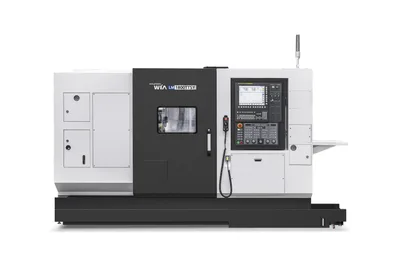
Image: dn-solutions.com, DN Solutions
Key Specifications
X Travel
Z Travel
Max Spindle
Spindle Power
Max Turn Length
chuck size
How much does the DN Solutions PUMA TL 2000 cost?
Estimated price range
Our best estimate for a cnc lathes / turning center in this class — not a quote from DN Solutions. Configuration moves it a long way.
Overview
The DN Solutions PUMA TL 2000 is the short-bed, 8-inch model among DN's lathes with an upper and a lower turret. Z travel is 650 mm (26 in), maximum turning length is 600 mm (24 in), and the spindle runs to 5,000 rpm on a rating of 22 kW (29 hp) and 477 N·m (352 ft-lb).
Two turrets cutting one part at the same moment is the reason to buy it. One tool can rough while the other finishes behind it, or the two can work opposite sides of a shaft so that the cutting forces partly cancel and a slender part deflects less. DN names shafts, crankshafts among them, as the target work, and counts the series as 20 stations made up of 12 + 8. The table for this model lists a 12-station turret.
In the PUMA TL range the 8-inch spindle is the faster and the stronger one on paper. The 10-inch PUMA TL 2500 has more power, 26 kW (35 hp), but stops at 4,000 rpm and lists 433 N·m (319 ft-lb). If the parts fit an 8-inch chuck, that extra power is the only spindle argument for the larger model.
Read the diameter row carefully. DN prints the maximum turning diameter as a pair, 370 / 240 mm, and the table does not say what each value belongs to. Settle that with DN before quoting any part over 240 mm. X travel is 250 mm (10 in), and rapids are 20 m/min (787 ipm) in X and 24 m/min (945 ipm) in Z. There is no driven-tool row, so milling and cross-drilling are outside this model; the PUMA TL 2000 LM is the 8-inch version that lists live tools, at 5,000 rpm, together with 1,050 mm (41 in) of Z travel.
The machine covers 3,250 × 2,118 mm (128 × 83 in) of floor, is 1,930 mm (76 in) high and weighs 7,200 kg (15,873 lb).
Full Specifications
| Parameter | Value |
|---|---|
| Chuck Size | 8 in |
| Max Turning Diameter | 370 / 240 mm |
| Max Turning Length | 600 mm (24 in) |
| Rapid Traverse X | 20 m/min (787 ipm) |
| Rapid Traverse Z | 24 m/min (945 ipm) |
| X-Axis Travel | 250 mm (10 in) |
| Z-Axis Travel | 650 mm (26 in) |
| Max Spindle Speed | 5,000 rpm |
| Spindle Motor Power | 22 kW (29 hp) |
| Spindle Torque | 477 N·m (352 ft-lb) |
| Turret Stations | 12 |
| Floor Space Required | 3,250 × 2,118 × 1,930 mm (128 × 83 × 76 in) |
| Machine Weight | 7,200 kg (15,873 lb) |
Specifications sourced from dn-solutions.com — verified 2026-10-02
Strengths & Limitations
Strengths
- Upper and lower turrets cut the same part simultaneously, which DN describes as parallel processing that reduces cycle times
- 477 N·m (352 ft-lb) of spindle torque at an 8-inch chuck size, more than the 433 N·m (319 ft-lb) listed for the PUMA TL 2500
- 5,000 rpm spindle, against 4,000 rpm on the PUMA TL 2500
- DN describes a programmable tailstock for the series, for stable machining of longer components
- Lowest weight of the PUMA TL models at 7,200 kg (15,873 lb), on a plan of 3,250 × 2,118 mm (128 × 83 in)
Limitations
- No driven-tool speed is listed; live tools start with the PUMA TL 2000 LM at 5,000 rpm
- Turning length stops at 600 mm (24 in), where the PUMA TL 2000 LM reaches 1,000 mm (39 in)
- The turning diameter is given as 370 / 240 mm without labels, so the usable diameter for a given setup has to be confirmed
- Rapids are 20 m/min (787 ipm) in X and 24 m/min (945 ipm) in Z, which is slow for short-cycle work with many repositioning moves
Best For
Frequently Asked Questions
01
The table lists 12 turret stations. In its description of the series DN counts 20 stations as 12 + 8 turret stations across the upper and lower turrets. Use the series figure when planning tooling for both turrets, and confirm the station count of each turret on the quotation.
02
DN lists it as 370 / 240 mm. The table gives the two values without saying what each refers to, so do not assume the larger one applies to every tool position. For parts between 240 mm and 370 mm, ask DN which value governs your setup. X travel is 250 mm (10 in).
03
Both have 650 mm (26 in) of Z travel and a 600 mm (24 in) turning length. The PUMA TL 2000 has an 8-inch chuck and a 5,000 rpm spindle rated 22 kW (29 hp) and 477 N·m (352 ft-lb). The PUMA TL 2500 has a 10-inch chuck and a 4,000 rpm spindle rated 26 kW (35 hp) and 433 N·m (319 ft-lb), and weighs 7,300 kg (16,094 lb) against 7,200 kg (15,873 lb).
04
Not as listed. The table has no live-tool row for this model. The PUMA TL 2000 LM, with the same chuck size and spindle figures, lists live tools at 5,000 rpm and a 1,000 mm (39 in) turning length, at a weight of 8,400 kg (18,519 lb).
05
DN describes the PUMA TL series as optimized for turning shafts, crankshafts included, by simultaneous turning with the upper and lower turrets, with a programmable tailstock for longer components. On this model that means shafts within 600 mm (24 in) of turning length, where two tools in the cut shorten the cycle.
Videos

Automatics & Machinery

Microsol
Community Discussions
Troubleshooting and problem-solving
Links to community discussions. Summaries are editorial — visit the original thread for full context.
More from DN Solutions
Other CNC Lathes / Turning Centers
Huron DX 350-2000 B
Victor Taichung Vturn-45/425
DMG Mori NEF 600
Hyundai WIA LM1800TTSY
Hyundai WIA LV1400