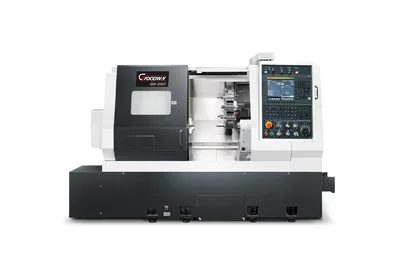
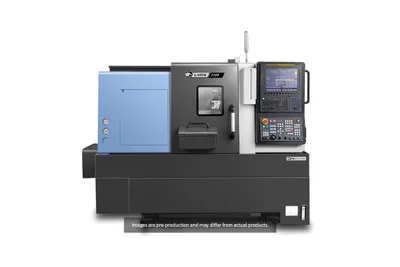
DN Solutions PUMA 2100 LY II
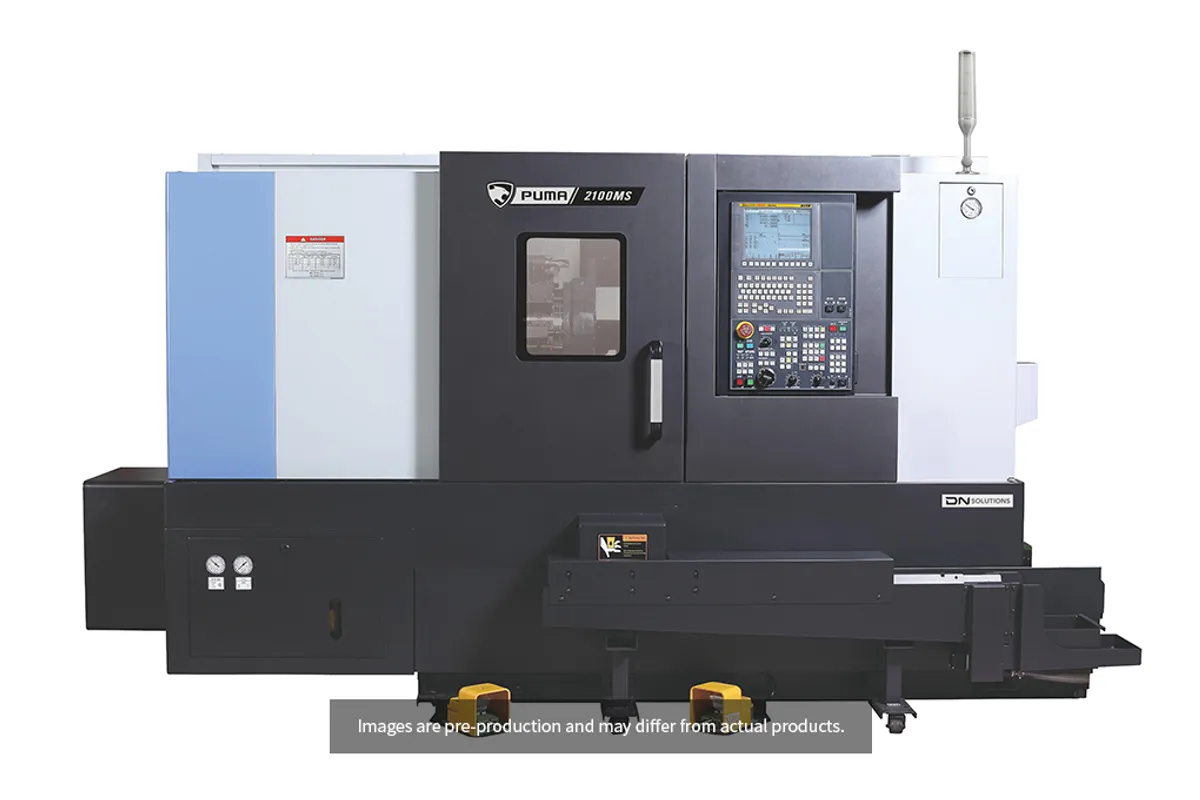
Image: dn-solutions.com, DN Solutions
Key Specifications
X Travel
Y Travel
Z Travel
Max Spindle
Rapid Traverse
Spindle Power
How much does the DN Solutions PUMA 2100 LY II cost?
Estimated price range
Our best estimate for a cnc lathes / turning center in this class — not a quote from DN Solutions. Configuration moves it a long way.
Overview
The DN Solutions PUMA 2100 LY II is an 8 in Y-axis lathe on the longer of the two PUMA 2100 beds, with a single spindle. Turning length is 760 mm (30 in) and Z travel is 830 mm (33 in), against 520 mm (20 in) and 590 mm (23 in) on the PUMA 2100 Y II.
That extra length is the whole case for this model, because the cutting end is unchanged: a 5,000 rpm spindle rated 22 kW (29 hp) and 358 N·m (264 ft-lb), a 12-station turret, live tools to 5,000 rpm, 260 mm (10 in) of X and 105 mm (4 in) of Y. A 760 mm part held in an 8 in chuck is a slender workpiece, so the listed capacity is best read as room for shafts, spindles and tube-type parts, with flats or cross-holes milled on the Y axis in the same setup. Maximum turning diameter is 406 mm (16 in).
DN's table has no sub-spindle rows for this model. A buyer who needs the back of the part machined without a second operation should look at the PUMA 2100 LSY II, which lists a 6,000 rpm, 15 kW (20 hp) sub-spindle and weighs 6,500 kg (14,330 lb). The single-spindle machine described here weighs 6,050 kg (13,338 lb) and measures 3,410 × 1,945 × 2,163 mm (134 × 77 × 85 in).
DN's notes for the series mention upgraded structural rigidity, reduced vibration, and an operation panel and maintenance function it describes as easier to use, all without figures. Rapid traverse is 30 m/min (1,181 ipm).
Full Specifications
| Parameter | Value |
|---|---|
| Chuck Size | 8 in |
| Max Turning Diameter | 406 mm (16 in) |
| Max Turning Length | 760 mm (30 in) |
| Rapid Traverse Rate | 30 m/min (1,181 ipm) |
| X-Axis Travel | 260 mm (10 in) |
| Y-Axis Travel | 105 mm (4 in) |
| Z-Axis Travel | 830 mm (33 in) |
| Max Spindle Speed | 5,000 rpm |
| Spindle Motor Power | 22 kW (29 hp) |
| Spindle Torque | 358 N·m (264 ft-lb) |
| Turret Stations | 12 |
| Live Tool Speed | 5,000 rpm |
| Floor Space Required | 3,410 × 1,945 × 2,163 mm (134 × 77 × 85 in) |
| Machine Weight | 6,050 kg (13,338 lb) |
Specifications sourced from dn-solutions.com — verified 2026-10-02
Strengths & Limitations
Strengths
- 760 mm (30 in) of turning length on an 8 in chuck machine, against 520 mm (20 in) on the PUMA 2100 Y II
- Y axis with 105 mm (4 in) of travel for milling shafts off the centreline
- Spindle and live tools both reach 5,000 rpm, which suits small diameters and small cutters
- 6,050 kg (13,338 lb), lighter than the 6,500 kg (14,330 lb) PUMA 2100 LSY II
Limitations
- No sub-spindle is listed, so the second end of a part needs a second setup
- 358 N·m (264 ft-lb) of spindle torque limits heavy roughing on long, large-diameter stock
- The table does not describe a tailstock or steady rest, which matter for 760 mm (30 in) parts; confirm what is fitted
- 3,410 mm (134 in) of machine length for a single-spindle 8 in lathe
Best For
Frequently Asked Questions
01
Bed length. The PUMA 2100 LY II lists 760 mm (30 in) of turning length and 830 mm (33 in) of Z travel. The PUMA 2100 Y II lists 520 mm (20 in) and 590 mm (23 in), and weighs 5,550 kg (12,236 lb). The spindle, turret, Y travel and turning diameter are the same in both columns.
02
No sub-spindle figures appear in its column of DN's table. The PUMA 2100 LSY II is the long-bed model that lists one, at 6,000 rpm and 15 kW (20 hp), with a weight of 6,500 kg (14,330 lb).
03
The table lists an 8 in chuck, a maximum speed of 5,000 rpm, 22 kW (29 hp) and 358 N·m (264 ft-lb). Bar capacity and spindle bore are not given, so ask DN for those before planning bar-fed work.
04
X travel is 260 mm (10 in), Y travel is 105 mm (4 in) and Z travel is 830 mm (33 in). Rapid traverse is listed as 30 m/min (1,181 ipm). The turret has 12 stations and live tools run to 5,000 rpm.
Videos

Dematec Polska

Duroc Machine Tool Group
More from DN Solutions
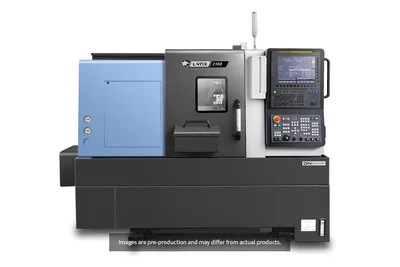
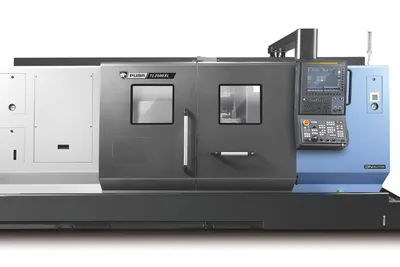
Other CNC Lathes / Turning Centers
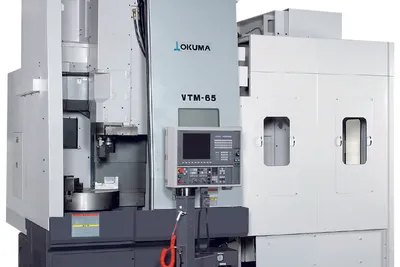
Okuma VTM-65
Victor Taichung Vturn-V22WT2
Tongtai TCS-2000II
Republic Lagun AT-1440-G-TW-CNC
INDEX C200