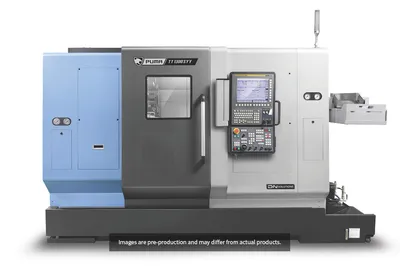
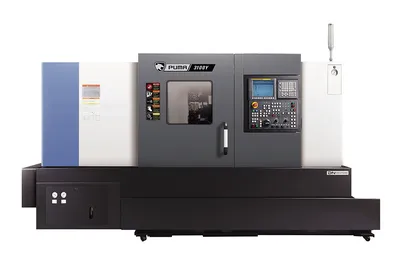
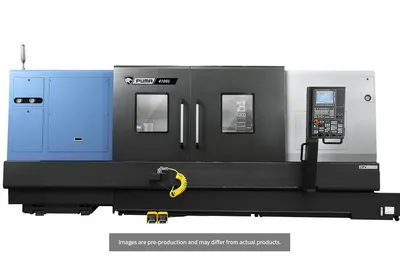
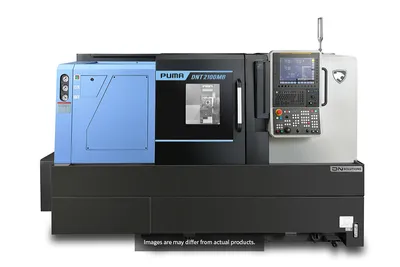
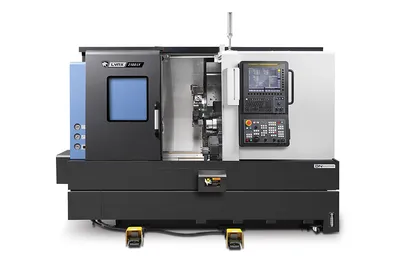
DN Solutions LYNX 2100 LMSA
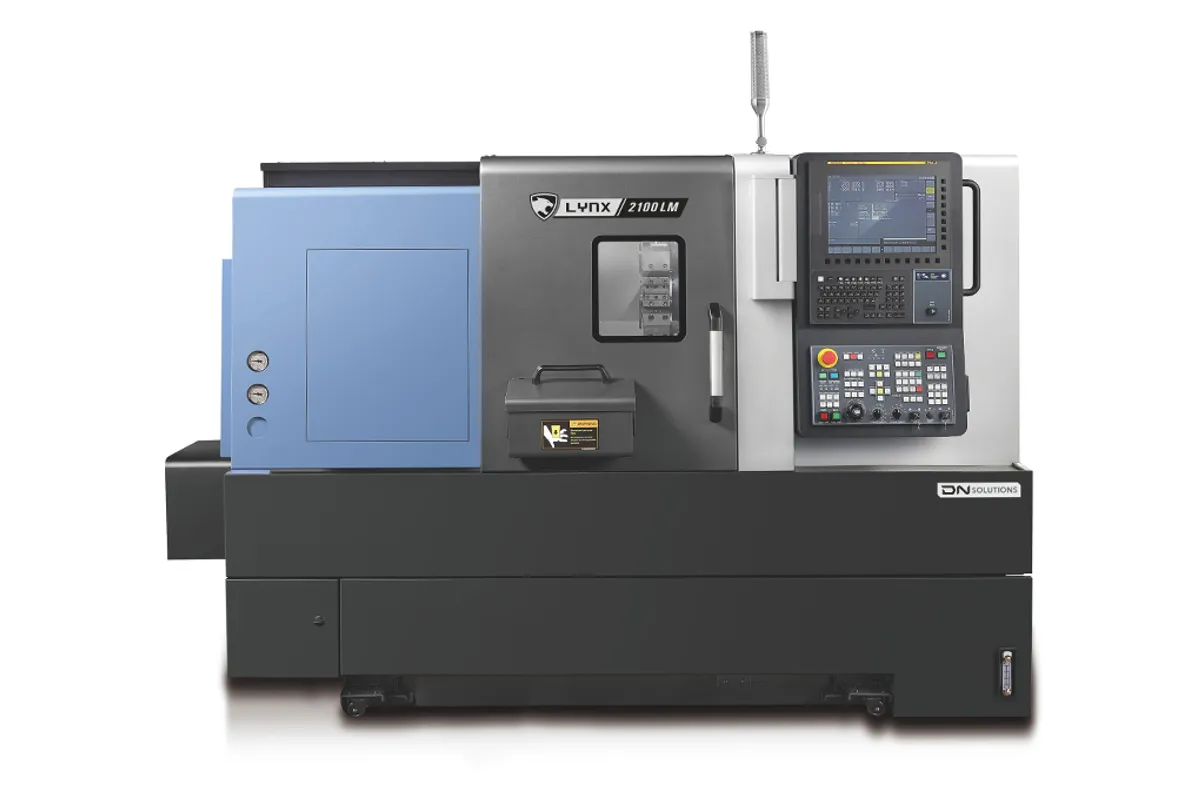
Image: dn-solutions.com, DN Solutions
Key Specifications
X Travel
Z Travel
Max Spindle
Spindle Power
Max Turn Length
chuck size
How much does the DN Solutions LYNX 2100 LMSA cost?
Estimated price range
Our best estimate for a cnc lathes / turning center in this class — not a quote from DN Solutions. Configuration moves it a long way.
Overview
The DN Solutions LYNX 2100 LMSA is a 6 in, long-bed LYNX lathe with driven tools, listed at 6,000 rpm for both the main spindle and the live tools. The spindle motor is 15 kW (20 hp) with 127 N·m (94 ft-lb). The turning envelope is 300 mm (12 in) in diameter by 510 mm (20 in) in length, on 205 mm (8 in) of X travel and 560 mm (22 in) of Z travel.
A caution about the model code comes first. DN Solutions' comparison table gives this model one set of spindle figures, the ones above, and no row that spells out what the S in LMSA adds. Anyone weighing this variant against the others in the LYNX 2100 range should get that part of the specification from DN in writing, including its speed, power, chuck size and travel, because none of it can be read from the published rows.
What the rows do show is a long machine, and a heavier one than the plain long-bed lathe. Length is 2,805 mm (110 in), width 1,595 mm (63 in) and height 1,693 mm (67 in). Weight is 3,600 kg (7,937 lb), where the turning-only LYNX 2100 LA is listed at 3,400 kg (7,496 lb). The LYNX 2100 LA also has the wider turning envelope, 350 mm (14 in) by 550 mm (22 in), with the same 6 in chuck and the same spindle rating.
For the work itself, the figures describe a fast small-parts machine. Both the workpiece and the rotating tools can reach 6,000 rpm, which suits small diameters and small cutters alike, and rapids of 30 m/min (1,181 ipm) in X and 36 m/min (1,417 ipm) in Z keep idle moves brief. Torque of 127 N·m (94 ft-lb) will not rough large steel blanks quickly. The 12 turret stations have to be shared between turning tools and driven holders, so tool count is worth checking on complex parts.
Full Specifications
| Parameter | Value |
|---|---|
| Chuck Size | 6 in |
| Max Turning Diameter | 300 mm (12 in) |
| Max Turning Length | 510 mm (20 in) |
| Rapid Traverse X | 30 m/min (1,181 ipm) |
| Rapid Traverse Z | 36 m/min (1,417 ipm) |
| X-Axis Travel | 205 mm (8 in) |
| Z-Axis Travel | 560 mm (22 in) |
| Max Spindle Speed | 6,000 rpm |
| Spindle Motor Power | 15 kW (20 hp) |
| Spindle Torque | 127 N·m (94 ft-lb) |
| Turret Stations | 12 |
| Live Tool Speed | 6,000 rpm |
| Floor Space Required | 2,805 × 1,595 × 1,693 mm (110 × 63 × 67 in) |
| Machine Weight | 3,600 kg (7,937 lb) |
Specifications sourced from dn-solutions.com — verified 2026-10-02
Strengths & Limitations
Strengths
- Main spindle and live tools are both listed at 6,000 rpm, a good match for small parts and small cutters
- 510 mm (20 in) turning length on 560 mm (22 in) of Z travel
- 12-station turret, described by DN Solutions as servo-driven
- Fast axes for a small lathe: 36 m/min (1,417 ipm) in Z and 30 m/min (1,181 ipm) in X
- Series features listed by DN include grease-type lubrication and a full slideway cover against chip ingress
Limitations
- The table has no rows explaining what the S in the model code adds, so that specification must be obtained from DN
- 127 N·m (94 ft-lb) of spindle torque limits heavy roughing
- Heavier than the LYNX 2100 LA, 3,600 kg (7,937 lb) against 3,400 kg (7,496 lb), and 2,805 mm (110 in) long
- Y travel is not listed; among the comparison models it appears on the LYNX 2600SY, with 105 mm (4 in)
Best For
Frequently Asked Questions
01
DN Solutions' table for this model does not say. It lists one spindle, at 6,000 rpm, 15 kW (20 hp) and 127 N·m (94 ft-lb), live tools at 6,000 rpm, and no further rows tied to the S. Ask DN for the full specification of that feature before comparing this variant with the others or quoting work on it.
02
Both have a 6 in chuck, 6,000 rpm, 15 kW (20 hp), 127 N·m (94 ft-lb) and 560 mm (22 in) of Z travel. The LYNX 2100 LMSA adds live tools at 6,000 rpm and weighs 3,600 kg (7,937 lb). The LYNX 2100 LA is turning-only, weighs 3,400 kg (7,496 lb) and turns 350 mm (14 in) by 550 mm (22 in) against 300 mm (12 in) by 510 mm (20 in).
03
The LYNX 2600SY is a size larger: a 10 in chuck, 18.5 kW (25 hp), 403 N·m (297 ft-lb) and 3,500 rpm, turning 380 mm (15 in) by 610 mm (24 in), with 105 mm (4 in) of Y travel and a weight of 6,000 kg (13,228 lb). The LYNX 2100 LMSA is the smaller, faster machine, with a 6 in chuck, 6,000 rpm and 3,600 kg (7,937 lb), and it lists no Y travel.
04
The machine is 2,805 mm (110 in) long, 1,595 mm (63 in) wide and 1,693 mm (67 in) high, and weighs 3,600 kg (7,937 lb). DN Solutions lists a rear-side chip conveyor for the series, so the back of the machine needs to stay accessible. Utility requirements are not in the table.
05
Live tools are listed at 6,000 rpm, equal to the top speed of the main spindle. The table does not give the power or torque of the live-tool drive, so the listed figures support drilling, tapping and light milling with small tools. Anything heavier should be checked against drive ratings supplied by DN.
Videos

ALTTEK