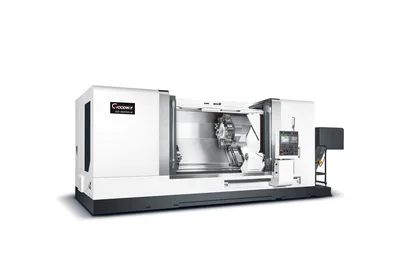
DMG Mori NZ TRE
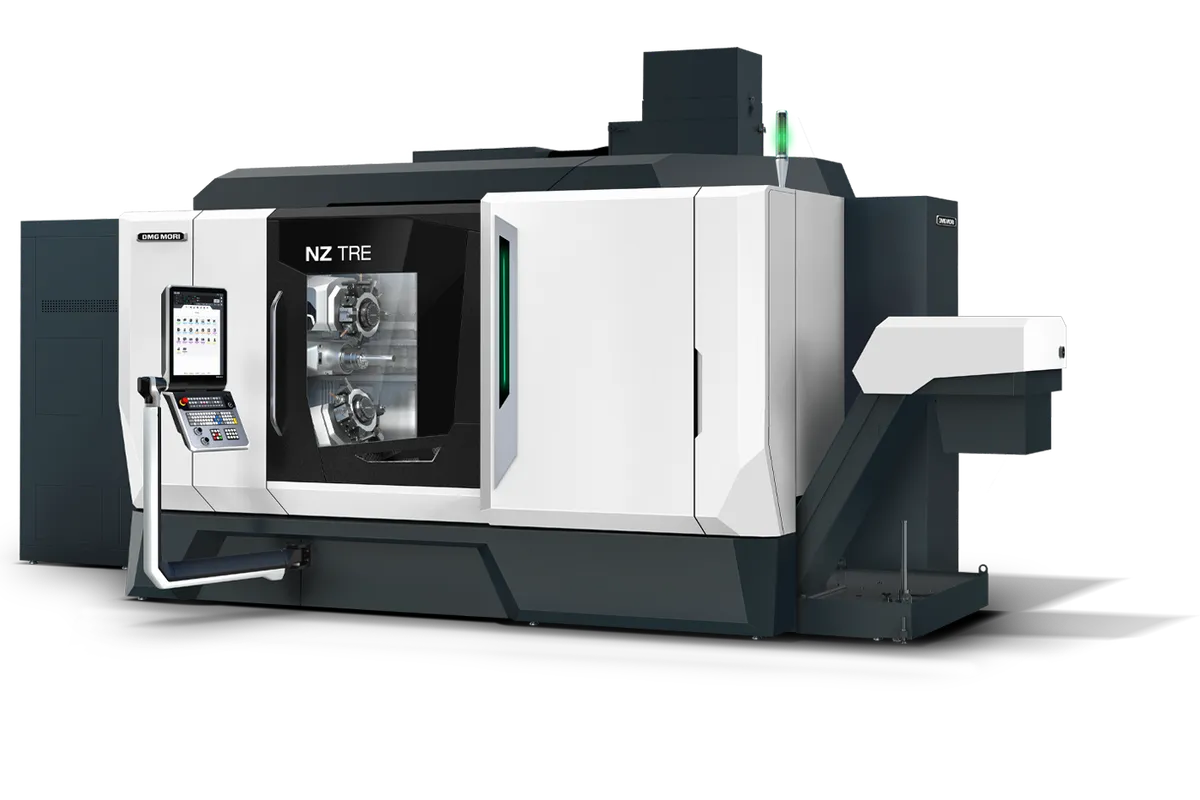
Image: dmgmori.com, DMG Mori
Key Specifications
X Travel
Y Travel
Z Travel
Max Spindle
max workpiece length
max bar capacity
How much does the DMG Mori NZ TRE cost?
Estimated price range
Our best estimate for a cnc lathes / turning center in this class — not a quote from DMG Mori. Configuration moves it a long way.
Overview
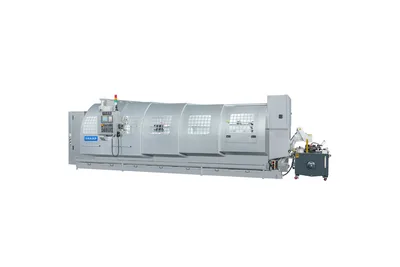
The DMG MORI NZ TRE is a production turn-mill center for parts cut from bar up to 72 mm (2.8 in) or shafts up to 1,290 mm (50.8 in) long, on 210 mm (8.3 in) of X travel, 80 mm (3.1 in) of Y and 1,290 mm (50.8 in) of Z.
Tooling is where a buyer has the most to decide. DMG MORI offers 12 stations for VDI 30 and BMT 40, or 16 stations for VDI 25 and BMT 42/64. The larger count keeps more tools standing ready and cuts changeovers between part numbers; the smaller count comes with the larger VDI shank. The turret drive is a built-in motor at 12,000 rpm with up to 24 Nm / 16 kW. That is plenty of speed and modest torque, which fits small end mills, drills and cross holes in bar parts and rules out heavy face milling.
A B-axis is possible, with a swivel range of -10° to +100°. DMG MORI's point is that standard tools replace special angle tools and that 5-axis simultaneous operation becomes possible, so angled holes and chamfers no longer need a dedicated holder for each angle.
The main and counter spindles are rated at 174 Nm at 100% DC, with 5,000 rpm as standard and up to 7,000 rpm available. A TWIN spindle (TS) adds two independent work areas, a turning function with up to 4,000 rpm and 60 Nm, a rotating guide bush at up to 5,000 rpm and a steady rest function.
Against the NZX 2000, which lists 110 mm (4.3 in) of Y and 810 mm (31.9 in) of Z, the NZ TRE has less Y travel and more Z on the same 210 mm (8.3 in) of X.
Full Specifications
| Parameter | Value |
|---|---|
| X-Axis Travel | 210 mm (8.3 in) |
| Y-Axis Travel | 80 mm (3.1 in) |
| Z-Axis Travel | 1,290 mm (50.8 in) |
| Max Workpiece Length | 1,290 mm (50.8 in) |
| Max Bar Capacity | 72 mm (2.8 in) |
| B Axis Swivel | -10° to +100° (B-axis possible) |
| Max Spindle Speed | Up to 7,000 rpm (5,000 rpm as standard), main and counter spindle |
| Spindle Torque | 174 Nm (100 % DC), main and counter spindle |
| Driven Tool Speed | 12,000 rpm (built-in motor turret) |
| Driven Tool Torque | Up to 24 Nm |
| Driven Tool Power | Up to 16 kW |
| Turret Stations | 12 stations for VDI 30 and BMT 40 or 16 stations for VDI 25 and BMT 42/64 |
| Twin Spindle | Turning function up to 4,000 rpm and 60 Nm (100 % DC); rotating guide bush up to 5,000 rpm |
Specifications sourced from dmgmori.com — verified 2026-10-02
Strengths & Limitations
Strengths
- Choice of 12 stations for VDI 30 and BMT 40, or 16 stations for VDI 25 and BMT 42/64
- 12,000 rpm built-in motor turret drive for small tools that need speed
- B-axis possible with a -10° to +100° swivel range, for 5-axis simultaneous operation with standard tools
- Main and counter spindle rated at 174 Nm at 100% DC
- 1,290 mm (50.8 in) of Z travel, against 810 mm (31.9 in) on the NZX 1500 and NZX 2000
Limitations
- Driven tool drive is limited to 24 Nm / 16 kW, which excludes heavy milling
- Y travel is 80 mm (3.1 in), less than the 110 mm (4.3 in) of the NZX 1500 and NZX 2000
- Standard spindle speed is 5,000 rpm; 7,000 rpm is the upper version
- The 16-station turret uses the smaller VDI 25 shank
Best For
Frequently Asked Questions
01
Two configurations are listed: 12 stations for VDI 30 and BMT 40, or 16 stations for VDI 25 and BMT 42/64. Both are driven by a 12,000 rpm built-in motor turret with up to 24 Nm / 16 kW.
02
Up to 24 Nm and 16 kW at up to 12,000 rpm. That suits small-diameter end mills, drills and taps. For comparison the turning spindles are rated at 174 Nm at 100% DC, so this is a turning machine with fast, light driven tools.
03
From -10° to +100°. DMG MORI lists the B-axis as possible on the turret positions and gives two uses for it: standard tools in place of special angle tools, and 5-axis simultaneous operation. Confirm how many positions carry it on the machine quoted.
04
Both have 210 mm (8.3 in) of X travel. The NZX 2000 lists 110 mm (4.3 in) of Y and 810 mm (31.9 in) of Z. The NZ TRE has 80 mm (3.1 in) of Y and 1,290 mm (50.8 in) of Z, so it gives up some off-centre milling width for a longer part.
05
Both. DMG MORI lists a turning function with up to 4,000 rpm and 60 Nm at 100% DC, a SWISSTYPE function with a rotating guide bush at up to 5,000 rpm, and a steady rest function. It divides the machine into two independent work areas.
Videos
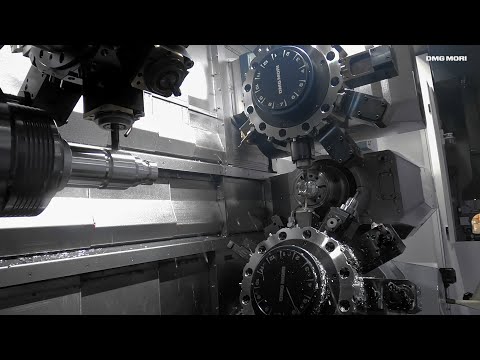
DMG MORI
More from DMG Mori
Other CNC Lathes / Turning Centers
HNK NT-12/16F
Haas ST-15LY
Sharp STB-70
Mazak Quick Turn Nexus 450-II