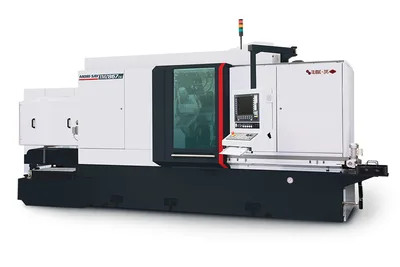
DMG Mori GM 16|6
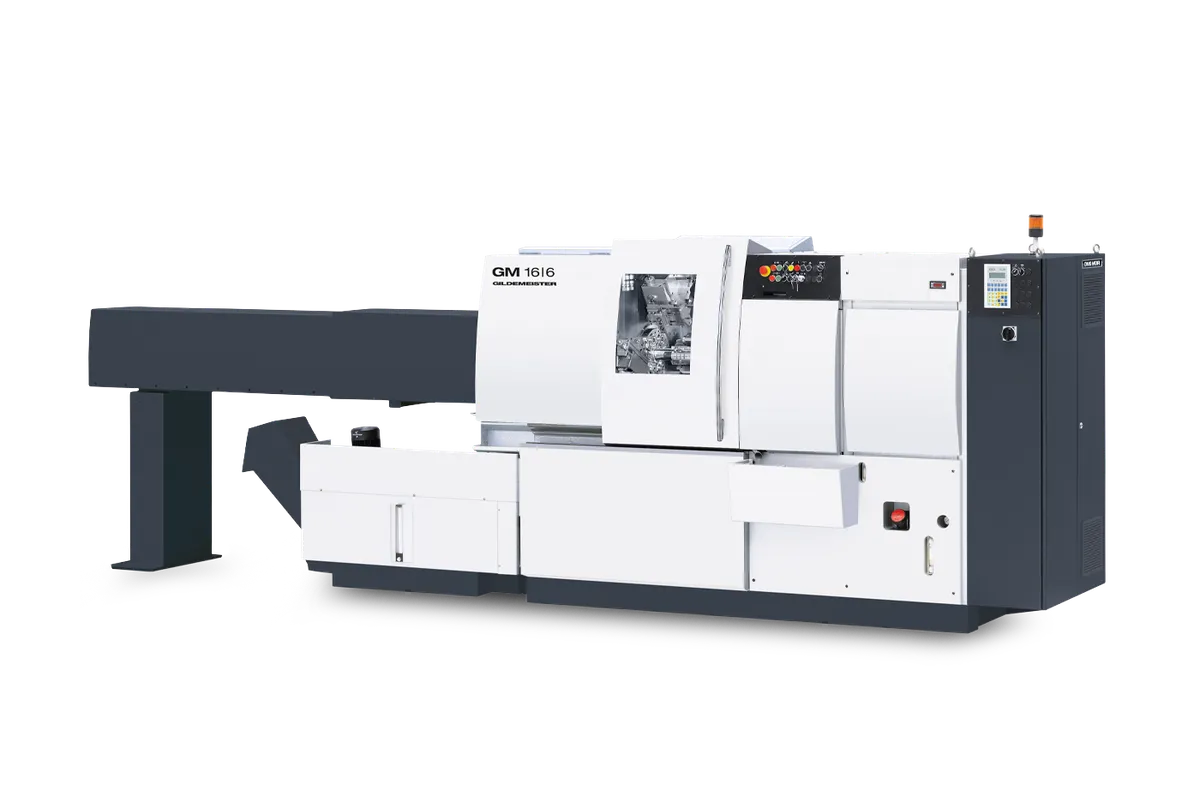
Image: dmgmori.com, DMG Mori
Key Specifications
X Travel
Z Travel
Max Spindle
Max Workpiece ⌀
max workpiece length
max bar capacity
How much does the DMG Mori GM 16|6 cost?
Estimated price range
Our best estimate for a multi-spindle automatic in this class — not a quote from DMG Mori. Configuration moves it a long way.
Overview
The DMG MORI GM 16|6 is a multi-spindle automatic lathe for bar up to 16 mm, aimed by DMG MORI at medium and large-scale production of small turned parts. Workpieces can be up to 80 mm (3.1 in) long. The slides are short to match: 28 mm (1.1 in) of X travel and 45 mm (1.8 in) of Z.
Speed is the reason to buy a machine like this. The main spindles run at 9,000 rpm, the kind of speed a bar this thin needs before the cutting edge is moving fast enough to work properly. The minimum cycle time is adjustable to under 0.9 second, and DMG MORI states that this also holds for double drop production. At that rate bar supply, chip removal and part handling decide the real output more than the cutting does.
Rigidity is built into the structure. The machine is a Monoblock laid out as a frame or portal with overhead bracing, and a Hirth coupling locks the spindle drum. Workpieces are machined from the front, so no angle tools are required, and the front-working tools are guided on the central block. All spindle bearings are oil-cooled.
Setting up is helped by independent, stepless adjustment of the working stroke in every station, and four compound-rest slides handle radial or straight turning. DMG MORI's page gives no figure for spindle power and names no control, so ask how stroke and cycle changes are set, and what drives the spindles, before planning a job around the machine.
The GM 20|6 is the larger sibling: 25 mm (1 in) bar, 100 mm (3.9 in) workpiece length, 42 mm (1.7 in) of X and 50 mm (2 in) of Z. Parts over 16 mm in diameter or over 80 mm (3.1 in) in length need that machine.
Full Specifications
| Parameter | Value |
|---|---|
| X-Axis Travel | 28 mm (1.1 in) |
| Z-Axis Travel | 45 mm (1.8 in) |
| Max Workpiece Diameter | 16 mm |
| Max Workpiece Length | 80 mm (3.1 in) |
| Max Bar Capacity | 16 mm |
| Spindle Bearing Cooling | Oil cooling of all spindle bearings |
| Max Spindle Speed | 9,000 rpm (main spindles) |
| Cycle Time Min | Under 0.9 second (adjustable minimum), also for double drop production |
| Compound Slides | Four compound-rest slides for radial or straight turning |
| Spindle Drum Locking | Hirth coupling |
Specifications sourced from dmgmori.com — verified 2026-10-02
Strengths & Limitations
Strengths
- Main spindles run at 9,000 rpm, suited to bar of 16 mm and under
- Minimum cycle time adjustable to under 0.9 second, also for double drop production
- Monoblock structure with a Hirth coupling locking the spindle drum
- Independent, stepless adjustment of the working stroke in all stations
- Four compound-rest slides for radial or straight turning
- Oil cooling of all spindle bearings, which matters at sustained high speed
Limitations
- Bar capacity ends at 16 mm; the GM 20|6 takes 25 mm (1 in)
- Workpiece length is limited to 80 mm (3.1 in), and Z travel is 45 mm (1.8 in), so confirm how parts longer than the stroke are turned
- Laid out for medium and large-scale production: sub-second cycles only repay the setup on long runs
- No spindle power, torque or control is stated on DMG MORI's page for this model
Best For
Frequently Asked Questions
01
Bar up to 16 mm and workpieces up to 80 mm (3.1 in) long. The slides travel 28 mm (1.1 in) in X and 45 mm (1.8 in) in Z. Since the Z travel is shorter than the maximum workpiece length, ask DMG MORI how the longest parts are produced.
02
The main spindles run at 9,000 rpm, and the minimum cycle time can be adjusted to under 0.9 second. DMG MORI states the same minimum for double drop production. Whether a given part reaches that depends on its longest single operation.
03
It has a Monoblock structure in a frame or portal design with overhead bracing. The spindle drum is locked by a Hirth coupling. Workpieces are machined from the front without angle tools, the front-working tools are guided on the central block, and all spindle bearings are oil-cooled.
04
Size. The GM 16|6 takes 16 mm bar and 80 mm (3.1 in) workpieces with 28 mm (1.1 in) of X and 45 mm (1.8 in) of Z. The GM 20|6 takes 25 mm (1 in) bar and 100 mm (3.9 in) workpieces with 42 mm (1.7 in) of X and 50 mm (2 in) of Z.
05
Three things the manufacturer's page leaves open: the spindle power, the type of control, and how working strokes and cycle time are adjusted in practice. The page does state that the stroke of every station is adjusted independently and steplessly, and that four compound-rest slides do the radial or straight turning.
More from DMG Mori
Other Multi-Spindle Automatics
Index MS22-8 CNC Multi-Spindle Turning Machine
Index MS 16
New Britain Machine Model 54
Tornos MultiDeco 26/6b
INDEX MS 16 Plus