DMG Mori CTX 350 4A
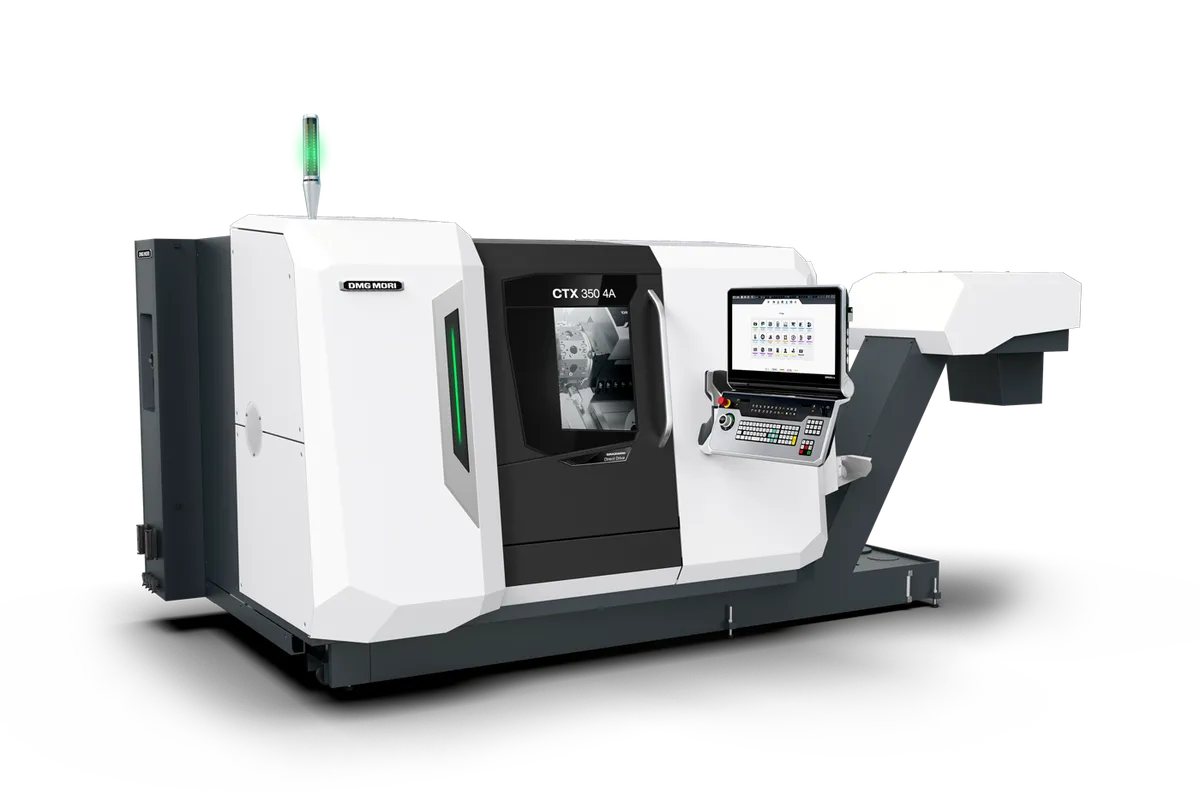
Image: dmgmori.com, DMG Mori
Key Specifications
X Travel
Y Travel
Z Travel
Max Spindle
Max Workpiece ⌀
Accuracy
How much does the DMG Mori CTX 350 4A cost?
Price estimate
We do not have a price for the DMG Mori CTX 350 4A that we can stand behind, so we show no number. Configuration, options and installation move the final price a long way: a quote is the reliable figure.
Overview
The DMG MORI CTX 350 4A is a turning center with two spindles and two turrets, arranged so that both turrets can work on both spindles, individually or simultaneously. It takes workpieces up to 320 mm (12.6 in) in diameter and 530 mm (20.9 in) long, and bar up to 65 mm (2.6 in). Travels are 185 mm (7.3 in) in X, 100 mm (3.9 in) in Y and 495 mm (19.5 in) in Z.
The two spindles are not equal. The left spindle is an ISM 65 with 5,500 rpm and 171 Nm. The right spindle is an ISM 50 Plus with 6,000 rpm and max. 93 Nm, a bit over half the torque. Roughing therefore belongs on the left, and the right spindle takes the part for the second side, where cuts are lighter and the extra speed helps.
Each turret has 12 tool stations in VDI 30, with driven tools up to 12,000 rpm or 17 Nm, and the upper turret is offered with up to 16 tool stations. The 100 mm Y-axis is on the upper turret, so milling off the centreline is done from above while the lower turret turns or drills on centre. At 17 Nm the driven tools are for drilling, tapping and small end mills. The point of the layout is overlap: two tools cutting at once, on one spindle or on both, shorten the cycle more than faster axes would.
For 6-sided complete machining DMG MORI quotes workpieces up to Ø 200 x 100 mm with +/- 50 mm of Y, on a footprint of 8.1 m². That is well inside the 320 mm (12.6 in) the table allows, and it is the realistic size for parts passed between spindles and worked by both turrets.
Positioning accuracy is stated as within 6 µm // 12 arcseconds. Direct scales by Magnescale in X1, X2, Y1 and Z are optional. GREENMODE is listed for up to 10% reduced energy consumption, with energy monitoring, automatic shutdown, class IE3 motors and inverter technology on hydraulics and coolant.
Full Specifications
| Parameter | Value |
|---|---|
| X-Axis Travel | 185 mm (7.3 in) |
| Y-Axis Travel | 100 mm (3.9 in) |
| Z-Axis Travel | 495 mm (19.5 in) |
| Max Workpiece Diameter | 320 mm (12.6 in) |
| Max Workpiece Length | 530 mm (20.9 in) |
| Max Bar Capacity | 65 mm (2.6 in) |
| Sub Spindle Speed | 6,000 rpm (right spindle, ISM 50 Plus) |
| Driven Tool Speed | up to 12,000 rpm (upper and lower turret) |
| Max Spindle Speed | 5,500 rpm (left spindle, ISM 65) |
| Spindle Torque | 171 Nm (left spindle, ISM 65) |
| Sub Spindle Torque | max. 93 Nm (right spindle, ISM 50 Plus) |
| Turret Stations | 12 tool stations, VDI 30 (upper and lower turret); upper turret up to 16 tool stations |
| Driven Tool Torque | 17 Nm (upper and lower turret) |
| Positioning Accuracy | within 6 µm // 12 arcseconds |
| Floor Space Required | 8.1 m² |
Specifications sourced from dmgmori.com — verified 2026-10-02
Strengths & Limitations
Strengths
- Two turrets that can work on both spindles individually or simultaneously
- Left spindle ISM 65 with 5,500 rpm and 171 Nm; right spindle ISM 50 Plus with 6,000 rpm and max. 93 Nm
- Driven tools up to 12,000 rpm on the upper and the lower turret, each with 12 tool stations in VDI 30
- 100 mm Y-axis on the upper turret
- Positioning accuracy within 6 µm // 12 arcseconds
- Bar machining up to Ø 65 mm on a footprint of 8.1 m²
Limitations
- Driven tool torque is 17 Nm, which limits milling to light cuts
- The Y-axis is listed for the upper turret only
- Direct scales by Magnescale in X1, X2, Y1 and Z are optional
- X travel is 185 mm (7.3 in); the CTX 350 has 250 mm (9.8 in)
- The 16-station turret is offered for the upper turret only, and DMG MORI does not state driven tool figures for it separately
Best For
Frequently Asked Questions
01
The machine has two turrets, an upper and a lower one, and two spindles, left and right. DMG MORI states that both turrets can work on both spindles individually or simultaneously. In practice two tools can cut at the same time on one part, or each turret can serve its own spindle while the first and second sides run in parallel.
02
The left spindle is an ISM 65 with 5,500 rpm and 171 Nm. The right spindle is an ISM 50 Plus with 6,000 rpm and max. 93 Nm. DMG MORI's Highlights for this model give speed and torque but no spindle power figure.
03
The upper and the lower turret each have 12 tool stations in VDI 30. The upper turret is also available with up to 16 tool stations in VDI 30. Driven tools run at up to 12,000 rpm or 17 Nm, and the 100 mm Y-axis is on the upper turret.
04
The table gives a maximum workpiece diameter of 320 mm (12.6 in), a maximum length of 530 mm (20.9 in) and a 65 mm (2.6 in) bar capacity. For 6-sided complete machining DMG MORI quotes workpieces up to Ø 200 x 100 mm with +/- 50 mm of Y travel, which is the better guide for parts worked on both spindles.
05
In travel, the CTX 350 lists 250 mm (9.8 in) of X and 550 mm (21.7 in) of Z, against 185 mm (7.3 in) and 495 mm (19.5 in) on the CTX 350 4A. Both list 100 mm (3.9 in) of Y. What defines the CTX 350 4A is its pair of turrets, which can work on both spindles individually or simultaneously.
06
DMG MORI lists GREENMODE for up to 10% reduced energy consumption. The measures named are energy monitoring with automatic shutdown, synchronous spindle drives and class IE3 motors, inverter technology for hydraulics and coolant, minimized compressed air consumption, and low friction linear guides with grease lubrication.
Videos

DMG MORI

DMG MORI

MTDCNC

DMG MORI
Comparisons
More from DMG Mori
Other CNC Lathes / Turning Centers
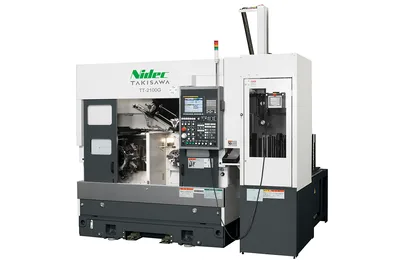
Takisawa TT-2100G
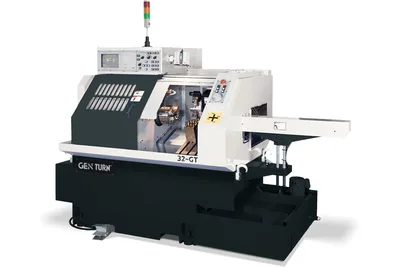
Ganesh GEN TURN 32-GT
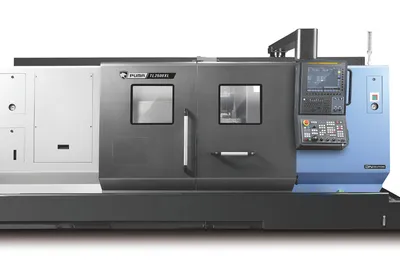
DN Solutions PUMA TL 2500 XLM
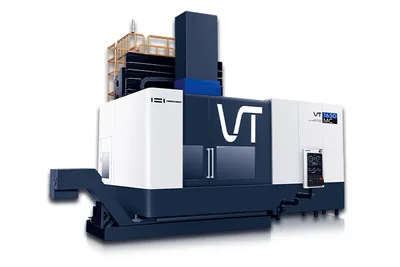
Hwacheon VT-1650
Hardinge GS-150